
17 October 2026, 13:09
Loading...
German government wants to use carbon capture, experts warn

David Vobořil
5 May 2025, 10:27
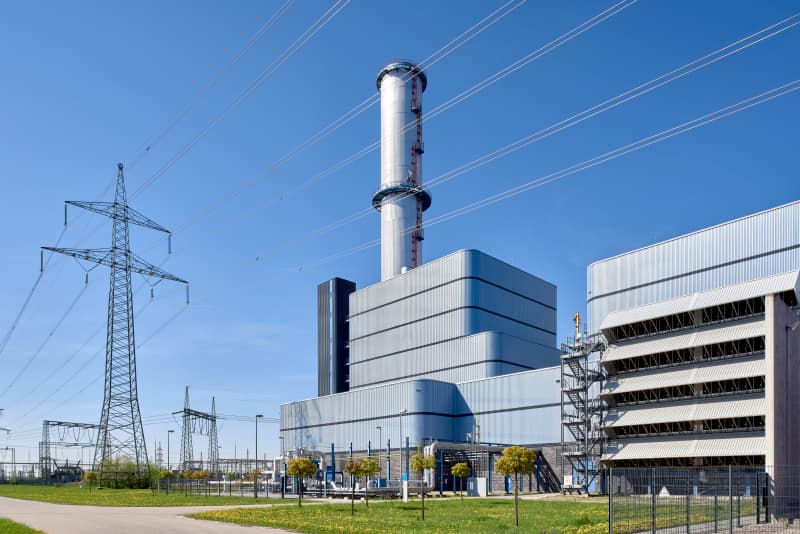
The incoming German government’s plans to use carbon capture and storage (CCS) to generate electricity at gas-fired power plants are likely to prove a costly and unnecessary way to decarbonise Germany’s energy sector, critics told Montel. Experts say the technology makes no sense when used with gas-fired power plants.
Friedrich Merz’s Christian Union (CDU/CSU) and the Social Democrats (SPD) plan to invite tenders for 20 GW of installed gas-fired power capacity by 2030. They also hope to pass a law by the summer allowing carbon capture and storage at gas-fired power plants and in industrial processes.
“In our view, CCS makes no sense for power generation. The cost of capturing CO2 is so high that it only pays off after a certain number of full-load hours,” said Fabian Huneke, an electricity expert at the Agora Energiewende think tank.
Operating gas-fired power plants with CCS is estimated to be economically viable only at between 1,500-4,000 operating hours per year, Huneke said.
“We see that, as the energy transition progresses, fewer and fewer power plants are used for that many full-load hours. This makes investment in power plants with CCS more expensive and increases system costs. Instead, the technology should focus on industry,” Huneke added.
A paper recently published by Stanford University researchers compares these technologies with alternative sources of zero-emission energy in 149 countries and concludes that support for CCS in power generation or direct air capture of CO2 should be abandoned.
Gas-fired power plants are also among the most challenging sources from which to capture CO2, since CO2 concentrations in flue gases are only around 3%. Many industrial processes, by contrast, have concentrations in the double digits.
Costs falling?
According to the Global CCS Institute, which advocates accelerating the deployment of CCS technologies, the use of CO2 capture could significantly reduce CO2 emissions.
“The cost of capturing CO2 has fallen in recent years, and this trend is expected to continue,” said Ruth Gebremedhin, a spokesperson for the Global CCS Institute.
Last year, the institute counted 50 facilities operating worldwide and 46 under construction. Cumulative CO2 capture capacity rose to more than 400 million tonnes per year, compared with only around 350 million tonnes in 2023.
However, only a few gas-fired power plants featured among the CCS projects operating worldwide, the institute said. These include the Glacier Entropy Gas Phase 1 unit in the UK, where CO2 capture costs are estimated at around USD 80/t. The institute expects average CO2 capture costs to fall to around USD 90/t by the end of the decade, compared with USD 160/t around 2010.
Limited space for CO2 storage
A three-year study by Geostore on Germany’s potential for deploying CCS in the North Sea, published in April, found that the country could in principle store around 10 million tonnes of CO2 per year in its exclusive economic zone. This corresponds to around 8-22% of projected residual emissions by 2045, when the country aims to reduce its net CO2 emissions to zero.
“Given the limited capacity and potential environmental risks, only residual CO2 that cannot be avoided despite consistent climate policy should be stored here,” the report said.
Translation disclaimer
This article is a machine translation of the Czech original and has not yet been fully reviewed. In case of any doubt, please refer to the Czech version.
Sdílejte článek prostřednictvím:
You might also like




16 October 2026, 10:16