
20 September 2026, 08:36
Loading...
Giant rotating cylinder instead of a sail: Maersk tests a new route to lower shipping emissions

Marek Kršák
19 September 2026, 07:51
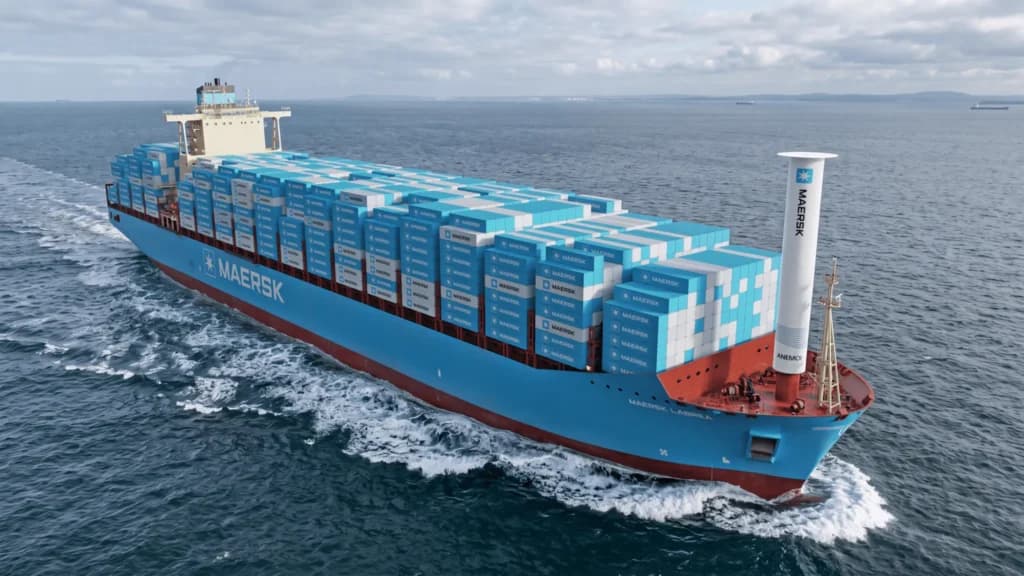
Maritime transport currently accounts for around 80% of global trade, but also makes a significant contribution to global CO₂ emissions. Amid growing pressure to decarbonise, shipping companies are seeking ways to reduce fuel consumption and emissions without having to wait for alternative fuels to be deployed at scale. One of the most promising technologies is so-called wind-assisted propulsion. Danish shipping company Maersk, one of the world's largest container ship operators, plans to install the technology on its container vessels in a pilot project.
Maersk has signed a contract to install the first modern-day “wind sail” on one of its container ships. In doing so, the maritime industry is in a sense returning to a proven technology from the past in order to reduce fuel consumption. However, rotor sails have little in common with traditional white sails suspended from masts.
What is wind-assisted propulsion and how does it work?
Translation disclaimer
This article is a machine translation of the Czech original and has not yet been fully reviewed. In case of any doubt, please refer to the Czech version.
The article continues for subscribers
Premium content
The rest of this article is available to premium subscribers only. Get access to all premium articles on oEnergetice.cz.
You have read only 21% of the article — unlock the remaining 79% with a premium subscription.
Best value: annual subscription
Monthly option 4 € / month
3.25 €/ month
You might also like

19 September 2026, 13:30
19 September 2026, 07:51
18 September 2026, 20:09

18 September 2026, 13:28