3 October 2026, 13:01
Loading...
What is happening with CO2 capture worldwide and in the Czech Republic

Jakub Malý
8 February 2025, 07:40
Carbon capture, utilisation and storage (CCUS) technology is set to become an important tool for achieving climate targets. The recent decision by the US Department of Energy to allocate $1.3 billion to CCUS projects underlines the growing importance of this technology for industrial decarbonisation.
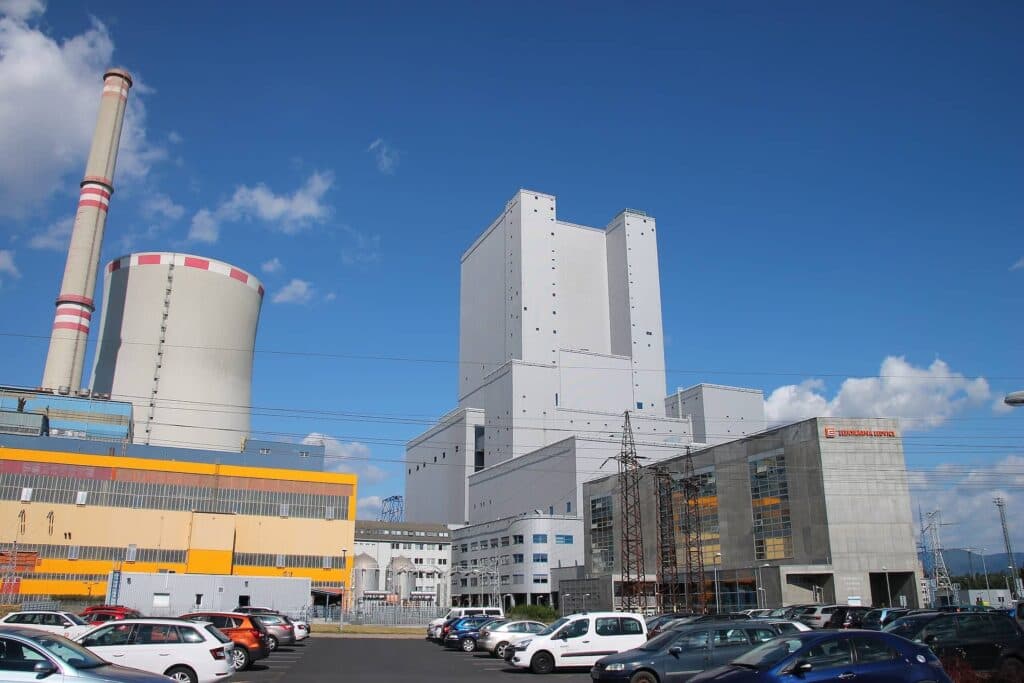
The application deadline is 1 March 2025, and the funding is divided into several areas. The first is Carbon Capture Demonstration Projects, under which up to $750 million will be invested in commercially scalable CO₂ capture projects connected to transport and storage infrastructure. The area includes one project at a coal-fired power plant and two projects in the industrial sector.
The second area is Carbon Capture Large-Scale Pilot Projects. Up to $450 million is intended for technologically innovative pilot projects aimed at demonstrating higher capture efficiency, reducing costs and improving environmental impacts.
The final area, with an allocation of up to $100 million, is infrastructure planning and design (Carbon Capture Demonstration Projects Program – Infrastructure Planning and Design). The funds will go towards planning and designing shared CO₂ transport and storage infrastructure, enabling multiple projects to be connected and reducing CCUS costs
Funding is primarily directed towards the development of two regional projects aimed at creating infrastructure for the safe storage of CO₂. This initiative is intended to support the development of CCUS and encourage further investment in the sector. The programme focuses on reducing costs and ensuring the long-term sustainability of the technology.
Alongside financial support, the US is focusing on a legislative framework intended to facilitate project implementation and their integration into the broader energy strategy. It remains to be seen whether the approach to CCUS technology will change with the arrival of the new US administration.
Overview of selected European CCUS projects
Similar initiatives are also emerging in Europe, where several major projects focused on implementing CCUS at industrial scale are under way, with these projects very often receiving support from the EU Innovation Fund.
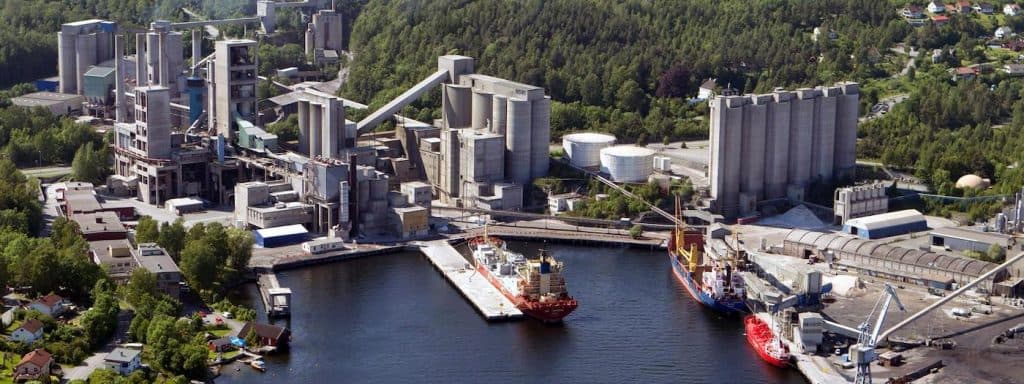
One of the most significant European CCUS projects is the Carbon2ProductAustria (C2PAT) initiative, involving Lafarge, OMV, Verbund and Borealis. The project focuses on capturing CO₂ emissions from Lafarge’s cement plant in Austria and subsequently converting them into synthetic fuels or chemical products. By combining the industrial expertise of its individual partners, C2PAT has the potential to demonstrate an economically sustainable model for CO₂ utilisation in the circular economy.
Another important example is cooperation between OMV and other industrial players, such as Holcim, which is planning several projects across Europe. This approach offers a realistic path to reducing emissions from industrial sectors with limited options for electrification or the use of renewable energy, and is in line with the EU’s CCUS strategy.
The largest European CCUS projects include:
- Northern Lights, Longship (Norway) – An ambitious project focused on transporting and storing CO₂ beneath the seabed, with planned capacity of up to 1.5 Mt CO₂ per year in the first phase and an additional 1.5 Mt CO₂ in the second phase. The creation of extensive infrastructure for capturing and storing CO₂ in depleted natural gas reservoirs in the North Sea is set to become one of the main drivers of the technology’s development.
- Porthos (Netherlands) – A project for storing CO₂ from the Port of Rotterdam, with capacity of approximately 2.5 Mt CO₂ per year. Captured CO₂ will be transported through a gathering pipeline more than 30 kilometres long in the port area and subsequently stored in depleted gas fields beneath the North Sea.
- Acorn CCS (United Kingdom) – A project focused on using existing infrastructure for CO₂ storage in Scotland, with capacity of up to 5 Mt CO₂ per year. It plans to capture CO₂ from various industrial sources and transport it through existing pipelines to depleted oil and gas fields.
- Aramis (Netherlands) – A system for transporting and storing CO₂ in the North Sea, with planned capacity of up to 5 Mt CO₂ per year. The consortium, including TotalEnergies, Shell, EBN and Gasunie, plans to begin operations with capacity of at least 5 million tonnes of CO₂ per year, with the potential to expand to as much as 22 million tonnes per year.
Czech project: Testing CO₂ storage in rock formations
In the Czech Republic, the MND Group carried out a test project focused on storing CO₂ in rock formations. This pilot project examined the feasibility and safety of geological CO₂ storage, but no expansion to a commercial phase is planned. The total capacity of rock formations in South Moravia for carbon storage is approximately 23.4 Mt CO₂. Nevertheless, the project contributed to the development of CCUS expertise and could serve as a basis for future initiatives in the region.
The problem with this technology is its high energy intensity and cost. Its development is therefore very gradual, and in the context of the volume of CO2 emissions released and compared with how much CO2 some projects will be able to capture, these are only fractions of annual emissions. The Czech Republic in 2023 emitted around 99 Mt CO₂.
Translation disclaimer
This article is a machine translation of the Czech original and has not yet been fully reviewed. In case of any doubt, please refer to the Czech version.
Sdílejte článek prostřednictvím:
You might also like
3 October 2026, 07:43

2 October 2026, 21:55

2 October 2026, 15:14