Energy and the US presidential election: America divided by the ‘war on coal’
Will the era of ‘green’ President Barack Obama be followed by another renewable energy boom in America, or will the new head of state hit the brakes? And how will the United States’ new energy policy affect the whole world? We bring you the first in a series of articles on ‘Energy and the US presidential election’.
It was one of presidential candidate Hillary Clinton’s weaker moments. It happened at a March rally in Ohio, and her words were broadcast by CNN. When Clinton said that many miners and coal companies would find themselves out of work, Democratic politician Mary Throne from the ‘coal’ state of Wyoming cried out in dismay while watching the television broadcast.
Throne contacted the Democratic presidential candidate’s campaign team and Clinton apologised for her remarks. But Republican candidate Donald Trump would not have been Donald Trump if he had not taken advantage of the situation. According to him, his main rival spoke of miners as though they were mere numbers: people facing job losses who would supposedly never find work again.
Green solutions
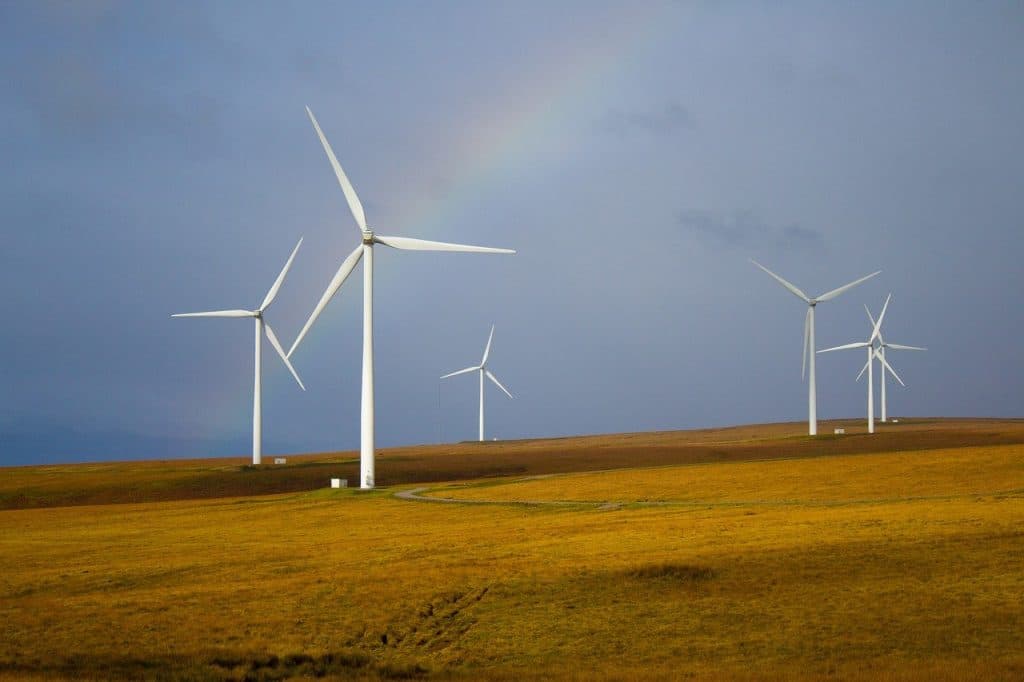
As sometimes happens in election contests, Clinton’s words may have been unfortunate, but above all they were taken out of context. The Democratic leader was not actually saying that she would leave laid-off miners to their fate. Clinton stresses that the opposite is true: people will lose their jobs if the current situation does not change. On the one hand, she sees the solution in a massive expansion of renewable energy sources; on the other, she promises $30 billion – an amount intended to help ‘coal communities’ move away from coal and create new jobs. Some critics say the sum is too high, but overall many experts assess the plan positively.
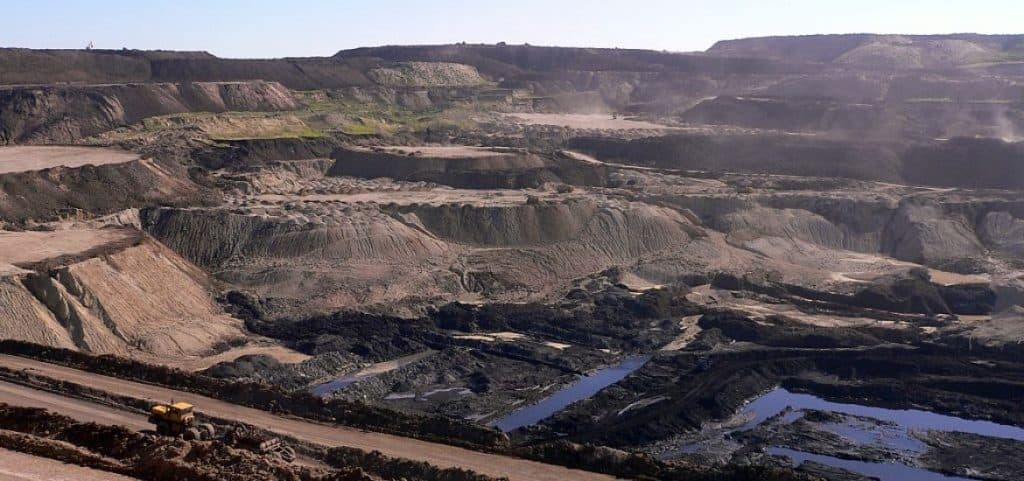
Donald Trump is clearly trying to appeal more to the section of the population in ‘coal’ states that is frightened by plans to transition to greener sources, despite all the reassurances. Under a Trump administration, the mining business will enjoy great times again, he says. This would supposedly be thanks to the concept of so-called ‘clean coal’ – more precisely, technologies that make it possible to extract the traditional commodity without such mining having dramatic environmental impacts. Trump has also sharply criticised the environmental policies of current President Barack Obama’s administration in the past, including its strong support in particular for solar and wind power.
Proud miners again?
If the Republican candidate were to ‘occupy’ the White House, he could hardly reverse environmental policy by 180 degrees. If he stuck to his campaign promises, he would at the very least not introduce further stricter rules for coal-fired power plants. In the eyes of supporters of conventional energy, he would thus end Obama’s supposedly senseless ‘war on coal’. The question remains what would become of Trump’s other promise: that miners would once again be proud of their profession.
An effort to repeal Obama’s Clean Power Plan – namely the Clean Power Plan – would probably encounter resistance even within Republican ranks, and a President Trump would struggle to find sufficiently strong support in Congress. The plan contains clear commitments: to cut carbon dioxide emissions from US power plants by 32 percent by 2030 compared with 2005, and to raise the share of electricity generated from renewable sources to 28 percent by the same date, from 13 percent in 2015. Nevertheless, it can be expected that as president, Trump certainly would not encourage his administration to implement the Clean Power Plan strictly.
Clinton is naturally betting on a different card from Trump. She pays tribute to people whose livelihoods have so far depended on coal power. “They did everything they could to produce the energy we relied on,” she says. At the same time, however, she makes it clear to them that in many cases they should look for a more ‘modern’ way to make a living.
‘Coal no longer supports us’
The fact is that this is a highly sensitive issue in a number of states in the Union. Even so, it does not appear that Clinton must necessarily suffer politically because of her stance. Public support for new green energy, including the expansion of renewables, appears to be relatively strong in America. Coal power currently provides jobs for around 57,000 employees in the United States. According to analyst Michael Biesecker, both solar and wind power surpass it. Solar employs 210,000 people, while wind turbines employ 77,000. The strength of mining companies supposedly lies rather in their still very powerful lobbying in Washington.
So what real situation will the next US president inherit? The fact is that coal’s importance in the United States’ energy sector and economy has declined anyway. At the height of its boom, the coal industry employed ten times more people than it does today. When President Barack Obama took office in 2009, it still accounted for approximately 85,000 jobs.
Coal displaced by gas
The fundamental shift, however, came earlier, around ten years ago. Coal consumption for electricity generation fell by around 30 percent compared with 2007. The commodity’s share of power generation dropped from one-half to one-third. It must be added, however, that the biggest factor displacing coal was the expansion of shale gas production. Using cheap gas is now often much more advantageous than using coal. And thanks to gas, which is at least ‘cleaner’ in terms of carbon dioxide emissions, the US can boast declining emissions.
As regards the relationship between the two fossil fuels, paradoxically the situation is the complete opposite of that in Germany, for example, where coal has instead displaced gas in recent years. Europe has even used coal imported from America. For states with underground coal mining, such as Kentucky and West Virginia, export prospects did not offer much promise – local mines are in many ways similar to those going bankrupt in the Czech Moravian-Silesian Region. Wyoming and Montana, however, profited considerably from exports. Relatively cheap extraction at their surface coal mines did not lead to victory over American shale gas, but it was still enough to conquer foreign markets.
Any rosy future for US exports was then cast into doubt by lower global demand from the steel industry, also in connection with China’s slower economy. The worldwide fall in coal prices led to the bankruptcy of mining company Peabody Energy – a situation that, on a global and US scale, resembles the troubles of Czech company OKD. And it is debatable whether the recent rise in coal prices, and thus signs of higher demand, can still bring about any truly fundamental turnaround – especially in America, where coal is too expensive compared with competing sources.
A cleaner face for coal?
So what is to be done? Coal supporters can hope that the commodity will receive fairer treatment if it also ‘shows a cleaner face’. If renewables enjoy strong support, why should this not also apply to technologies that prevent harmful emissions from coal use? It should be added regarding Donald Trump’s rhetoric that he is, of course, not advocating the use of a ‘dirty commodity’. He argues that the concept of clean coal has a real chance.
It is certain that new technologies are indeed bringing significant reductions in emissions from burning fossil fuels. However, the entire concept of clean coal is often an easy target for its opponents, especially because of the failures so far of carbon dioxide capture and underground storage technology (CCS – Carbon Capture and Storage). In the United States, one example is a power plant project in Mississippi that has faced huge delays and ballooning costs. Critics say this plant will become one of the most expensive in history. Supporters of CCS technology, meanwhile, argue that it receives nowhere near as much state support as renewable energy sources.
A sad or exciting reality?
The argument that renewables are being overly favoured at coal’s expense may appeal to a fairly significant share of conservative voters. Ted Cruz, Donald Trump’s defeated Republican rival, called for the abolition of all energy subsidies, and a similar ‘pro-market’ approach will likely have supporters in any Republican administration.
The key dispute, however, may concern whether the state should provide money for research – where the majority answer is yes – and what specifically it should support. According to sceptics, research into ‘clean coal’ technologies may divert funding from more promising projects.
On the other hand, clean coal is also discussed, for example, by Energy Secretary Ernest Moniz in the current Obama administration. In his view, it may be a way to mitigate problems in troubled mining regions. Among Democrats, however, there is generally strong enthusiasm for green energy, in which there is certainly no longer any room being sought for coal. Former Vice President Al Gore perhaps put it best for them: “We are entering the age of renewables. It is a very exciting new reality.”
The author works as a consultant and energy project specialist for HATcom agency.
Translation disclaimer
This article is a machine translation of the Czech original and has not yet been fully reviewed. In case of any doubt, please refer to the Czech version.