9 October 2026, 06:22
Loading...
In 2020, Tykač promised to prepare for strict emissions limits. Now he wants an exemption for Počerady until 2027
Ekonews.cz
22 January 2024, 14:36
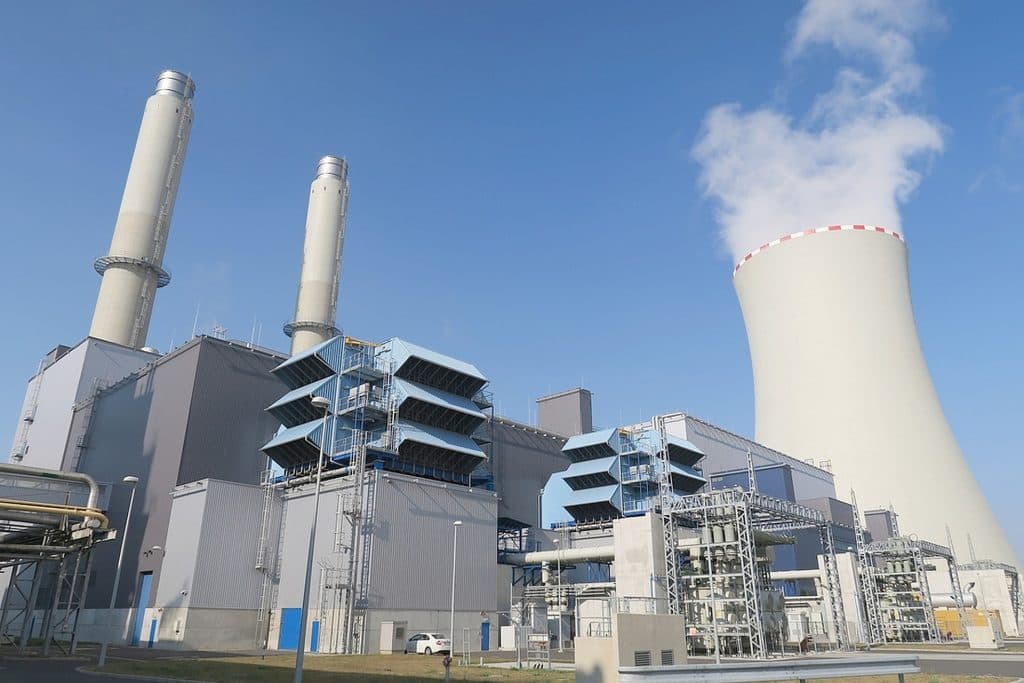
When Pavel Tykač's Sev.en group took over the Počerady lignite power plant from ČEZ three years early in 2020, it explained the move by saying it wanted to prepare in time to meet emissions limits. It is now seeking to extend its mercury exemption by almost another three years.
Počerady's operator filed an application to extend the current emissions exemption at the beginning of this year. Representatives of environmental organisations point out that the existing exemptions for many facilities in Czechia were already questionable, but they should clearly have been sufficient for the companies concerned to adapt to limits that had been known since 2017.
The current mercury exemption at Počerady is due to expire for two boilers on 30 June 2024, for one boiler on 31 December 2024 and for the final two on 30 June 2025. However, the operator wants to extend it for all boilers until the end of April 2027. Environmental organisations Greenpeace and Friends of the Earth Czech Republic (Hnutí DUHA), as well as the Frank Bold expert group, consider granting such an exemption unacceptable and contrary to the law, and will therefore join the administrative proceedings on the exemption.
The Počerady power plant was bought by the Sev.en group from the semi-state-owned company ČEZ. It was originally due to be taken over only this year, in 2024. However, the companies agreed to hand it over by the end of 2020. According to the new owner's statement, the reason for the earlier transfer of the plant was, paradoxically, preparation to meet emissions limits on time.
“After negotiations with ČEZ, Sev.en Energy will buy the power plant at a higher price, but three years earlier than originally planned. We want to prepare Počerady as soon as possible to meet the European Union's strict emissions limits applicable from 2021,” Sev.en Energy Group CEO Luboš Pavlas told iROZHLAS in October 2020.
Elektrárna Počerady generated revenue of CZK 14.5 billion in 2022 (the latest results published in the commercial register), CZK 4 billion more than a year earlier, and made a profit of CZK 930 million.
“There was plenty of time”
The emissions limits, which have applied since 2021 and have been known since 2017, require polluters not to emit more than seven micrograms of mercury per cubic metre of flue gas. Under the exemption granted, the Počerady power plant can currently emit 28 micrograms of mercury per cubic metre, but in reality the plant reached an emissions concentration of 15–17 ug/m3 in 2021 and 2022. The new exemption would set a limit ranging from 22 to 26 ug/m3.
“The Počerady power plant was granted an exemption from emissions limits several years ago – making it one of the largest sources of toxic mercury in the air – so that it could reduce mercury pollution by deadlines set by the operator itself. An application for a follow-on exemption for another two years is therefore an utter act of audacity and disregard for the environment and human health. This is a classic salami-slicing tactic. First an exemption for three to four years, now an extension to six. What would come next? Another extension? The authorities must not tolerate such an approach,” urges Jiří Koželouh, head of Friends of the Earth Czech Republic's energy programme.
“We applied for an emissions exemption for the same reason as the overwhelming majority of the other 22 large Czech power plants and heating plants: to gain time for applied research aimed at eliminating mercury emissions, for which no working solution existed at the time. And the research has finally borne fruit! Thanks to intensive cooperation with the Chvaletice power plant, the Czech Technical University and other entities, after years of testing we found that an additive can be used to effectively bind the problematic substance. We have now selected both the most suitable method for applying this substance and the contractor for the relevant dosing equipment. We have set a work schedule with firm deadlines until 2027, and need to extend the exemption only in order to install, fine-tune and properly test the technology,” wrote Sev.en communications manager Eva Maříková.
Exemptions were weak from the outset
However, the Frank Bold expert group supports Friends of the Earth Czech Republic's position and insists that the operator had plenty of time. “Even then (in 2021), we pointed out that the exemption decision did not contain sufficient safeguards that would genuinely lead the operator to modify the power plant within the required timeframe. This has now fully come to light – the operator did nothing during the exemption period and is now merely requesting a longer exemption. Such a procedure is clearly contrary to the purpose of the Integrated Pollution Prevention Act. I would be surprised if the regional authority were to permit such an exemption again,” said Frank Bold lawyer Eliška Beranová.
“Coal baron Pavel Tykač must be the biggest poor man among billionaires. He made more than CZK 90 billion from the energy crisis, paid by ordinary people in their electricity and heating bills, but apparently he must have squandered all that money somewhere, or someone stole it from him. How else can it be explained that he cannot afford to invest in new filters for the Počerady power plant? Given the way his wealth has grown, this is small change for Tykač. Yet he refuses to invest it in the environment and people's health,” fumes Lukáš Hrábek, spokesperson for Greenpeace Czech Republic.
However, Maříková counters with the outcomes of disputes over the exemption at Chvaletice, which was granted until 2027 from the outset. “We accept that eco-activists will try to block our plan, as they have over the past five years. After all, the regional court in Ostrava recently dismissed a lawsuit filed by activists against the Ministry of the Environment over a similar emissions exemption for another of our coal-fired sources – the Chvaletice power plant,” she said.
According to Koželouh, however, a cassation appeal is still pending in the matter.
They managed it at Tušimice
Officials at the Ústí nad Labem Regional Authority will now decide on the extension of the exemption, although participants in the proceedings may appeal its decision to the Ministry of the Environment. The current government states on page 50 of its policy statement that it wants to restrict exemptions allowing air pollution.
“It is clear that if there is a will, change can be achieved quickly. For example, at Tušimice, which belongs to ČEZ, they met the limits during 2022 and are essentially at half the emissions limit. They did not even use the entire exemption, even though it is an old power plant,” notes Koželouh.
“An exemption application may be granted only if the expert assessment submitted by the operator demonstrates that it will not result in significant environmental pollution, that a high level of environmental protection will be achieved overall, and that achieving emission levels associated with best available techniques would lead to costs disproportionate to the environmental benefits,” wrote Ústí nad Labem Region spokesperson Magdalena Fraňková, adding that if, after consideration, the plan did not meet the requirements of the Integrated Pollution Prevention Act, the regional authority could reject the application.
Coal-fired power plants do not merely emit mercury. According to 2012 data, Czechia was also among the countries with the highest mercury deposition per square kilometre, with 55 percent of this deposition coming from sources within the Czech Republic, Frank Bold says. Paradoxically, Czechia was also among the ten countries contributing most to mercury pollution in the Baltic Sea, despite being the only polluter not located directly on the coast.
In freshwater and marine environments, mercury is converted into methylmercury, which has highly toxic effects on the nervous system. It can cross the placenta and adversely affect the brain development of an unborn child in a pregnant woman's body. It accumulates in the human body and gradually passes into the developing organism of the child during pregnancy, the organisation notes.
Republished from EkoNews.cz, a website covering business and sustainability.
Translation disclaimer
This article is a machine translation of the Czech original and has not yet been fully reviewed. In case of any doubt, please refer to the Czech version.
Sdílejte článek prostřednictvím:
You might also like
8 October 2026, 10:05