9 October 2026, 06:22
Loading...
Northern Czech coal mines face reclamation, but flooding makes no sense
Ekonews.cz
24 July 2023, 10:32
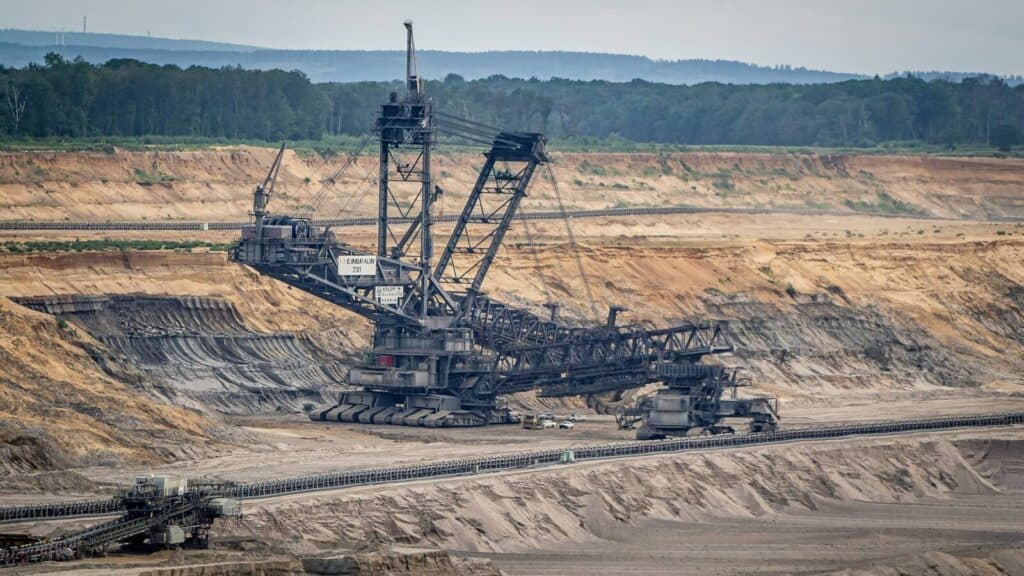
Four lignite open-cast mines in the Ústí Region were supposed to be flooded with water after mining ends. But according to water management experts, that makes no sense. Without a stable inflow, water in the pit would simply evaporate, meaning it would have to be topped up at considerable cost. New uses are therefore being sought for the pits. The ČSA mine will be the first to undergo restoration, followed by the Nástup–Tušimice, Bílina and Vršany mines.
Former plans for reclamation, or erasing the traces of mining, which had been envisaged since extraction began in the 1960s and 1970s, are proving unsuitable because of climate change. Water flows in the watercourses intended to fill the mines have declined since then, while evaporation is also a problem, as it is faster than before due to a warming climate.
“Such large volumes of water would evaporate from the lakes that the region would not have sufficient resources for natural, continuous replenishment. Topping up water to keep levels at the expected height represents one of the highest costs of managing a future lake. For the entire system of lakes, this amounts to several hundred million crowns a year,” explains Petr Lenc, director of mining companies Severní energetická (which mines at ČSA) and Vršanská uhelná (which mines at Vršany), which belong to the Sev.en group of billionaire Pavel Tykač.
Topping up a lake costs millions of crowns a year
Lenc has experience with mine reclamation. As the former long-serving head of Palivový kombinát Ústí, he was responsible for reclaiming the Chabařovice mine (Lake Milada near Ústí nad Labem) and the Ležáky mine (Lake Most). It was at Most, where flooding to the designated level was completed in 2014 and the lake opened to the public for recreation six years later, that it became clear the approach does not work very well.
“A lake without a natural inflow, supplied only by precipitation, its own catchment and hydrogeological inflows, is far from self-sufficient and must be expensively topped up through an industrial pipeline from the Nechranice reservoir. As the administrator, this costs us several million crowns a year,” says Ludvík Kašpar, director of the state-owned company Diamo. It is responsible for addressing the legacy of mining (uranium, ores and coal) and removing old environmental burdens. Although the state provides miners with water for the initial flooding of a mine free of charge, the lake owner must subsequently pay for topping it up to the designated level.
Based on this experience, the idea later emerged of trying to make future lakes through-flowing, self-sufficient and ideally interconnected, and the concept began to be reassessed. In 2019, the then ministers from the ANO movement publicly spoke about building hydropower plants and solar parks at the lakes, with the lakes serving not only recreation but also as “water storage in the landscape”. However, studies suggested that this was not the right path either.
“The results showed that surface water resources, particularly for the long-term sustainability of water levels in future lakes, are very limited. The main factors are evaporation from extensive water surfaces and the trend of climate change, says Kašpar.
They will leave it to nature
The Ministry of the Environment therefore began seriously considering leaving the post-mining landscape, at least in part, to develop naturally rather than flooding it. The ministry asked the Sev.en group two years ago to halt afforestation work in the ČSA mine area, where extraction is nearing its end and is expected to finish in two or three years.
“The nature conservation approach has changed from active reclamation to leaving it to nature,” said ministry spokeswoman Lucie Ješátková. According to the Nature Conservation Agency, which falls under the ministry, expert opinion has shifted over the past decade away from conventional reclamation towards so-called ecological restoration, meaning restoration by natural processes. This is happening in Western Europe as well as neighbouring Poland and Germany.
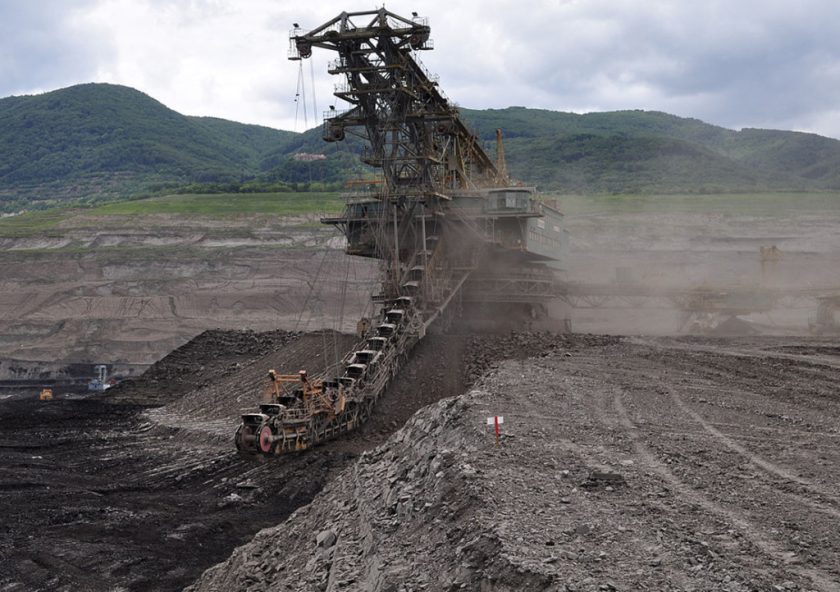
The ČSA and Vršany mines have already been confirmed as sites where, instead of artificial flooding, the area will be left to flood naturally and lake levels will fluctuate according to weather and climate conditions. At ČSA, the government endorsed this approach at the end of June: among other things, 11 square kilometres of specially protected area will be established under the administration of the Nature Conservation Agency. This will include a future water body created by self-flooding, where rare animal and plant species are already present and the “Most wilderness” is emerging.
The government is expected to discuss changes to the reclamation method for the remaining sites later this year. This does not mean that there cannot be anything else in the mined-out areas. Plans include photovoltaic parks or an industrial zone, while at ČSA the state is retaining a land reserve in case a pumped-storage power plant is built.
This also suits conservationists such as Hnutí Duha. “Personally, I think it is good that the government report considers economic use, for example the construction of a pumped-storage power plant, as well as leaving part of the area to natural development. It will be important for areas set aside for succession to be accessible and permeable, meaning not fenced off,” says Karel Polanecký, an energy expert at Hnutí Duha.
Miners can save money
In the Ústí area, mining is currently carried out by Severočeské doly, a subsidiary of the ČEZ Group that owns the Nástup–Tušimice and Bílina mines, and by the Sev.en group, which leases ČSA and Vršany from the state. Coal reserves in the mines would last for decades, but given the Europe-wide trend towards climate protection and a shift away from coal, mining will end much sooner. The current government refers to 2033 in its policy statement, while the previous government's expert Coal Commission proposed 2038.
The reclamation method will be up to the mining companies, but both groups are taking the changed concept into account. The Czech Mining Authority will approve the specific changes and procedures.
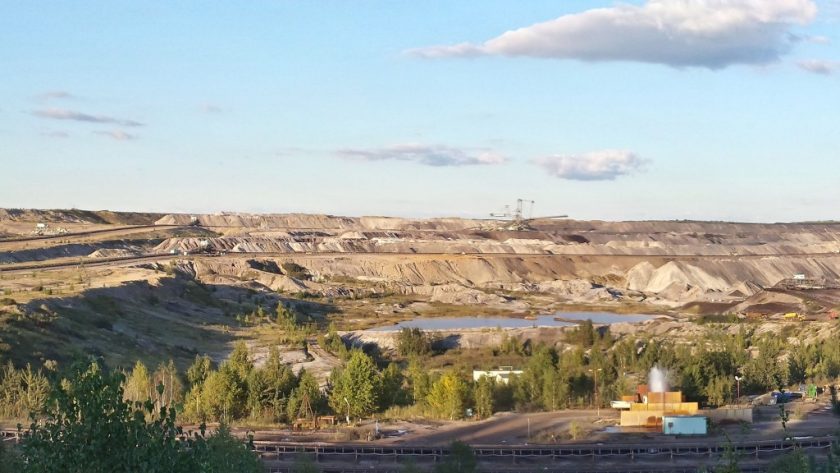
“Results from water management studies to date indicate a lack of water in the coming years. For this reason, it will probably not be possible to create the lakes as through-flowing bodies. A comprehensive assessment is now under way so that we can respond to current developments in both mining and water management,” said Kopecký of Severočeské doly. In his view, self-flooding is a more economical way of restoring the landscape than the originally planned managed water reclamation.
Leaving restoration to nature also suits the Sev.en group. It will save more than CZK 1 billion. Part of this will come from paying lower contributions into the reclamation fund: at Vršany, likely CZK 1 billion less than expected, while at ČSA it has already reached a preliminary agreement with the state to pay a surplus of up to CZK 950 million into the State Environmental Fund.
“The money would be used in the given area through grant programmes and would go to municipalities,” says Ješátková of the Ministry of the Environment. Tykač's group will also save because it will stop paying rent several years earlier. Rather than having to wait to return the mine to the state until the lake has been filled to the designated level, in the case of self-flooding it can hand over the mined-out area virtually immediately after the mine has been technically cleared and secured. Nature will take care of the flooding, which is not subject to any time limit.
Almost as large as Orlík
Plans for the artificial flooding of the Libouš site (the Nástup–Tušimice mine) and Bílina have not been completely abandoned, however. According to water management experts, a unique opportunity has emerged to build water infrastructure there. “This means connecting mines that currently have no inflow or outflow to the river network and turning them into pseudo-reservoirs where water can be managed and, as needed, either stored in times of surplus or released to supplement a watercourse and thus the entire river basin during drought,” explains Daniel Pokorný, director of the water management and river basin administration department at the Ministry of Agriculture.
In the case of Libouš, the water management study proposes connecting the future lake to the existing Nechranice waterworks on the Ohře River. It has a capacity of 290 million cubic metres and is used to augment river flows, supply industrial and agricultural businesses and water utilities, and provide flood protection. “Connecting it to the pit two to three kilometres away, at the Libouš site, would have an unprecedented water management effect: it would double Nechranice's capacity to 550 million cubic metres. Moreover, it would not need to be built; the hole is already there. The possibility of expanding the capacity of an existing water resource is a unique opportunity from a water management perspective,” Pokorný says. The country's largest waterworks, the Orlík reservoir, has a capacity of 700 million cubic metres.
The connection could run through a tunnel, but this would not increase flood protection downstream of the waterworks because water levels could not equalise quickly during a flood. The second option is an open channel, which preliminary estimates put at roughly CZK 20 billion. This would depend, among other things, on the channel's parameters.
“A geological survey is planned. The more stable the soil, the less of it needs to be excavated, so the land take may be lower than preliminary estimates suggest, Pokorný adds.
Land not owned by the state
At the Bílina mine, the benefits of potential flooding are less clear-cut. “There is the possibility of connecting it with Lake Most, which would no longer need expensive topping-up. But it would be up to Diamo to decide whether building a connecting channel would be worthwhile. Water discharged from the lake could also be used to supplement the low-flowing and poor-quality Bílina River,” Pokorný explains.
The quality of water in a potential lake is another question, and this could be helped by upgrading wastewater treatment plants on the Bílina River. “In theory, money from Sev.en's surplus reserve at the ČSA mine could be used,” the water management expert muses. According to expert calculations, flooding would take fourteen years because the Bílina River has users, the largest of which is Unipetrol Litvínov. They have priority for withdrawals, and only surplus water can be used for flooding.
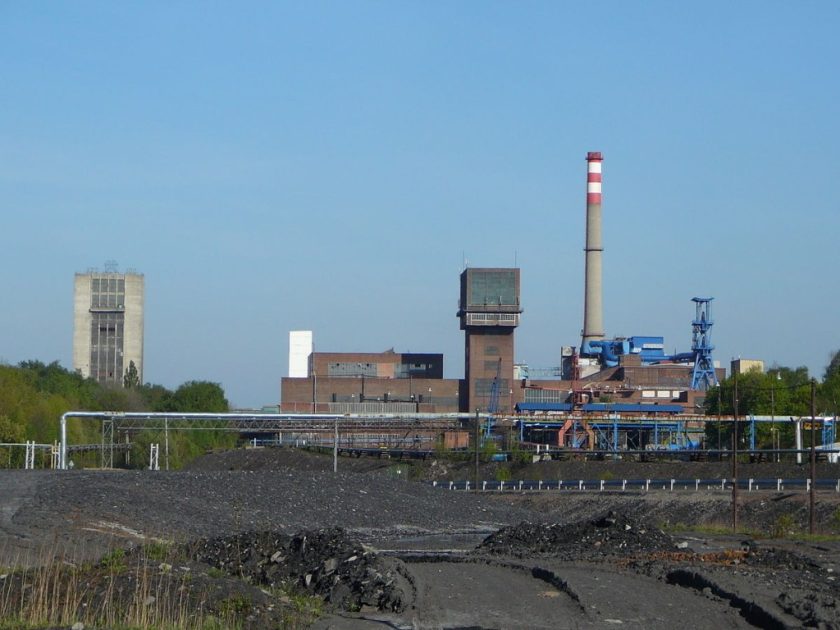
However, the state cannot decide alone in the case of Libouš and Bílina: it does not own the land. If it wanted to build water infrastructure there, it would probably have to buy it from the ČEZ Group. However, the group already has its own plans for the area: it wants to build photovoltaic power plants there and use the land for agricultural production, forestry, industrial zones or other energy projects.
“We respect the initiative of water management experts to connect the two water bodies. As regards the settlement of property rights for the residual pit, this will, should the connection be implemented, be subject to further negotiations between the investor and the landowner,” said Kopecký of Severočeské doly. According to him, the situation in this area is evolving and the company has certain visions that it is currently examining and preparing expert studies for. However, nothing specific is yet known.
The article is part of the series Where will the billions intended for the end of coal go?, supported by the Independent Journalism Foundation Fund.Republished from the online portal EkoNews.cz, a website covering business and sustainability.
Translation disclaimer
This article is a machine translation of the Czech original and has not yet been fully reviewed. In case of any doubt, please refer to the Czech version.
Sdílejte článek prostřednictvím:
You might also like

8 October 2026, 10:05