7 October 2026, 19:33
Loading...
Greenland in Washington’s sights: security or mineral resources?

Lukáš Lepič
19 January 2026, 06:13
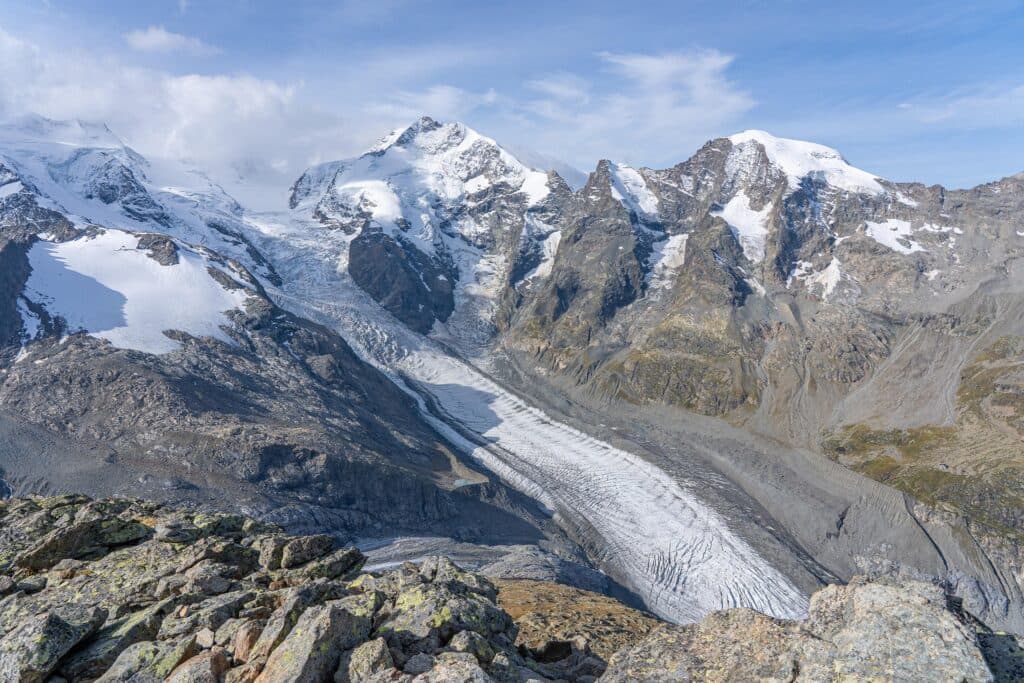
While the world is still absorbing the aftershocks of the US operation in Venezuela, Washington’s attention has shifted north. Greenland, formally administered by Denmark, is at the centre of geopolitical interest because of its strategic location, while its enormous but largely unexplored mineral wealth also raises questions. As global warming makes these resources increasingly accessible, the question is whether strict regulations will protect them forever.
Lithium, rare earth elements, oil and gas, climate change exposing new areas, and growing pressure from major powers are creating an explosive combination that could turn the world’s largest island into another hotspot in global politics. And although the US president said that the United States needs Greenland for national security, not its minerals, it is worth remembering that this very motive has recently played an important role in the foreign policy of the US administration. In addition to Venezuela, government officials have explicitly mentioned mineral resources, for example, in talks with Ukraine.
In this context, it is worth examining Greenland’s position. The largest island on Earth has some of the richest natural resource deposits in the world. These include critical raw materials such as lithium, uranium and rare earth elements, which are essential for technologies needed for decarbonisation, as well as vast quantities of hydrocarbons, including oil and gas.
This potential has already prompted extensive research by Denmark and the US into the commercial and environmental viability of new activities such as mining. The US Geological Survey estimates that Greenland’s northeastern coast, including ice-covered areas, contains around 31 billion barrels of oil equivalent in hydrocarbons. That is comparable to the total volume of proven oil reserves in the US.
Enormous potential, but still unexplored
The overall potential for mining, however, remains a big question mark. Around 80 % of Greenland is covered by ice, which has hampered exploration so far. There is therefore a strong likelihood that vast, still-unexplored deposits lie beneath the ice.
The scale of this unexplored potential is also reflected in the fact that Greenland’s concentration of natural resources is linked to its enormously diverse geological history over the past 4 billion years. Some of the oldest rocks on Earth are found here, as are pieces of native (non-meteoritic) iron.
The forces that have shaped local rocks over billions of years have also enabled gold, gemstones such as rubies, and graphite to accumulate in faults and fissures. Graphite, for example, popularised by the Chernobyl series, is key not only to nuclear power plants but also to the manufacture of lithium batteries. According to the Geological Survey of Denmark and Greenland, however, it remains “underexplored” compared with major producers such as China and South Korea.
In addition, areas such as the Jameson Land Basin appear to have the greatest potential for oil and gas deposits, analogous to the Norwegian continental shelf. A growing body of research also points to potentially extensive petroleum systems surrounding Greenland’s entire coastline.
Climate change and pressure from major powers are opening up new possibilities
The main challenge so far has been the difficult terrain, which makes commercial exploration disproportionately expensive. Progress in exploring beneath the ice is slow, and sustainable mining is likely to prove even more difficult. But the current melting of glaciers due to global warming is opening up new possibilities. According to NASA, 266 million tonnes of ice melt on the island each year, making more and more areas accessible.
This could be compounded by the aforementioned pressure from the US to relax strict mining regulations. The Greenlandic government enforces these through complex legal frameworks dating back to the last century, and they also affect the granting of new exploration and mining licences. As in the case of Venezuela, the question is how far previously inaccessible mineral deposits may be able to realise their potential under the weight of international developments in the Western Hemisphere.
Translation disclaimer
This article is a machine translation of the Czech original and has not yet been fully reviewed. In case of any doubt, please refer to the Czech version.
Sdílejte článek prostřednictvím:
You might also like
7 October 2026, 16:15
7 October 2026, 11:20