9 October 2026, 06:22
Loading...
Czech households to receive CZK 40,000 less in solar subsidies, but prices have fallen year on year
Ekonews.cz
29 February 2024, 15:16
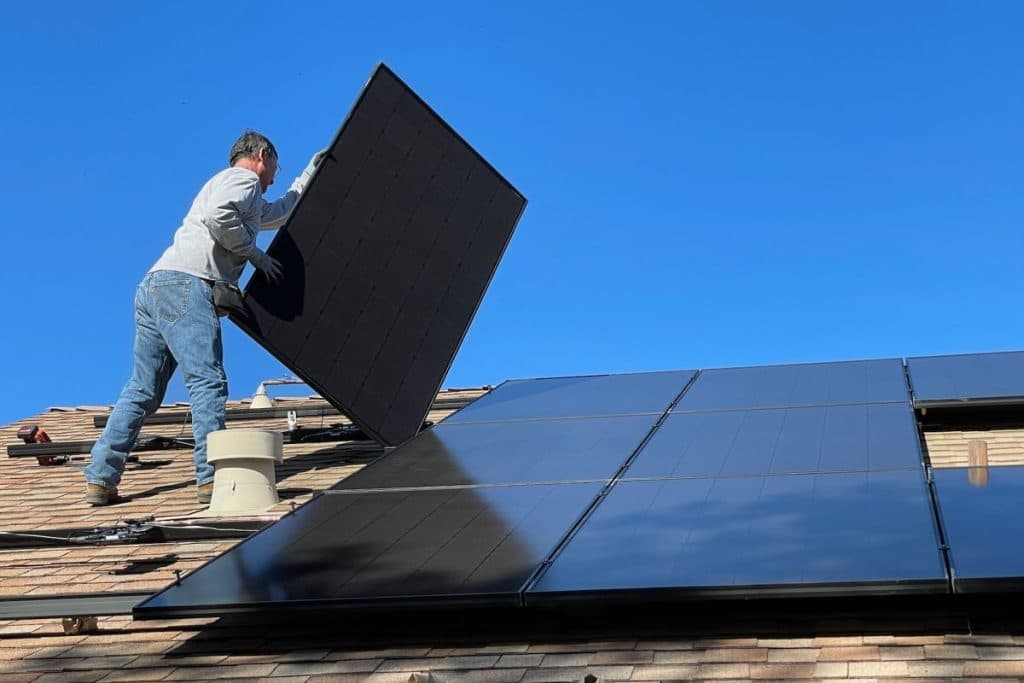
People had just two weeks to adapt to the new terms for subsidies for residential solar power systems. The subsidy for photovoltaic installations without insulation is being cut by CZK 40,000. The result? Customers began putting mass pressure on installation companies to submit applications under the old terms, while government servers crashed.
At the last minute, the Ministry of the Environment changed the terms of the New Green Savings Programme (NZÚ), including subsidies for residential solar power systems. Until then, people could receive up to CZK 200,000. Under the new rules, however, this is only available if they combine the installation of panels with insulating their home. The maximum subsidy for panels without insulation will now be only CZK 160,000.
The timing of the change, which took effect as early as 15 February, was particularly surprising. Everyone who submitted an application after that date will receive CZK 40,000 less for a residential solar system without insulation. “This announcement clearly did not come sufficiently far in advance for people to prepare for it. It caused significantly higher demand for photovoltaic systems under the original subsidy terms. Towards the end of this two-week period, the relevant government servers also crashed,” says Kateřina Pištorová, spokesperson for Woltair, which installs photovoltaic systems.
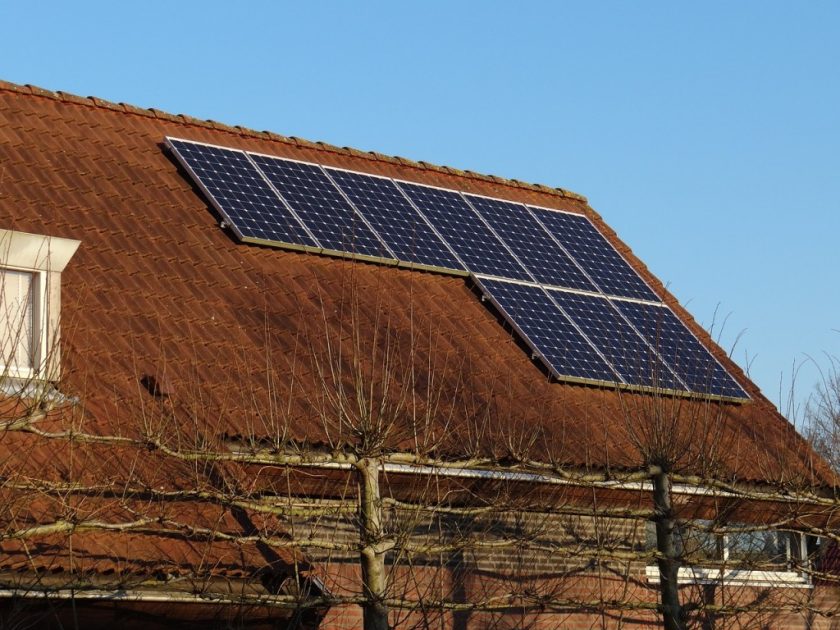
New customers, as well as those who already had enquiries under discussion, naturally began pushing to finalise contracts at the original subsidy levels, she says. “It also required a great deal of effort on our part. We were closing customer enquiries literally until the very last moment,” Pištorová adds.
The sharp increase in demand is also confirmed by installation company Schlieger. “Compared with the same period in previous months, the first two weeks of February saw a 100% increase in the number of applications. Interest was significant and unusual in the first half of the month,” says Pavel Matějovič, Schlieger’s chief operating officer.
The ministry says there was enough time to prepare
According to Woltair, major fluctuations occur in the residential green energy segment in all markets where the company operates. In Czechia, however, changes are more than frequent. “It is clear that subsidies are highly appealing to households. The same situation occurred in June last year before the subsidy hiatus. However, these market fluctuations are very demanding in terms of processing the necessary administration, from receiving an enquiry to signing contracts, while also destabilising the supply side, as they can lead to overstocking or understocking among suppliers and installation companies,” Pištorová explains.
The company would welcome a more stable business environment in which market behaviour can be predicted. “In this case of changes to subsidies, there was also a leak of information from the relevant authorities, which spread throughout the company as unverified information. We call for a more cultivated market segment,” Pištorová stresses. At the same time, according to Woltair’s experience, none of its clients withdrew their enquiry because of the more modest subsidies. Most customers wanted to conclude a contract before the original terms ended.
The Ministry of the Environment itself does not consider the 14-day period for introducing the new terms to be a problem. “We had announced through the media that we were preparing to make adjustments around mid-January. This was followed by a press conference on 31 January. Companies seeking to make the most of the situation, mostly through misleading information, began sounding the alarm even earlier. Intermediary firms offered customers the subsidy at the original level based solely on a signed contract; applicants did not need to have a project prepared. We believe there was sufficient time to consider the options,” ministry spokesperson Dominika Pospíšilová said.
The Solar Association, which brings together companies operating in the photovoltaic sector, agrees with the ministry’s view. “It is enough time for companies to prepare. For us, it was crucial that there should not be a long subsidy hiatus without the new subsidy terms being known. We are pleased that we managed to secure this during the negotiations,” notes Jan Krčmář, executive director of the Solar Association. The association was, incidentally, part of the working group that repeatedly discussed the update of the subsidy terms. Krčmář considers the outcome a good compromise.
Only half of surplus output can be fed back into the grid
And why were subsidies for photovoltaic systems reduced in the first place? Simply because the ministry wants people to renovate their entire homes rather than put panels on the roofs of buildings with major heat losses. “The aim is to support comprehensive renovations. That means when I am installing photovoltaics, I first look at whether my roof is insulated,” explains Environment Minister Petr Hladík (KDU-ČSL).
“We need to target funds towards maximum energy savings. A financial bonus of CZK 40,000 is therefore now available to applicants who insulate their home in addition to purchasing photovoltaics. The bonus includes CZK 10,000 for connecting a water heater to photovoltaics and an exceptional CZK 30,000 bonus for the specific combination of a solar system and insulation,” Pospíšilová adds. She says falling photovoltaic panel prices also play a role. She also told Ekonews that nothing more will change this year in subsidies for purchasing photovoltaic systems without insulation.
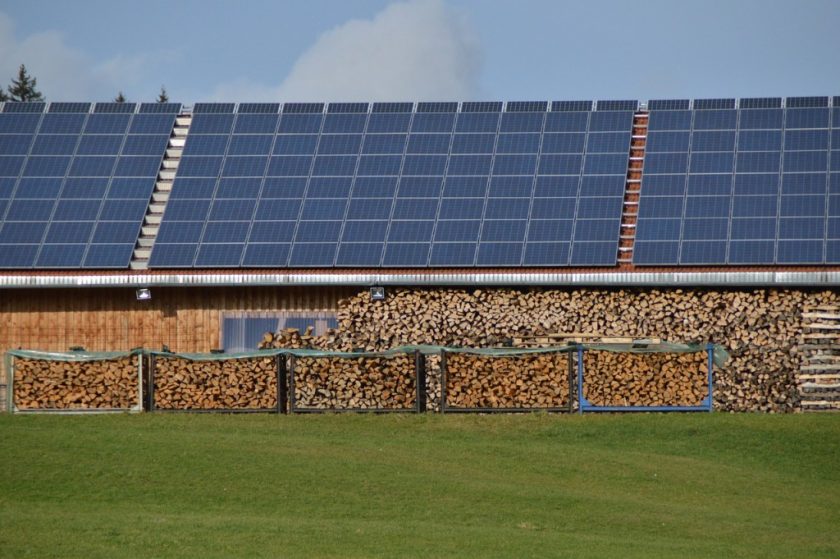
The new terms also bring another change: a restriction on feeding generated electricity back into the grid. This will now be permitted only up to 50% of the maximum output of the photovoltaic system. According to the ministry, the measure is intended to enable the connection of more residential photovoltaic systems. Those with panels on their roofs who want to feed surplus electricity into the grid will therefore now be limited by this cap.
In practice, this means the state will limit the amount of clean, cheap electricity that can flow into the grid. Low-voltage grid capacity is so overloaded in many parts of Czechia that it does not allow further systems with grid exports to connect. According to Woltair, however, people also rushed to submit applications because of this new condition, in order to apply for subsidies under the old rules, without restrictions on grid exports.
Photovoltaics are more affordable than ever
Despite stricter subsidy terms, installation companies are seeking to make it easier for people to obtain photovoltaic systems and other energy-saving equipment. For example, Woltair tested self-service sales at the end of last year, allowing customers to purchase a heat pump or photovoltaic system themselves using a specially developed digital form.
“We have thus managed to shorten the administrative process from around two weeks to just under three days. Since the beginning of the year, we have sold 50% of equipment this way,” Pištorová says. Meanwhile, Schlieger is compensating new customers for the reduced subsidies through a CZK 40,000 discount on the total project price until the end of March.
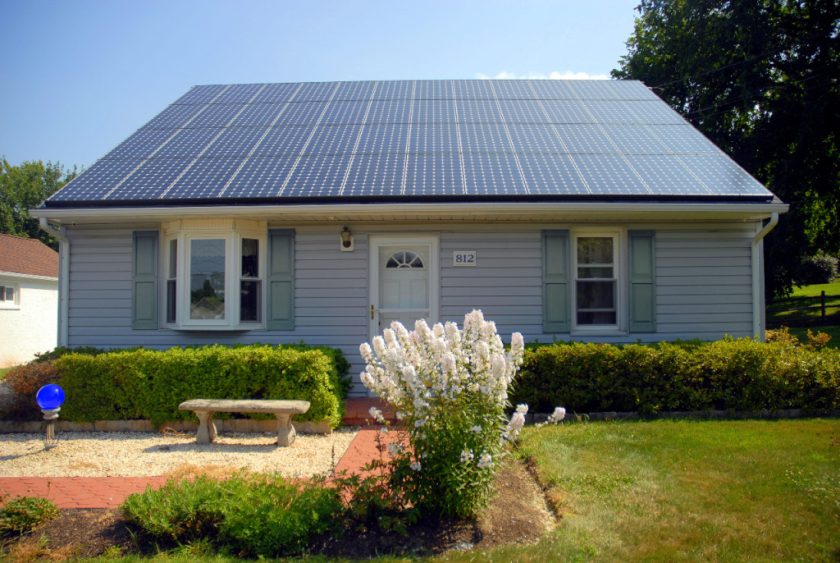
None of the companies contacted, nor the Solar Association, expect the subsidy reduction to dampen Czech interest in rooftop panels. “We see no reason for interest to decline. Photovoltaics are now cheaper than in the first quarter of last year, even with the reduced subsidies,” Matějovič of Schlieger assures. For example, the company’s price for a 10kWp installation has fallen by CZK 51,000 compared with the first months of last year, despite the subsidy changes.
“Changes in component prices and VAT have resulted in a price that has never been lower,” Matějovič states. According to Krčmář, the subsidy reduction also responds to falling market prices. “We believe that if equipment prices rise, the ministry will adjust subsidies upwards again. In addition, we hope the main motivation for installing a photovoltaic system is not subsidies, but protection against possible increases in energy prices,” Krčmář says.
Republished from EkoNews.cz, a website covering business and sustainability.
Translation disclaimer
This article is a machine translation of the Czech original and has not yet been fully reviewed. In case of any doubt, please refer to the Czech version.
Sdílejte článek prostřednictvím:
You might also like
8 October 2026, 10:05