9 October 2026, 06:22
Loading...
Czechia has room for twice as many waste incinerators as it has now, environment minister says
Ekonews.cz
27 November 2023, 14:58
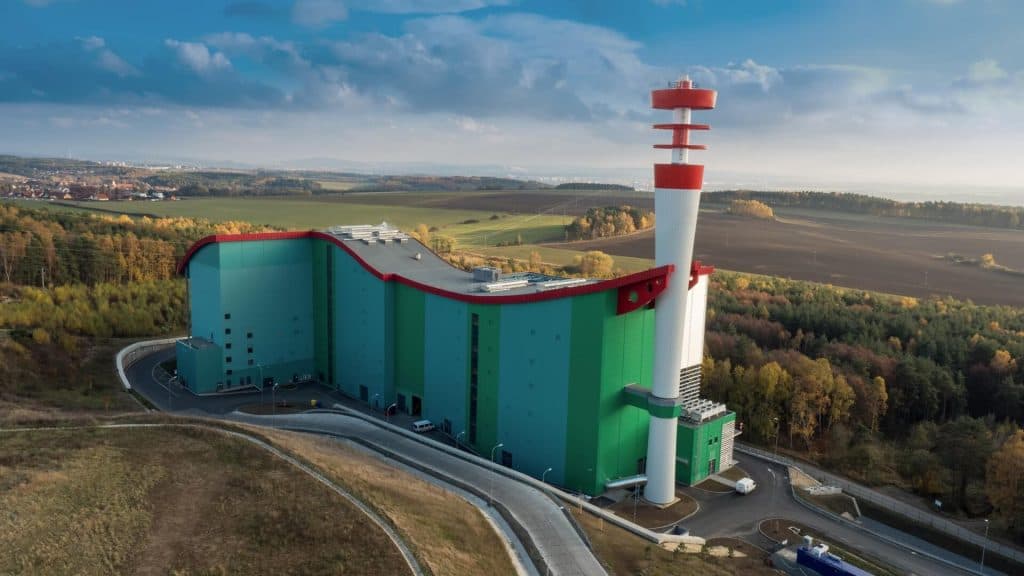
There are currently four large waste-to-energy (WtE) facilities, commonly known as incinerators, operating in the country. They process around 710 thousand tonnes of waste each year, while under the law Czechia can dispose of more than twice that amount in this way.
Projects gained momentum mainly after the rules made it possible to obtain grants for WtE facilities from the Modernisation Fund. According to Environment Minister Petr Hladík, it is now necessary to recalculate how many projects can still receive subsidy support.
The Waste Act sets a limit under which 25% of total municipal waste may be used for energy recovery in 2035. The aim is to ensure that waste is not merely incinerated alongside landfilling (only 10% of municipal waste is to be landfilled in 2035), but is recycled and returned to circulation. The share of waste incinerated in Czechia currently stands at around 12%.
The Environment Ministry recently submitted the long-discussed law on deposit returns for PET bottles and cans for consultation. When could it take effect?
It will probably go to the government at the beginning of next year, and then enter the legislative process. It can take effect no earlier than one year after approval by the Chamber of Deputies, because a number of steps need to be taken. The earliest date is therefore mid-2025, or possibly the beginning of 2026.
Do you expect it to face difficulties in being approved?
We will see. I do not see much that is controversial about it, because Czechs, Moravians and Silesians support deposit returns. There are a number of arguments for doing it, above all because of material circularity. Today, an old plastic bottle is not made into a new plastic bottle; today it becomes a sweatshirt, a car mat or something similar. At the same time, we are not meeting, or will not be able to meet, the EU collection targets we have for 2029: collecting 90% of beverage PET bottles and cans placed on the market.
Beverage producers say that unless they have a guaranteed right of first refusal to buy PET material in the deposit-return system, it will not work properly...
There will certainly be an option to purchase PET. But we are not making this law for beverage producers. We are making it for the circular use of these two materials. PET and cans are only the tip of the iceberg, because we are dealing with the circularity of a range of materials, such as concrete, asphalt, clothing, glass, toys, bulky furniture and batteries.
Can circularity also be achieved for plastics other than PET?
Certainly, because the yellow-bin system will remain in place after the introduction of deposit returns. In municipalities that send waste to additional sorting lines and are capable of doing so, we would like to introduce multi-material collection. This means that one container could hold plastic, glass, aluminium and metals, for example.
Why?
For two reasons. Our cities are not expandable, and I already speak of bin smog. So there is an opportunity here for multi-material collection, provided that the municipality has the technology. Secondly, we can make the collection system more efficient.
But back to the yellow bin. Even now, due to both legislation and circularity, we are seeing a gradual shift from non-recyclable plastic packaging to recyclable packaging. The recyclability rate of plastic packaging will increase. This is clearly visible in the household chemicals and cosmetics segment, where the shift to PET is very noticeable.
But the question is whether recycling will take place mechanically, as it does with PET, or chemically, such as through pyrolysis, which Unipetrol is now preparing.
Today’s system of manually sorting materials is very outdated and one fine day it must end because of its inefficiency. The future in Czechia lies in further sorting mixed municipal waste. So far, however, only one municipality does this: Ostrava.
The waste management plan clearly points to the need for material recovery, but the technologies are not yet in place; they are only beginning to take root. Chemical recycling may be the future, but more for industry, which will need to blend recycled material into products. The output of chemical recycling should not be fuel, as that makes no sense at all, but a raw material blended with virgin material.
Will other plastics also have a mandatory recycled-content share, as PET does now, meaning that manufacturers of household chemicals packaging will also be pushed to use it...
There are two paths: legally mandating the blending in of a certain percentage of recycled material, or pursuing circularity. That means recycling as much as possible and not landfilling. The landfill ban certainly will not be postponed; it is set for 2030. In 2035, at most 10% of mixed municipal waste may be landfilled, and the infrastructure needs to be built by then.
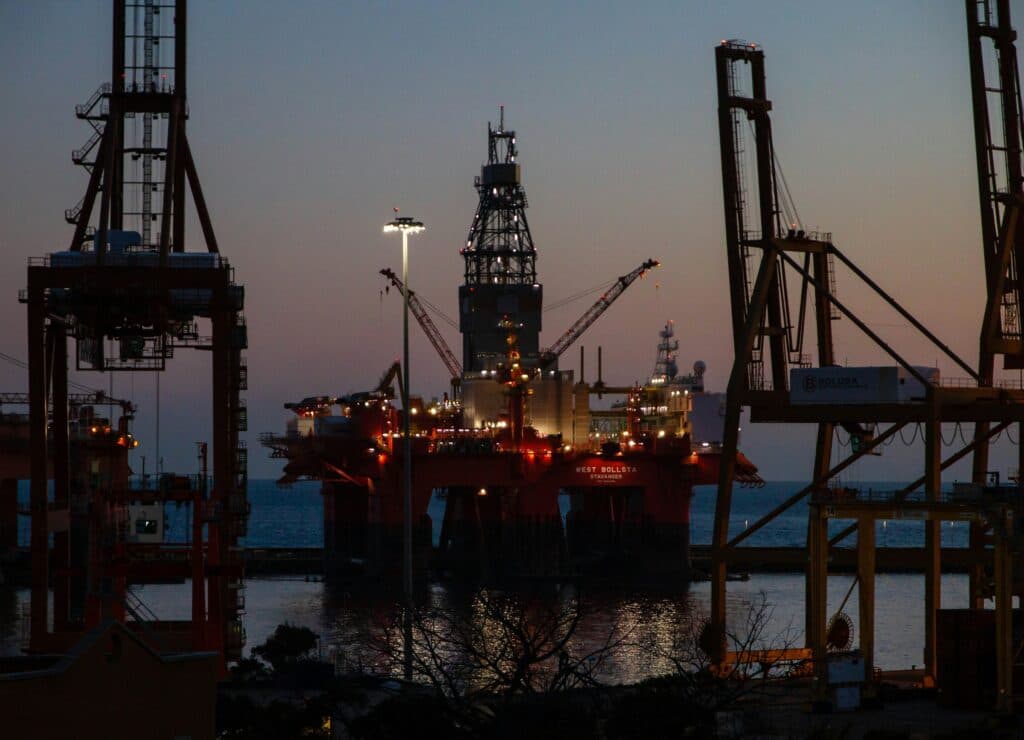
Between landfilling and recycling, as an intermediate step, are waste-to-energy (WtE) facilities, known as incinerators. There are currently four in Czechia. How many more could be added? Under the Waste Act, the share of waste going for energy recovery in 2035 is to be no more than 25%, while today we are at around 12%. Does that mean there is room to double it?
In simplified terms, yes. Today, around 710 thousand tonnes of waste are used for energy recovery at four facilities, while the potential is around 1.8 million tonnes, so slightly more than double. We are monitoring a number of facilities, including in Mělník, České Budějovice, Přerov, Karviná, Kolín, Planá nad Lužnicí, Tábor, Brno and Prague. Some are still only at the project proposal stage.
We now want to recalculate whether we will continue to support WtE facilities with subsidies or not. I think it was very good that we negotiated the scheme as the second country after Poland. We can now see clear projects here, seven of which have received grants. But the calculation will also be affected by whether the Brno project is ultimately built or not.
Do you mean the expansion of the Sako Brno incinerator?
The expansion of Sako with a third boiler, for around 144 thousand tonnes of processed waste. If it is not carried out (Brno City Council has so far halted the project, editor’s note), there is room for further support if all those currently receiving grants proceed and bring their projects to final implementation. That is why we are recalculating whether we would continue to support incinerators with subsidies.
So, whether the new projects will cover the “remainder”?
But besides conventional waste-to-energy recovery, we also have multi-fuel boilers. That is energy recovery, so it counts towards this percentage. The same applies to boilers for solid recovered fuel (SRF), one of which is now being built near Přerov (a multi-fuel boiler at the Přerov heating plant, where non-recyclable waste in the form of SRF and biomass will be used instead of coal, editor’s note).
How do you view the criticism of incinerators in this context? Arnika has now published an extensive study, and the criticism is twofold: the release of toxic substances from fly ash, and the fact that waste incineration is no better than burning fossil fuels from a CO2 perspective. Are we creating another problem by expanding incinerators?
We need to say what happens to municipal waste today. It still has a relatively large biological component and in most cases it is landfilled. And the biggest problem with landfilling is the creation of methane. Around 28% of methane in Czechia currently comes from landfills.
Methane is a greenhouse gas 25 times worse than CO2, and that is the problem. With WtE facilities, given current technologies, separators and filters, we are talking about absolutely negligible quantities. For some substances, actual values are up to an order of magnitude lower than the limits set across Europe by regulations.
Do you mean methane leaks? Because landfills are supposed to capture methane...
Yes, methane leaks from landfills into the atmosphere. Despite methane capture and its possible energy use, some leakage still occurs. One tonne of methane is equivalent to 25 tonnes of CO2. Therefore, one tonne of waste is calculated as around 1.2 tonnes of CO2 through methane.
I understand methane releases from landfills, but how emissions-intensive are WtE facilities? They too will probably have to pay for emissions allowances eventually...
The level of emissions here depends to a large extent on the composition of the waste being incinerated. The biogenic component of waste incinerated in WtE facilities is counted as CO2-neutral. Depending on this share, emissions from one tonne of incinerated municipal waste range from around 0.7 to 1.2 tonnes of CO2.
The discussion will continue; the emissions framework for 2030 to 2040 has not yet officially begun to be debated. In the long term, the Nordic countries, especially Finland and Sweden, have pushed for WtE facilities to be subject to emissions allowances. We will see how it all turns out, because unlike western Europe, a number of countries in central, southern and eastern Europe have not yet completed their capacity build-out.
I think there is a major difference between using WtE facilities to burn waste, generate electricity at 40 to 42% efficiency and let the heat go to waste, and using that heat for heating. We cannot take the same view of two facilities, one of which releases the vast majority of its energy as heat into the air, thereby worsening its climate impact, while the other uses that same heat. My position in negotiating the next emissions framework will therefore be to clearly distinguish between these two types of facility. Their climate impacts are radically different.
Above incinerators in the waste hierarchy are recycling and the circular economy. At a conference in June, you mentioned a plan for lower VAT in the EU on products made from recyclates. What came of it?
We opened the issue and subsequently held a seminar for all member states in Brussels in October. A number of states support it, while some are sceptical. We are now lobbying intensively to make it happen. We also have the support of the European Commission, but it will then have to be approved unanimously by the Council of Finance Ministers.
Some states support lower VAT but are sceptical about reopening the annex in the legislation, because that could trigger further and further discussions. We are therefore also trying to devise the process so that it is safe and states have no concerns.
You also spoke about higher taxation of primary raw materials, namely plastics. Was that just an idea, or has it developed further?
We are not dealing with it now. Nevertheless, for an even more dynamic development of circularity, economic incentives are needed to support products made from recyclates, or to stop supporting products made from materials that are not recyclable. We currently have quite a lot of other work, but differentiation through economic incentives is the right path.
The prime minister spoke about this recently, and he is right that the Czech Republic fell behind in developing renewable energy sources, and it will now cost us more. European countries with a larger share of renewables have cheaper electricity. That is reality.
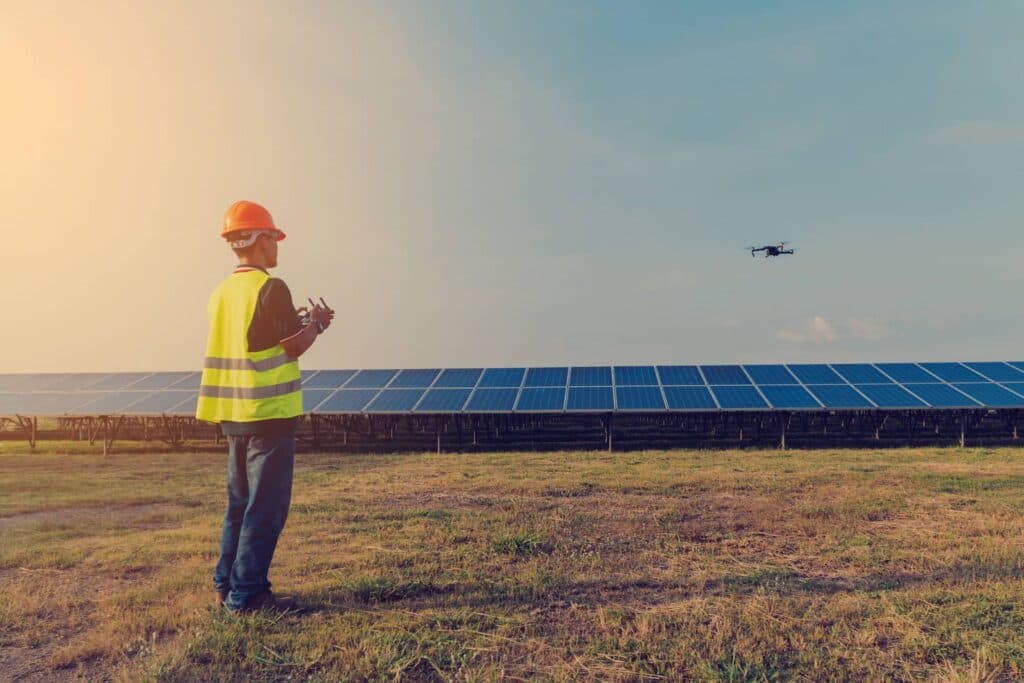
Whether it concerns photovoltaics, heat pumps or wind, we want to increase installed capacity fivefold by 2030. It is ambitious but realistic. As for heat pumps and photovoltaics, I have no concern that we will not achieve this. For wind, we will have to establish so-called acceleration zones, and we are already working on that. My vision is for a small number of acceleration zones, carefully selected in advance following discussions with regional representatives. We will conduct SEA (strategic environmental assessment, editor’s note) for them, put them into legislation, and an investor will then be able to obtain a permit there within a year.
How many wind turbines could that involve?
Today we have around 330 megawatts of capacity; a fivefold increase corresponds to around 1.5 gigawatts, so 1.2 GW will be added. Five- to six-megawatt turbines are now being installed, so that means 200 to 220 turbines. In practice, it is just a few wind farms across Czechia. It does not mean thousands of turbines; it is not some bogeyman. On the contrary, there are a number of sites in former mining landscapes that were used industrially and are well connected to the distribution and transmission grids. We are considering all these options, and the attitude of residents and mayors is changing considerably in many locations. I see this from the last three referendums, two of which supported wind turbines and one opposed them.
People must know that having such generation close to them has a positive economic impact for them. Here, the possibility of involving wind energy in community energy schemes and reducing the overall financial impact directly for residents or the municipality will help.
So you are now identifying acceleration zones?
During the winter months, we would like to discuss them with regional representatives, and we will listen to their views as well. We are trying to examine this from every angle: environmental impact, restrictions arising from other legislation, development plans and the Czech Republic’s defence objectives. We are trying to reconcile all of this.
Czechia is also a strong supporter of nuclear energy. Building reactors is capital-intensive, and that will be reflected in electricity prices. Will it lock them at a higher level than if we instead supported even greater development of renewables? How do you see this?
The Czech Republic’s future energy mix will be a combination of renewables and nuclear power. These plans are not a nuclear energy boom. Rather, we are realistically considering replacement, because the current reactors will simply reach the end of their lives, so the assumption for the greatest development of nuclear energy in Czechia by 2050 is actually capacity 50% higher than current levels. For renewables, it will be multiples by 2050. It is more a question of stability and diversification. It is relevant to ask about affordability and speed. Here again, previous governments simply fell behind. If I look at Slovakia, they are in a completely different situation.
We often talk about phasing out coal, and some people ask why Europe does not understand the Czechs. But we have to look at Europe as a whole. Not many countries use coal on a large scale. Apart from Poland, us and Bulgaria, coal is not represented so heavily in the energy mix. Greece and Germany use it too, but substantially less. They have alternatives, whereas we and the Poles do not yet have alternatives.
Do you mean that in relation to nuclear energy?
That is right. There will certainly be a discussion in the future about which technologies will continue and whether they will make economic sense. It is absolutely right that, after long years of inaction, our government has launched the tender and that it will be completed. Also because we can see how individual units at Dukovany, and subsequently at Temelín, will reach the end of their lives.
As you yourself noted, we had two presidents for 20 years, one of whom denied climate change and the other mocked it. This contributed negatively both to the atmosphere within political representation and to shaping Czech public opinion. Thank goodness we now have a president who, on the contrary, clearly describes climate change and shows what a threat it is to Czechia as well. Our agreement with the president is absolute; we often discuss and address this matter.
As for the government as a whole, I feel support there. And we are taking concrete steps. It is a major societal problem that will have major impacts on future generations and, in the form of drought, uneven rainfall and severe extremes, on our generation as well. That is why I place very strong emphasis on adapting cities, municipalities, open countryside and the landscape to climate change.
Republished from the online portal EkoNews.cz, a website covering business and sustainability.
Translation disclaimer
This article is a machine translation of the Czech original and has not yet been fully reviewed. In case of any doubt, please refer to the Czech version.
Sdílejte článek prostřednictvím:
You might also like
8 October 2026, 10:05