25 September 2026, 09:51
Loading...
Decline in new Czech solar installations accelerated last year, while batteries increased

oEnergetice.cz, ČTK
15 January 2026, 13:31
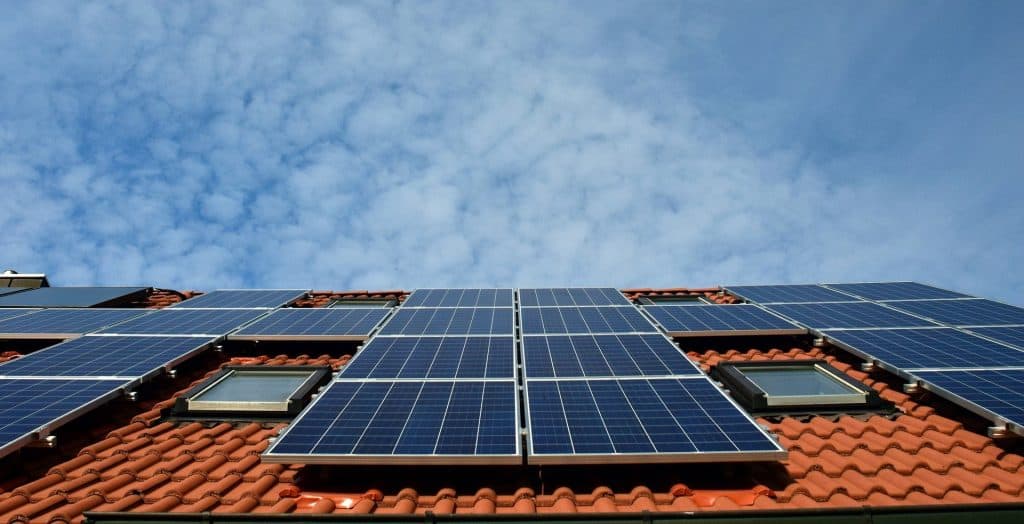
The decline in new solar power plant installations in Czechia accelerated last year, while batteries began to increase. A total of 27.298 photovoltaic power plants were newly connected last year, 17.295 fewer year on year. The total capacity of new sources fell by almost a third to 696 megawatts (MW). Energy storage facilities, meanwhile, are gradually increasing. Jan Krčmář, executive director of the Solar Association, said this at a press conference today. He noted that the decline in demand last year led to the bankruptcy of a number of established solar companies.
More than 239.000 photovoltaic power plants are now connected in Czechia. Their installed capacity is 5,16 gigawatts (GW). The vast majority are systems on the roofs of family homes.
Last year therefore continued the trend from the previous year, when fewer systems were installed but the share of larger sources began to grow. According to the association, the main reason for the decline is lower interest from households, which had been the main source of demand in previous years. According to Krčmář, in addition to market saturation from previous years, this development was also driven by the renewed suspension of subsidy programmes.
The share of corporate customers is therefore growing, with newly commissioned corporate solar power plants now exceeding the residential sector in capacity.
Storage facilities, meanwhile, are gradually increasing. A total of 546 MWh of batteries were connected last year, eight percent more year on year. According to the AKU-BAT Energy Storage Association, even faster growth can be expected this year. A key impetus is the Lex OZE III amendment, which has allowed standalone battery systems to be connected to the grid since last October.
"We are on the threshold of a battery revolution, but investors must be cautious. The current volume of connection applications is equivalent in capacity to almost fifteen times the maximum load of the Czech electricity system. It is clear that the vast majority of these projects will not be implemented," said Jan Fousek, director of the AKU-BAT CZ Association.
According to him, the problem is so-called blanket connection applications, which account for around 65 percent of all applications submitted and thus block capacity. They are often submitted by newly established companies seeking to use reserved capacity for investment speculation.
Krčmář noted that the decline in demand for new installations last year led to the bankruptcy of a number of solar companies, including established providers. Woltair, Solek, S-Power Energies and nanosun were among the companies that entered insolvency last year. According to Krčmář, other companies in the sector are already gradually adapting to the new market conditions.
"Installation companies invested heavily and hired new employees during the period of massive construction, and they now face uncertainty due to the unclear direction of the New Green Savings programme," Krčmář noted.
The association therefore called on the government to restore the subsidy programmes.
Translation disclaimer
This article is a machine translation of the Czech original and has not yet been fully reviewed. In case of any doubt, please refer to the Czech version.
Sdílejte článek prostřednictvím:
You might also like

24 September 2026, 11:23

24 September 2026, 10:30
24 September 2026, 06:56