9 October 2026, 06:22
Loading...
Energy cost savings are not just about photovoltaic plants, says Czech energy manager
Ekonews.cz
5 September 2023, 12:21
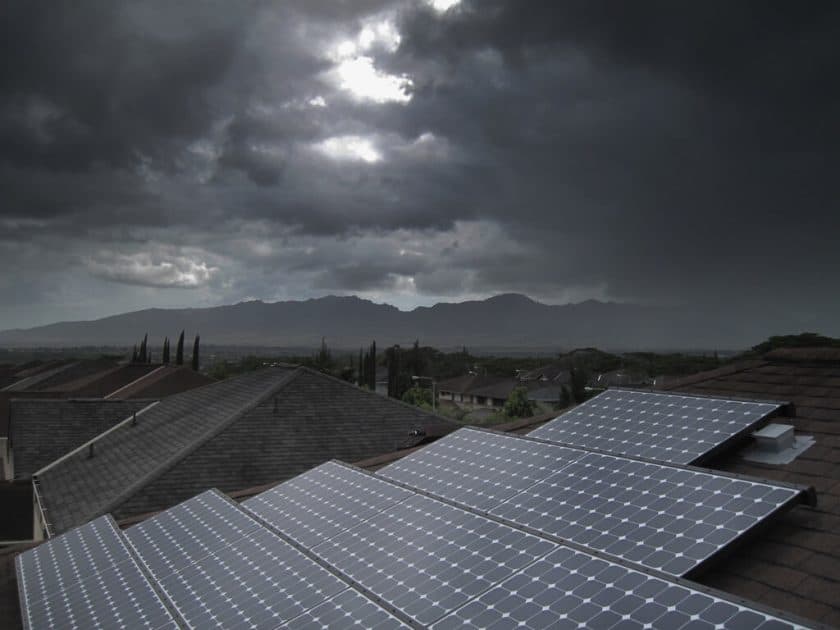
For decades, he has advised towns and villages on how to save as much money as possible on their electricity bills. Michal Svoboda sees the solution in comprehensive projects involving thorough insulation, replacement of windows, light bulbs and appliances, or an on-site energy source. “We must approach green energy in a purely rational, rather than emotional, way, as we are often accustomed to doing,” he warns.
How should we understand the work of an energy manager such as yourself?
He is a strategic planner responsible for ensuring that a municipality does not spend more on energy than necessary. He is someone with a holistic approach to energy – familiar with opportunities for savings and on-site energy generation, he sets the priorities for projects that are then assigned to the relevant energy specialists. He must keep track of current trends, and that is not just an empty phrase, because the pace of innovation in energy is dizzying and continues to accelerate. His role is strategic, not technical. He belongs in the strategic development department, not the administration department. That is where an energy technician may sit, with whom he is often confused.
What steps should he take first in a municipality?
Every manager must first get his house in order – take stock of all areas of energy use, especially consumption. And that is not easy. He faces painstaking work lasting several months. He starts by compiling the total consumption of all municipal buildings. It may seem obvious, but most villages and towns in the Czech Republic do not even remotely have these data in one place.
Does every municipality already have this position today?
We certainly do not have enough managers, although the situation is better than it was years ago. Good practice can be found, for example, in Prostějov, Písek, Kladno and Litoměřice, as well as in other towns and villages. For smaller municipalities, the problem is that they do not have enough work for a dedicated employee. Developing a strategy for three buildings is not a full-time job. One of my missions is to persuade small local authorities to join forces for this purpose. It makes no sense for each of them to have its own strategy. The sun shines exactly the same across one area, the same stream runs through it, and the wind blows in much the same way. Local mayors also often know one another, meet and address problems together.
Who can become a manager?
People who enjoy energy are all around us. They do not have to be nuclear physicists. Instead, we are looking for project managers who have an affinity for technology and a willingness to learn. They do not need to be able to describe a fission reaction in every detail in order to help towns and municipalities optimise their energy use and, consequently, their environmental impact. It is enough for them to understand how electricity is generated, how it is distributed and where it is, figuratively speaking, lost. So it is a job that can be done by someone with secondary-school-level maths and the ability to use Excel.
Once a mayor knows how many kilowatts are being used and where, can they start considering their own solar panels, for example?
Rushing to build photovoltaics can often be unnecessary. Any on-site source should only come into consideration once it is clear how much energy the community will actually use. Energy is becoming a human need like any other. A village does not have ten shops when one is enough. Under European rules, people do not form communities in order to make as much money as possible, either.
Savings come first. A manager can start simply by replacing light bulbs in the local nursery school and end with a comprehensive refurbishment of the municipal office. If he can bring a building from the worst G standard to level C, he will save, on average, more than half of the costs of all energy. Photovoltaics, by contrast, can at best reduce costs by around a third, and that only for electricity. Let me give you the example of a lovely municipality in a national park. They came to me because they wanted to put photovoltaics on the roof of the municipal office. They were paying more than CZK 90,000 a year for two rooms. In the end, we found together that 80 percent of consumption went on direct electric heating. The building was not insulated, its windows had not been replaced and its doors did not seal properly. In this case, photovoltaics would not have helped at all.
What about sources other than solar energy? Are they also suitable for municipalities, or can only large investors build them?
Frankly, it annoys me that everyone would build exclusively photovoltaic power plants. Yet nature offers us a whole range of other sources. Not only solar and wind power plants should be considered, but also hydropower. We often forget that we have enormous potential in biomass and municipal waste, which we still “primitively” bury in the ground. Paradoxically, just a short distance away we dig another hole from which we extract coal or oil instead. The best solution is to strive for as much diversity as possible, including at the municipal level.
Can a shared power plant bring benefits beyond lower bills?
Energy communities directly support the local economy and give it a new area in which to grow. Although I lived in large European cities for a long time, I am still just a boy from the Sudetenland. I have long been troubled by the development of my home region. It is becoming clear that this very new approach could be a solution for effectively developing neglected regions.
In what way?
Thanks to community energy, we will move away from the conservative, centralised approach that prevails today. We will start actively considering how to help small players. They face many legislative, administrative and financial barriers. In my view, citizens in these regions are rightly angry with the state, which may not put obstacles in their way but does nothing to make things easier for them.
Without a change in the law, people cannot share the electricity they generate. Does it make sense to start preparing now?
I am not at all concerned that, for the time being, we cannot send kilowatts to one another. We need to get on properly with building more sustainable power plants. The main problem facing us is grid capacity. Over the past 30 years, Czech distribution companies have invested, to put it somewhat exaggeratedly, criminally little in it.
At the very least, we can already establish associations. We can identify who owns solar panels or wind turbines and whether they would be interested in joining a community. In fact, I am glad we have time before sharing begins. There is a lot of work ahead. It is a major opportunity, and it is far from the case that all European countries have it. We will be among the first.
Part of Czech society is critical of renewable sources. Will community generation, in which they can actively participate themselves, persuade them otherwise?
We must approach green energy in a purely rational, rather than emotional, way. There is a direct relationship between savings and environmental protection. Every kilowatt saved means roughly one-third of a kilogram of carbon dioxide emissions that are not released into the atmosphere. Instead of emotions, we must seek simple economic and mathematical logic.
Once, I visited the mayor of a small village on the German border. He had the typically Czech reserved attitude towards renewable sources. But he was open to being persuaded about the benefits of producing his own electricity. I am proud of myself because I left knowing that his municipality had joined the Covenant of Mayors. Under this initiative, he committed to pursuing decarbonisation and protecting the planet. All it took was showing him that this major change brings benefits in the form of money saved, but above all that we can take into our own hands some of the duties and responsibilities that we had been used to merely accepting passively and paying for. That is good practice in municipalities – they do not hire large companies or buy turnkey solutions. Pavements, parks, children’s days and festivals – all of this is handled locally through self-help, not by hired companies. Energy will be another area that can be addressed this way within the local community. In addition to financial benefits, it provides a great degree of freedom and independence.
Republished from EkoNews.cz, a website covering business and sustainability.
Translation disclaimer
This article is a machine translation of the Czech original and has not yet been fully reviewed. In case of any doubt, please refer to the Czech version.
Sdílejte článek prostřednictvím:
You might also like

8 October 2026, 10:05