
25 September 2026, 09:51
Loading...
Freezing weather boosts Czech energy consumption, gas demand up a quarter year on year

oEnergetice.cz, ČTK
7 January 2026, 13:19
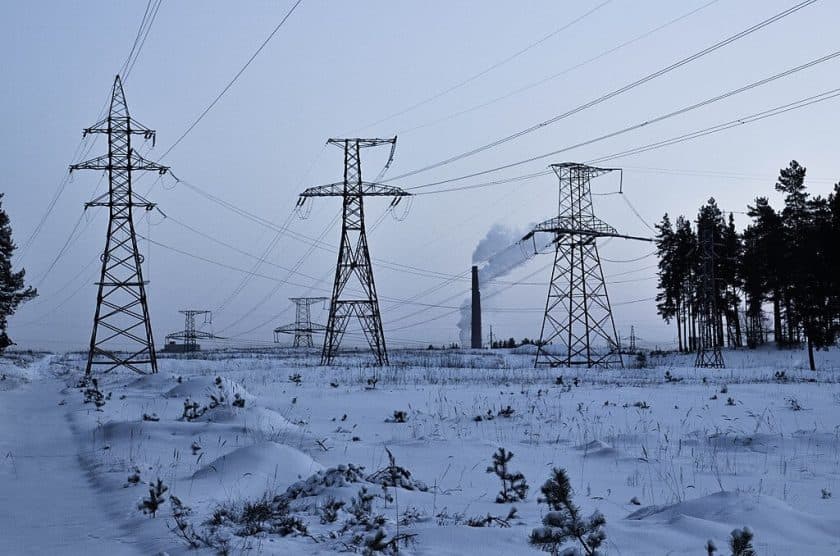
Freezing weather in recent days has significantly increased energy consumption in Czechia. Natural gas demand rose by almost a quarter compared with the same period last year, while consumption is up by nearly half compared with the turn of the year two years ago. Electricity demand also increased slightly. This follows from information provided to ČTK by distribution system operators. According to meteorologists, freezing conditions will continue in the coming days.
"Compared with the peak in the same period last year, current consumption is 23 percent higher. Compared with the turn of the year two years ago, when the weather was significantly warmer, the current daily peak is even 49 percent higher than the figures at that time," GasNet spokesman Aleš Gregorovič told ČTK.
According to him, the most gas was consumed on Monday.
Electricity distribution system operators are also reporting higher consumption, although the increase is more modest. "Compared with the same period in the previous week, electricity consumption is up by as much as 30 percent. However, this is not due to the freezing weather, but because the previous week was entirely atypical, falling between the holidays. Many people were off work, and a number of businesses were also closed or operating at reduced capacity. In reality, the current freezing weather is raising consumption by only a few percent," said ČEZ spokesman Ladislav Kříž.
According to him, electricity consumption in Czechia is 40 percent higher in winter than in summer, with the difference widening further in freezing conditions. "Consumption rises by an average of around 0.5 percent for every degree below zero. This applies down to approximately minus ten degrees. That is the saturation threshold, after which this relationship no longer applies," Kříž explained.
Freezing weather has, among other things, increased the output of the Temelín nuclear power plant. The nominal output of a Temelín unit is 1,086 electrical megawatts (MWe), but in freezing conditions it can exceed 1,100 MWe. The plant's output rises in freezing weather due to the lower temperature of water in the non-nuclear circuit.
Falling outdoor temperatures have also been reflected in EG.D's network. This is confirmed by data on the average maximum hourly load on the system, which indicates how much electricity is consumed in the network on average over one hour.
"From Monday 29 December to Wednesday 31 December 2025, when the average temperature in our distribution area was minus 2.8 degrees, the average maximum hourly load stood at 1,512 megawatts (MW). From Friday 1 January to Monday 5 January 2026, when freezing conditions began across most of the area, this figure rose to almost 1,600 MW. As a result of the freezing weather, we expect consumption to increase in the coming days as well," said EG.
D spokesman Lubomír Budný.
For the entire week around the turn of the year, the average maximum hourly load was 2,340 MW, according to Budný. It was 2,145 MW in the same period last year. The company's highest average hourly maximum to date was recorded on 28 February 2018. At 9 a.m. that day, it reached 2,566 MW at an average daily temperature of minus 0.3 degrees.
Snow, rain and freezing temperatures have caused transport chaos in a number of European countries since Monday. Winter weather has significantly disrupted train services and led to the cancellation of hundreds of flights in the Netherlands; schools were closed in Britain, while five people died in road accidents in France, where traffic jams stretching for several hundred kilometres formed. News agencies reported this on Tuesday evening.
Translation disclaimer
This article is a machine translation of the Czech original and has not yet been fully reviewed. In case of any doubt, please refer to the Czech version.
Sdílejte článek prostřednictvím:
You might also like
24 September 2026, 11:23

24 September 2026, 10:30
24 September 2026, 06:56