More efficient solar cells: Innovation involving Czech researchers
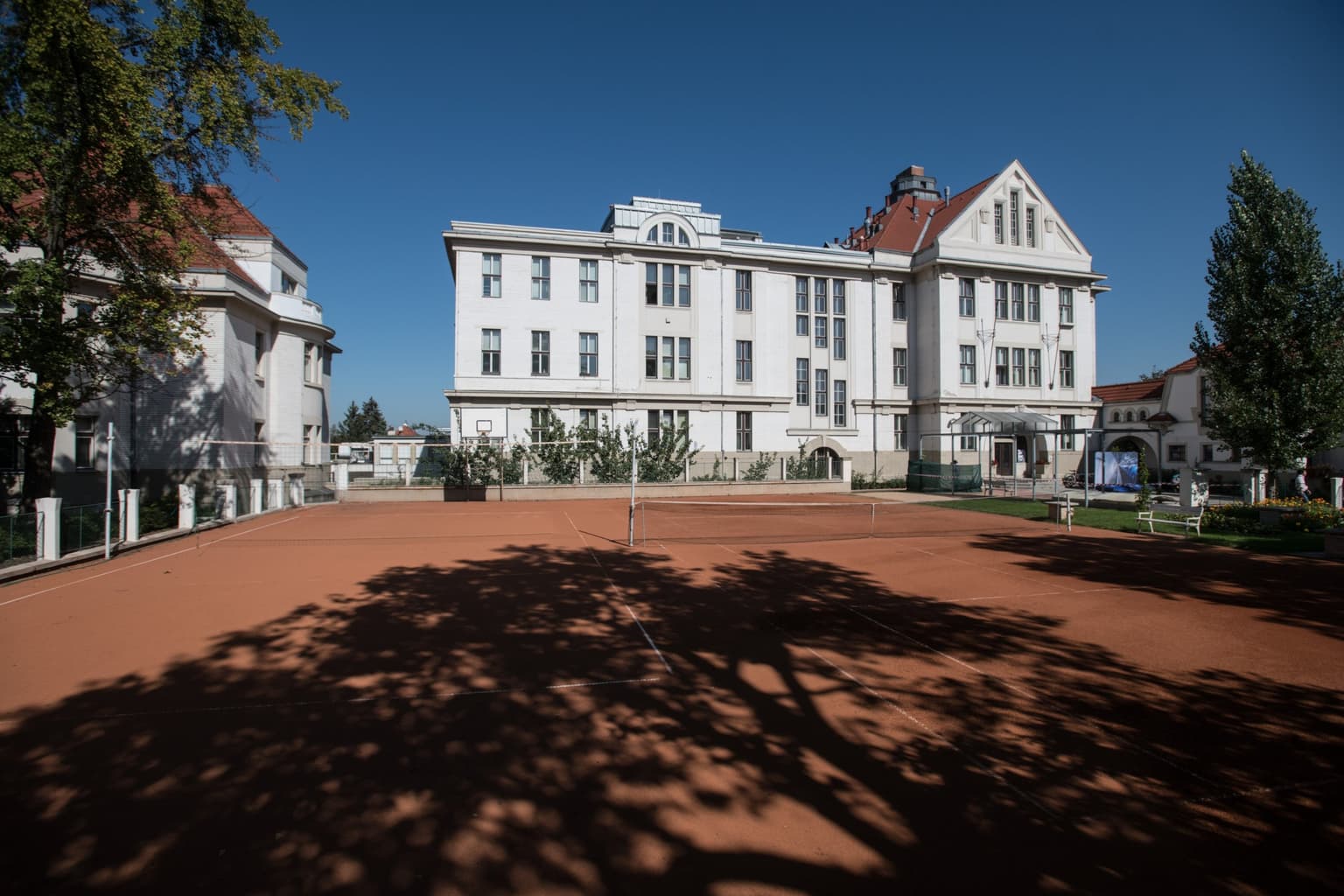
The campus of the Institute of Physics of the Czech Academy of Sciences in Prague’s leafy Ořechovka district has a rich history, forming an important part of the history of the former Czechoslovakia’s foreign economic relations. During the First Republic, it was home to the research institute of the United Prague Sugar Refineries, which played a major role in making Czechoslovakia a global powerhouse in sugar refinery exports for many decades. “Where there is now a tennis court, sugar beet was grown on a small plot during the period between the two world wars,” notes Antonín Fejfar, deputy director of the Institute of Physics.
The campus’s present-day occupants are also making a name for themselves through successes in international cooperation – above all scientific cooperation. The Institute of Physics is involved, among other things, in projects aimed at increasing the efficiency of photovoltaic panels. “We are looking for different ways to make the most of solar radiation,” says young scientist Martin Ledinský. The Czech research institute is pursuing this goal together with a number of European research institutions. Cooperation between Czech physicists and their Swiss counterparts has a 30-year tradition.
More efficient solar cells are intended not only to generate more electricity, but also to bolster European industry. Europe has fallen behind China in solar panel manufacturing, but by focusing on producing more technologically advanced products, it can strengthen its competitiveness. This can be achieved both by increasing the efficiency of conventional silicon cells and by using other materials, including perovskites – minerals named after Lev Alexeyevich Perovsky, a 19th-century Russian diplomat and mineralogist. Martin Ledinský is also researching how silicon can be combined with perovskites.
EUROPEAN COMEBACK?
In 2017-2019, the Institute of Physics took part in the NextBase research project, which focused on improving silicon cells. The European Union supported it with EUR 3.8 million under the Horizon 2020 programme, while the Swiss contributed a further EUR 1.7 million. The project involved research institutions and companies – a total of 14 partners from eight countries. The Prague institute was the only participant from Central and Eastern Europe.
After three years of research, improved cells were developed with an efficiency of 25.4 percent, only slightly below the current world record of 26.7 percent. That record is held by Japanese company Kaneka. However, Antonín Fejfar explains that photovoltaic panels made with cells from the NextBase project are much more suitable for mass production and are also price-competitive. The efficiency of commonly used cells today is below 20 percent.
“Although the project ended about a year ago, its results again became the centre of attention this summer for several reasons,” the deputy director of the Institute of Physics explained. First, the European Commission included NextBase among its success stories. Second, Swiss company Meyer Burger, which took part in the project alongside two research institutions from the Alpine country, delivered promising news. It announced that it intends to introduce the improved panels into serial production in Germany – a country that became a photovoltaic industry powerhouse during the first decade of this century, but later began to lose ground heavily to cheap panels from China.
According to Martin Ledinský, Europe now has an approximately five-year “window of opportunity” that it should use to manufacture improved photovoltaic panels. If local companies are delayed, they will once again lose their competitive advantage over the Chinese.
KEEPING EYES OPEN
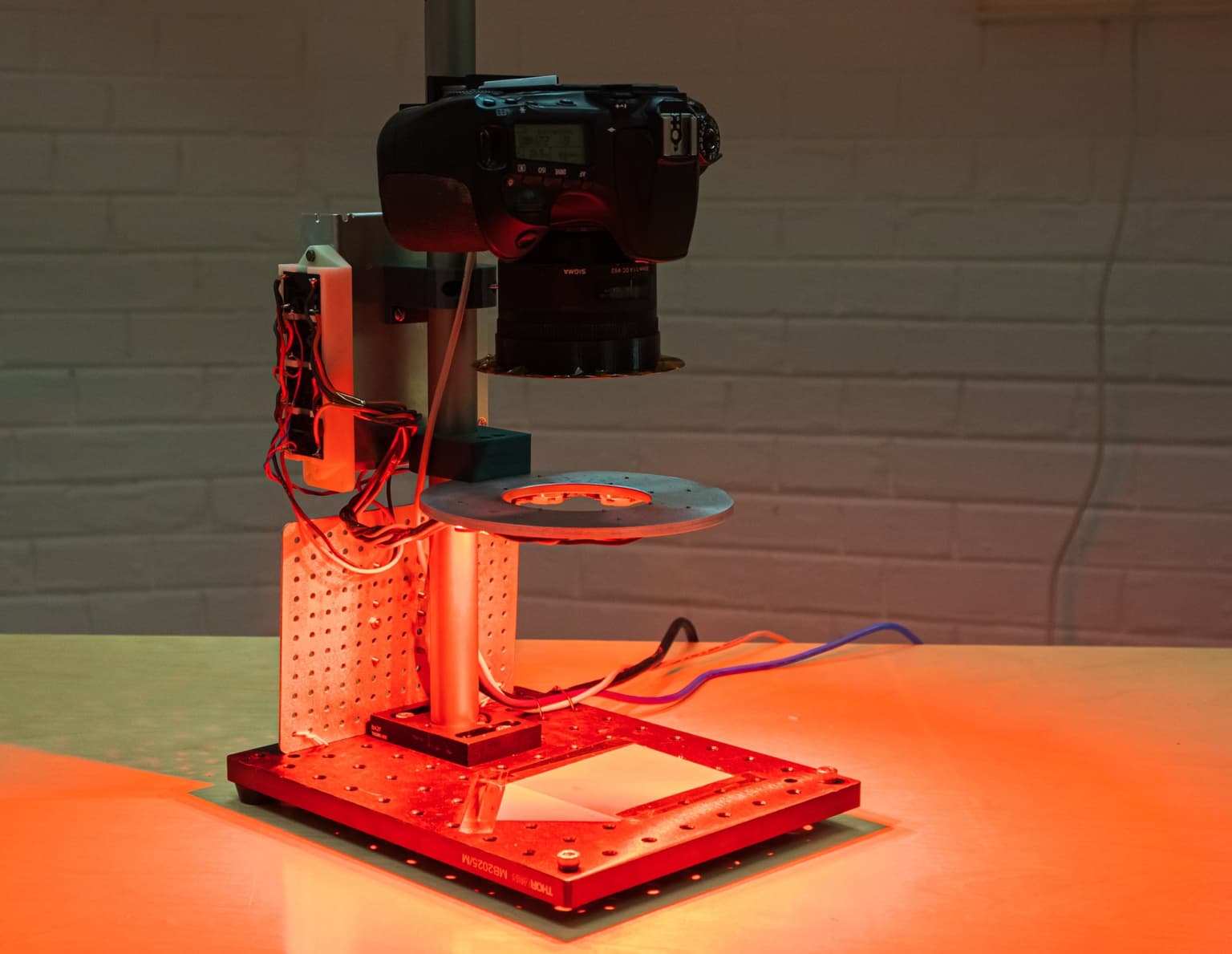
The third important piece of current news concerns specifically Czech activities within NextBase. The Institute of Physics has applied for patent protection for its own invention, which contributed to the success of the entire project. Scientists from the Ořechovka campus described their contribution on the institute’s website: The project innovated heterojunction photovoltaic cells, in which the positive and negative electrodes are created on a silicon crystal wafer by depositing strips of amorphous silicon just a few nanometres thick. For a long time, there was no practical tool for verifying the quality of the junctions. Martin Ledinský developed a testing method. He used optical profilometry based on Raman scattering.
The European Commission identified this testing method as one of the three main outcomes of the NextBase project. It will also be possible to use it in mass production of solar panels. And the patent application suggests that the Institute of Physics is considering other potential applications as well, which need not necessarily concern solar cells alone.
“Our method can be used for virtually any measurement of thin layers on rough surfaces,” Martin Ledinský explains in an interview with MED magazine. According to him, it could find applications particularly in the electrical engineering industry: “We need to keep our eyes open and be able to seize opportunities.” Antonín Fejfar adds that the original intention was not at all to develop a testing method for industrial production lines. It was intended to serve the research itself within the NextBase project. Thanks to optimisation of the method, however, the testing time was reduced from ten hours to seconds, something that manufacturing companies such as Meyer Burger will naturally want to exploit.
Both scientists from Ořechovka add that a significant share of the Czech success is due to Roman Dvořák, a student at the Czech Technical University’s Faculty of Electrical Engineering, who brought the testing method to the stage of a working prototype.
VISION OF CZECH INDUSTRIALISTS
The Czech photovoltaic industry has lost some of its former momentum in recent years. Antonín Fejfar does not see the current situation very optimistically, yet he does not believe that domestic production of sophisticated panels or their components is beyond saving forever: “I meet industrialists who are interested in the solar sector and are targeting high-tech technologies.”
According to the deputy director of the Institute of Physics, the problem is that panel manufacturing only starts to pay off above a certain volume.
Those seeking to enter this sector must reckon with producing panels with a total annual capacity of at least one gigawatt. Yet a company from a smaller country can succeed in the sector, as demonstrated by Lithuanian company Solitek. In the long term, the Czech Republic has a number of advantages – it can draw on a high-quality technological base and experience in semiconductor manufacturing.
Research aimed at developing more efficient solar cells is not the domain of physicists alone. This also applies in the Czech Republic. World-renowned Czech-born chemist Josef Michl, together with Zdeněk Havlas, former director of the renowned Institute of Organic Chemistry and Biochemistry of the Czech Academy of Sciences, has focused on exploring the possibilities of so-called singlet fission in molecules struck by solar radiation. This is important basic research, though practical applications may still be some way off.
In the applied research of the NextBase project, researchers joined forces with industrialists. “The basic goal was not only to increase the efficiency of solar panels, but also to quickly obtain an industrially realistic technology,” Antonín Fejfar pointed out. Companies such as the aforementioned Meyer Burger and Italy’s Enel are now taking up the baton.
The article was published on Export.cz
Translation disclaimer
This article is a machine translation of the Czech original and has not yet been fully reviewed. In case of any doubt, please refer to the Czech version.