
11 November 2026, 12:52
Loading...
Waste-to-energy in Czechia: record incineration, new capacity and future challenges

Jakub Malý
23 June 2026, 15:02
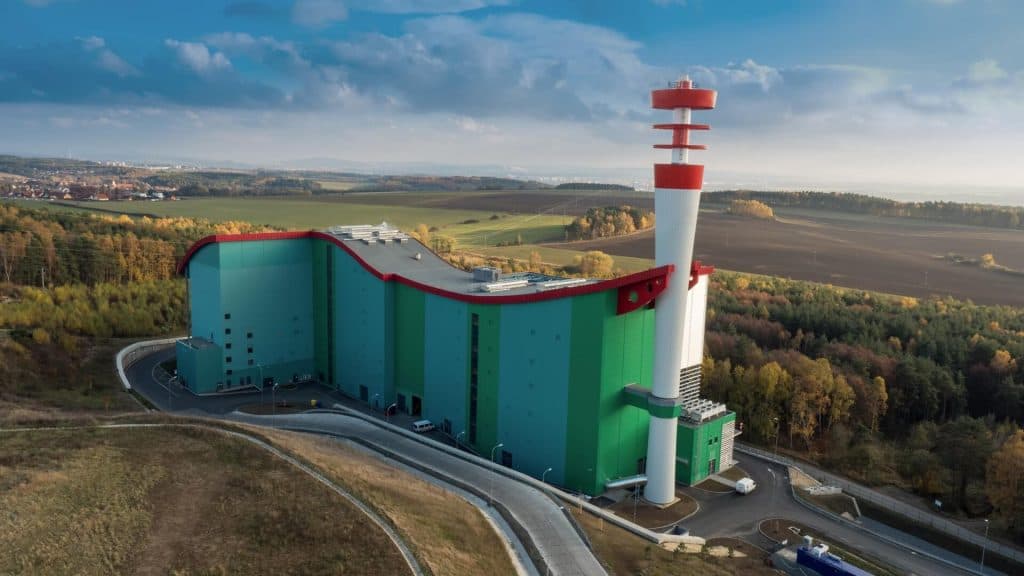
The Czech debate on waste incineration has in recent years shifted from a purely waste-management issue to an energy and system-level one. Waste-to-energy facilities, abbreviated as ZEVO, are no longer seen solely as an end-of-line solution for mixed municipal waste, but also as a source of heat for district heating systems, a replacement for part of coal-fired generation, and a potential element of greater local energy resilience. The new Czech Waste Management Plan for 2025–2035, approved by the government on 23 July 2025, is based on the waste management hierarchy: waste prevention, maximum recycling and waste recovery, followed only then by energy recovery or disposal.
In the Czech Republic, four large municipal-waste ZEVO facilities are currently in operation: Prague-Malešice, SAKO Brno, Termizo Liberec and Chotíkov near Plzeň. According to available information, a record 830 thousand tonnes of municipal solid waste underwent energy recovery in 2024. The facilities generated 261 GWh of electricity and supplied 2,8 PJ of heat. Malešice became the largest source, with its waste treatment capacity increased, according to this source, from the original 330 thousand tonnes to 480 thousand tonnes per year, which is the permitted ceiling, although actual utilisation may be lower. Brno has a capacity of 248 thousand tonnes, Liberec 96 thousand tonnes and Chotíkov 120 thousand tonnes per year.
Translation disclaimer
This article is a machine translation of the Czech original and has not yet been fully reviewed. In case of any doubt, please refer to the Czech version.
The article continues for subscribers
Premium content
The rest of this article is available to premium subscribers only. Get access to all premium articles on oEnergetice.cz.
You have read only 29% of the article — unlock the remaining 71% with a premium subscription.
Best value: annual subscription
Monthly option 4 € / month
3.25 €/ month
You might also like
11 November 2026, 10:55

11 November 2026, 10:43
10 November 2026, 16:31