Preparations for the construction of a new domestic pumped-storage power plant are in full swing. Engineers at Litostroj Engineering have completed testing of a model of the unique turbine; its manufacture will now begin, with work at the Orlík dam set to start as early as next year.
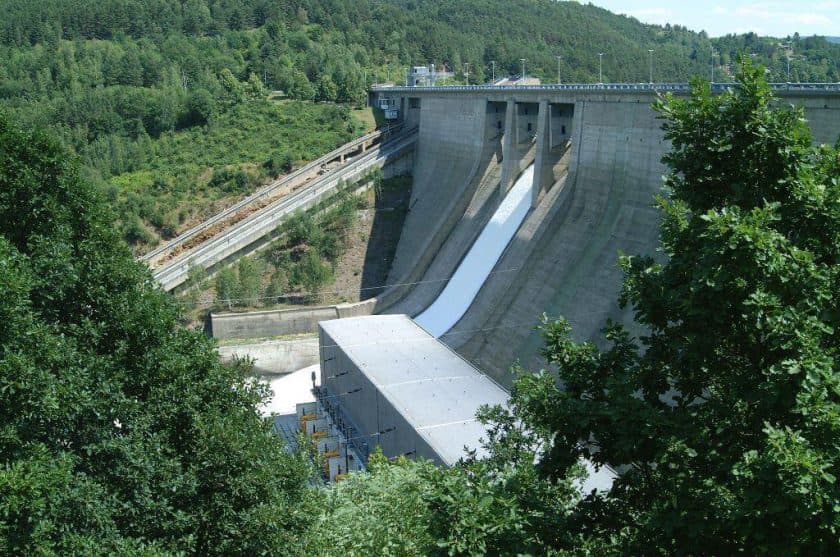
The hydropower plant at the Orlík dam has been generating electricity since the 1960s. So far, it has only been able to operate in turbine mode, with water flowing down from the reservoir. However, ČEZ Group is now preparing to convert it into a pumped-storage plant that will also be able to send water uphill – pumping it from the lower-lying Kamýk dam back to Orlík.
At Litostroj Engineering’s hydraulic laboratory in Blansko, South Moravia, a scaled-down turbine model has been tested over the past two months. The tests verified how the actual turbine will behave in all operating conditions. It will be thirteen times larger than the model.
The model test was demonstrated to journalists last week. A steady roar first began to fill the modest-sized hall. Water flowing towards the runner began transferring its energy to it, causing it to spin. At that moment, head of hydraulic development Lukáš Motyčák directed a stroboscopic light at the transparent part of the model, making the runner appear to freeze. It seemed to be standing still or moving only slowly, although it was actually rotating at quite a high speed.
The strobe flashes in synchronisation with the turbine’s rotation, creating an optical illusion. Its use during testing allows technicians to observe details of the flow and activity on the blades that would appear blurred under normal lighting. “During testing, the pump drives water around the circuit; the water simulates the head and spins the turbine runner in the model. The runner is braked by a motor representing the generator at the power plant,” Motyčák explained.
“Everything must work together perfectly. One of the most important parts of the new unit is the reversible Francis turbine. Before manufacturing it, we had to verify its key parameters in detail during two months of testing, especially its hydraulic properties, efficiency and operational stability,” explained Peter Šály, CEO of Litostroj Engineering. The actual turbine, with a diameter of five metres, will be manufactured at the company’s plant in Slovenia.
Pumping at noon, supplying the grid in the evening
How will the pumped-storage plant work? When electricity is cheap on the day-ahead market, for example during peak output from photovoltaic plants, the reversible Francis turbine will pump water from Kamýk to the higher-lying Orlík reservoir. When electricity is expensive, water will instead be released through the conventional Francis turbine, generating electricity and feeding it into the grid.
The pumped-storage plant will therefore take advantage of daily fluctuations in electricity market prices. For example, on Sunday, 23 August, the price of electricity fell below zero after noon, dropping to as low as minus five euros (120 crowns) per megawatt-hour. In such a situation, the pumped-storage plant is paid for the electricity it takes from the grid. At 7pm on the same day, by contrast, the price rose to nearly 190 euros (4585 crowns) per megawatt-hour. The plant then switches to turbine mode, generates electricity and sends it back to the grid.
“In pumping mode, we make use of midday and afternoon periods, precisely the times when renewable sources, especially photovoltaic plants, are operating. Turbine mode is used in the morning and particularly in the evening hours,” comments Róbert Heczko, director of ČEZ’s hydropower plants. ČEZ currently operates three pumped-storage plants: Dlouhé stráně, Dalešice and Štěchovice.
Cutting off a mountaintop does not pay off now
Czechia could use more such water batteries, which can store energy. However, building them from scratch – or rather on a blue water surface – is problematic. During construction of the Dlouhé stráně project in the 1980s, builders first cut off the top of a mountain in the Hrubý Jeseník range and then excavated a hole in it for a huge reservoir. At a time when Czechs do not want to build even a few wind turbines because of the landscape’s unique character, a similar project would most likely provoke opposition. The economics of such a project would also be uncertain.
“At present, we do not have any other pumped-storage plant project under development, although colleagues are examining technical proposals at certain locations. In any case, project economics are always crucial for us,” Heczko says on behalf of ČEZ.
At Orlík, ČEZ is taking the path of least resistance – it will not alter the dam. The work mainly involves modifying structures in the generating unit shaft and replacing the existing turbines with new ones. It should be completed in 2033, with operations expected to continue uninterrupted throughout the entire period. At least two turbines are to remain operational at Orlík at all times. Even so, the project will cost eight billion crowns. The planned service life of the unit is at least 50 years.
A modern hybrid instead of diesel
“Instead of the four Kaplan turbines currently installed there, we will install two Francis turbines and two reversible turbines. It is like having a standard diesel vehicle that consumes energy to move forward. We are now replacing it with a modern hybrid, allowing you to charge its battery and use that energy sometime in the future,” Šály explains.
The pumped-storage plant could also ensure more efficient water management during periods of drought, precisely because it can return water uphill. At present, Orlík has to rely solely on rainfall and on what flows into it.
“Drought waves have a negative impact on our generation. Orlík hydropower plant is currently operating, but we can use only a smaller volume of water to transfer it to the lower reservoir, meaning the Kamýk waterworks. We are operating with a lower head, and generation is therefore lower,” Heczko explains.