Ján Štuller: We are discussing seven reactor types for both Dukovany and Temelín
All foreign bidders for the construction of nuclear reactors in the Czech Republic are willing to participate in financing, while all of them also indicate that such a project would be difficult to implement without government involvement. In the first part of an interview for the oEnergetice website, government commissioner for nuclear energy Ján Štuller further said that all of them had also confirmed their willingness to involve Czech companies in the construction.
“However, we will need to be able to distinguish between promises and real possibilities in this respect,” Štuller added. Unfortunately, he said, it cannot be expected that Czech industry could be as major a manufacturer of components as it was in the days of the CMEA.
Štuller points out that so far, these have only been consultations with the individual bidders, which include Atmea (a Franco-Japanese venture), CGN (China), EDF (France), KHNP (Korea), Rosatom (Russia) and Westinghouse (USA). “Our aim so far has not been to create any ranking of who is better or worse in what,” the government commissioner explains. Six foreign companies took part in the consultations, but seven reactor designs are being offered because the Koreans offer two types.
In recent weeks, you have met with all potential bidders for the construction of new units in the Czech Republic. Do you already have an initial idea of which of them is more or less likely to be considered?
The purpose of these talks was different – we wanted to clarify certain answers that the Czech side had received earlier. These were therefore consultations during which we also wanted to make sure that we understood each other, both in terms of the technical and investor-financing parameters of the potential bids from the six bidders for the construction of nuclear units in the Czech Republic. So far, this has not been a competition between these bidders, but genuinely only consultations. Our aim so far has not been to create any ranking of who is better or worse in what.
We know some of the bidders from the previous cancelled Temelín tender. At the time, many regarded US-based Westinghouse as the leading favourite. Now, however, voices are coming from Westinghouse’s parent company, Japan’s Toshiba, saying that these companies will no longer build nuclear power plants. Will Westinghouse even continue talks with you?
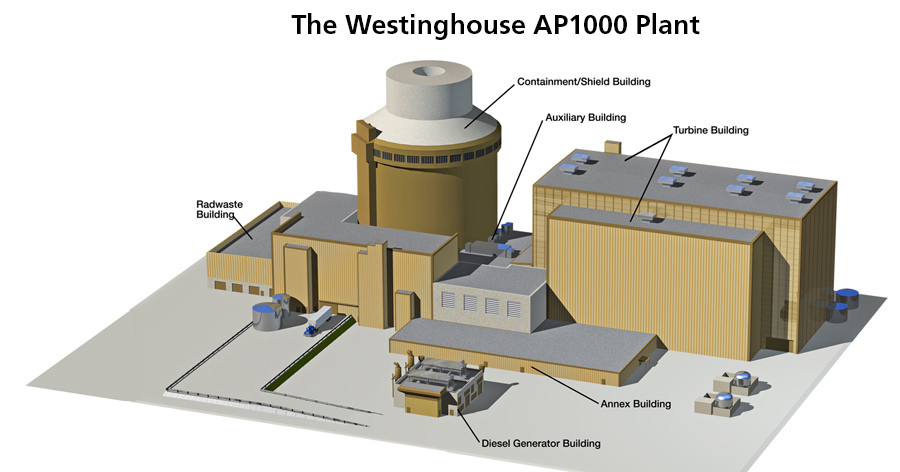
Westinghouse representatives told us that this was a misunderstanding. According to them, some of the quoted statements merely meant that Westinghouse would focus on its traditional activities. And these do not include civil construction. The company will not itself provide supplies related to the civil engineering parts of new reactor projects. In this area, it will turn to subcontractors. However, Westinghouse is fully committed to the overall coordination of nuclear power plant construction projects and to the full supply of technology – in the sense that it will commission someone to manufacture components according to its designs. Representatives of the US company said in this context that they were returning to their roots – as in the past, apart from fuel, they do not intend to manufacture individual components themselves.
I have the impression that in recent years, Westinghouse has voiced rather audible criticisms of the Czech Republic, which cancelled the Temelín tender roughly three years ago. Do you not think that Westinghouse has significantly scaled back its activity on the Czech market since that tender was cancelled?
Personally, it is difficult for me to assess, because I do not know exactly how active each party was during the previous Temelín tender. At that time, I was on the nuclear regulatory side. And nothing of the kind was said during the latest talks with Westinghouse. I can only say that I can quite well imagine a certain caution on the part of those companies (Westinghouse, Rosatom, Areva – editor’s note) that participated in the previous Temelín tender. Their participation cost them a great deal of money, both to prepare documentation and to prepare themselves for the competition – in total, the three companies certainly spent more than CZK 1 billion. From their point of view, this was naturally money lost.
One of those companies was Rosatom, which, according to media reports, is now repeating its offer from the Temelín tender regarding participation in financing the construction of new units. The Russians speak of a broad range of possible financing options – from an intergovernmental loan, as in the case of Hungary’s Paks power plant, through participation in construction and the future operation of the plant as in Turkey, to an equity stake in the project company as in Finland. How do you assess this offer?
This offer is indeed broad, and Rosatom First Deputy Director General Kirill Komarov confirmed it during an interview with Czech media. On the other hand, other bidders also express a similar willingness to participate in financing. Nor are we yet assessing who is offering more or less in this respect. The fact is that all six foreign partners confirm their ability to participate in the construction of new reactors also as co-investors – some to a greater extent, some to a lesser extent. More will become clear once we launch the actual tender.
An important role for the state
But presumably the Russians too would require some guarantee, either in the form of guaranteed electricity prices or some other form of Czech state involvement in the project?
Again, we do not need to talk only about the Russians, because this is a general characteristic. All six players indicated that they could hardly imagine such a major project without the state and government playing some role in it. This role of the state may take various forms. But the basic message is clear – without government involvement, all of them see a nuclear reactor construction project as difficult to implement. These are not ultimatums from the bidders, but it can be said that they all indicate this to us diplomatically.
The French are also returning to the picture. During the Temelín tender, a debate was already under way over whether the EPR reactors offered by Areva were too large. EDF is now taking over the reactor business from Areva, and you are also in talks with it – in this case concerning the possible construction of a new reactor at Dukovany. Are you not concerned that the large EPR units would not fit there at all because of limited cooling options?
If we considered the EPR reactor, with an installed electrical capacity of 1700 MW, to be disproportionately large, we would not have approached Areva – or now EDF – at all. This reactor is naturally the largest of all those that may now be under consideration, but that does not disqualify it. It also depends on how we ultimately decide and how many units we will build. And whether the new units will operate in parallel with the old ones, whether at Dukovany or Temelín. In talks with potential bidders, we are discussing both sites; it depends on a later decision.
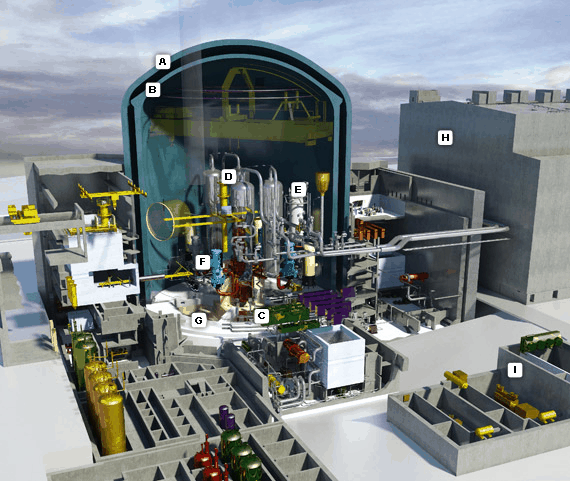
A – outer shell of reinforced concrete
B – inner containment wall of prestressed concrete with a metal liner
C – reactor vessel
D – steam generators
E – pressuriser
F – feedwater pumps
G – reactor core
H – turbine building
I emergency diesel generators
Source: Areva
Would the EPR reactor be more likely at Temelín than at Dukovany?
A decision should be made in 2025, and a great many things can happen before then. I assume that almost until 2025, we will continue discussing the possibilities of building new reactors at both sites. We will also refine this in connection with how the licensing process develops at both Dukovany and Temelín. The validity of the existing siting permit issued by the State Office for Nuclear Safety for Temelín will probably expire, and in view of the new nuclear law, the permitting procedure will have to be repeated. So we are in a situation where we are discussing both sites and all seven reactor types, including the EPR, for each site. However, it is clear that the potential operation of two EPR units in parallel with the four existing reactors at the Dukovany site, or with the two existing reactors at Temelín, will need to be analysed in detail. It therefore really depends on the decision as to how many units we will build and at which site.
You are talking with six companies, but you speak of seven reactor types. Is that because the Koreans are effectively offering two types?
Yes, that is the case. For Korea, only Korea Hydro and Nuclear Power is now negotiating with us, both on its own behalf and on behalf of KEPCO.
The rise of Asian players
Compared with the cancelled Temelín tender, the major new development now is that Asian companies have entered the picture. Japanese company Mitsubishi is represented in Atmea, a joint venture with the French. However, Atmea is so far the only bidder that has not made significant progress in building reactors that it could offer to the Czech Republic.
That is true. And again, I return to the fact that construction of new units will begin no earlier than 2025 – that is, eight years from today. We expect that practically every reactor being offered will already be in operation somewhere, or at least have a construction licence. This probably also applies to Atmea, which is preparing to build a nuclear power plant in Turkey and perhaps in other countries as well. During the Temelín procurement process, a requirement was set that the winning reactor must at least be licensable in its country of origin or in a European Union country. I believe that if we have a similar requirement in the next tender, it will ultimately be met by all seven reactors.
You have already mentioned that two Korean reactor offers are in play – the APR-1400 and APR-1000. The APR-1400 is better known, as the Koreans are building it in the United Arab Emirates. If they are now also offering the so-called 1,000 MW units in the Czech Republic, is it not precisely because they sense demand here for smaller reactors?
I think it is because one of these projects is linked to Korean company KEPCO, while the other is linked to its subsidiary KHNP (Korea Hydro and Nuclear Power). We approached both Korean players, but these companies agreed that only one company would negotiate with us, namely KHNP. However, we are discussing the offer of both Korean reactors with this company.
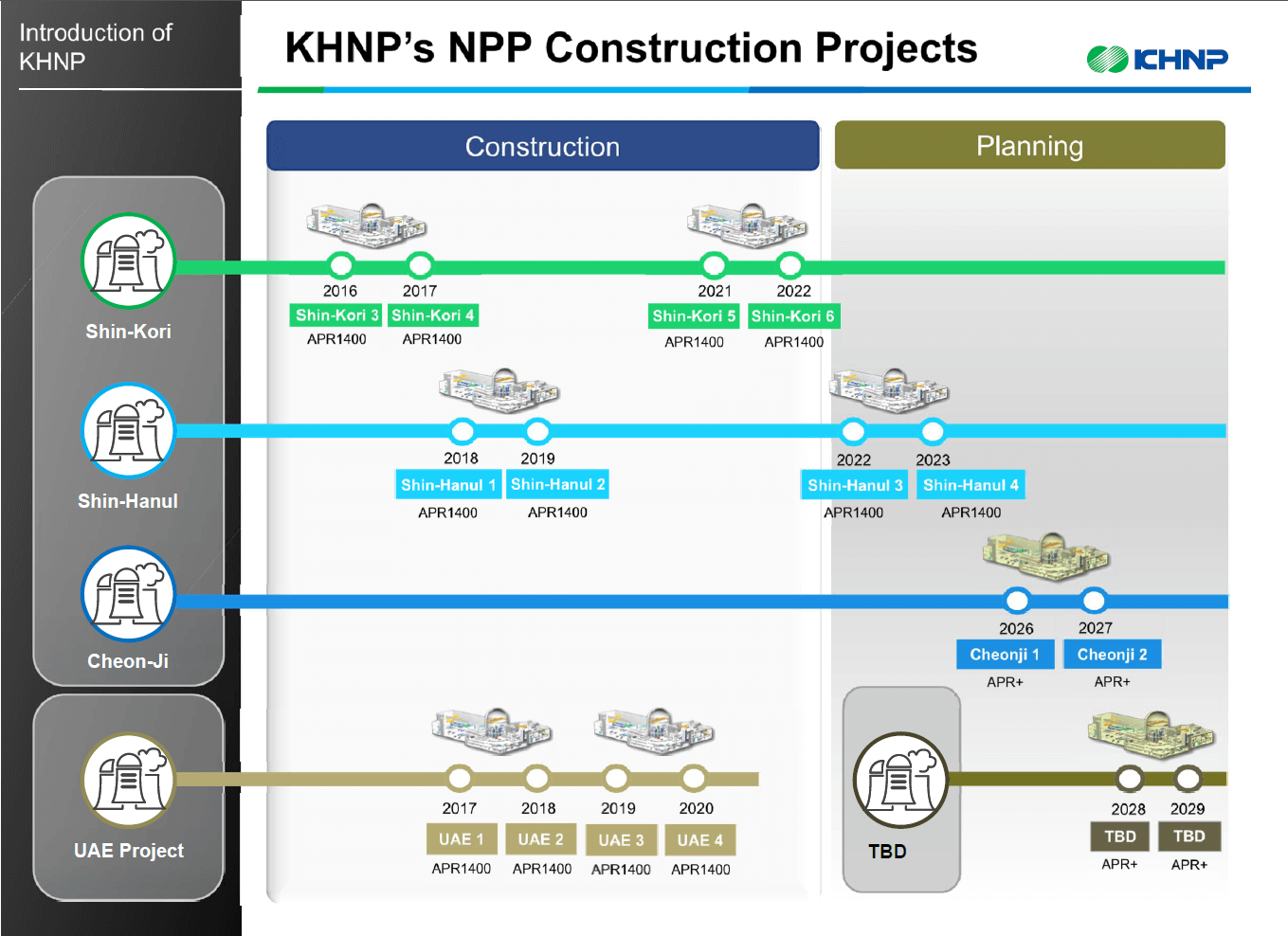
The Koreans have been quite active in the Czech Republic for some time, speaking of the country’s advantageous geographical position, which has led to considerations of strategic cooperation with Czech companies should the Koreans expand into European nuclear energy. In Europe in particular, the Koreans may not think they would have to import all power plant components from home halfway around the world.
Yes, but the other bidders speak similarly as well. All of them speak about localisation – that is, involving Czech companies in the construction of new reactors at Dukovany and Temelín. All six players also mention that this localisation need not concern only supplies for reactors built in the Czech Republic, but that there is also potential for exports of Czech components to third markets.
This is quite an important argument for us…
It is undoubtedly an important argument. However, we will need to be able to distinguish between promises and real possibilities in this respect. Any of these players would be foolish not to offer localisation in these still preliminary discussions. I repeat that we are at the consultation stage, not the procurement stage. Unfortunately, it cannot be expected that Czech industry could be as major a manufacturer of components as it was in the 1980s.
The CMEA era is over
Why is the situation different today?
At that time, the Soviet Union transferred to Czechoslovakia – and it can be said, quite generously – both production itself and the technical documentation and licences for all nuclear power plant components except the main circulation pumps and nuclear fuel. The so-called division of labour within the CMEA was in place. At higher political levels, for example, a decision was made that Czechoslovakia would manufacture reactor pressure vessels and that it would make at least twelve of them. No one can guarantee you anything similar today. Yet restarting the workshop where pressure vessels are manufactured would only pay off with guaranteed orders for a similar number of pressure vessels. Those people, the specialists involved in this production in Plzeň, are no longer there either. Fortunately, the local Škoda JS has retained the capability to manufacture reactor internals and other nuclear reactor components, which it produces for various customers at home and abroad, including the French.
The Chinese have also expressed interest in building new reactors in the Czech Republic. However, there are concerns that the Chinese, in particular, would prefer to supply absolutely everything for their overseas projects – including construction workers. In your view, do the Chinese understand that we insist on strong involvement by Czech companies in such a project?
Talks with the Chinese did not differ in this respect from discussions with the other bidders. Chinese company CGN, like the other players, offered localisation and the future conclusion of contracts with subcontractors from among Czech companies. The individual bidders will undoubtedly differ in the scope of subcontracting for Czech companies in different parts of the nuclear unit, which we will begin to assess once we launch the tender.
China has a reputation as the country with the biggest nuclear boom in the world, but on the other hand, the Chinese have only limited experience in exporting their reactors. Not to mention the newest reactor types, which include the Hualong that they are also offering in the Czech Republic…
So far, they have not actually implemented such a project abroad. The Chinese are naturally trying to gain a foothold in the European market and currently see an opportunity here. They will probably argue that they have received a favourable assessment from European nuclear industry representatives and that the Hualong reactor meets European requirements. Naturally, we have not yet carried out any detailed assessment of the Hualong reactor. Logically, we know less about it than about the designs of the three participants in the previous Temelín tender – we have already examined those extensively, both at ČEZ and at the State Office for Nuclear Safety.
The author of the article, who also asked the questions, works as an energy projects specialist at the HATcom agency.
Translation disclaimer
This article is a machine translation of the Czech original and has not yet been fully reviewed. In case of any doubt, please refer to the Czech version.