4 October 2026, 21:07
Loading...
India's transmission grid is not keeping pace with renewable growth, so developers are scaling back new projects
Vojtěch Kříž
13 May 2026, 13:46
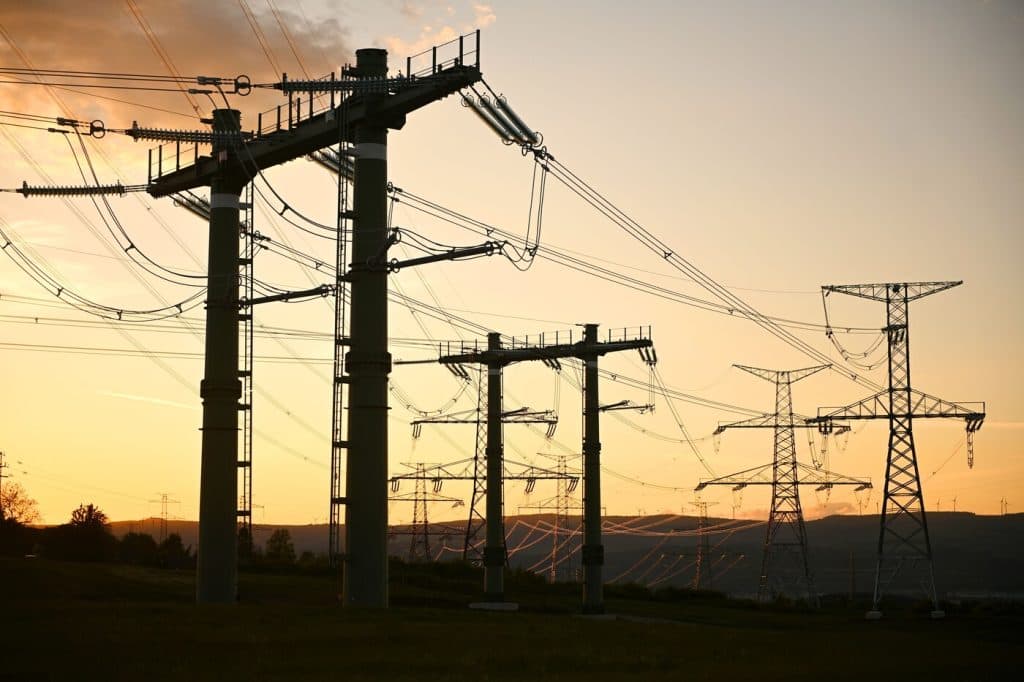
Indian company ReNew Energy Global is scaling back the size of its projects because of limitations in India's transmission grid. Adani Green Energy, the renewables division of Adani Group, made similar comments last month. Its CEO said the company could deliver more renewable capacity, but is constrained by India's transmission grid.
The company is adding around 5 GW of capacity, but its owner and CEO says it could build as much as 8 GW. However, after previous problems connecting to the grid, it is now limiting its own projects.
Adani, the owner of the group that bears his name, said this in an interview with analysts following a conference announcing the company's annual results. The company reportedly lost 5 billion rupees ($53.3 million) last year because it was unable to supply electricity to the grid.
According to the Indian Wind Independent Power Producers Association, up to 4.8 GW of renewable capacity cannot supply the wider Indian grid because of its limitations. For example, on some days last year, as much as 40 percent of the potential output from solar power plants could not be delivered to the grid.
ReNew Energy now plans to increase investment in battery systems to help balance these differences. India has around 223 GW of renewable capacity.
Transmission grids and renewable energy
India is an extreme case, but integrating renewable energy and its variable generation is running up against transmission grid limitations in many places. Many renewable energy advocates also point to the need to strengthen and modernise transmission grids, expand battery systems and make the grid more flexible.
According to some estimates, as much as 1.5 TW of renewable energy projects were blocked in 2022 because of connection problems. In the EU, the volume of electricity that cannot be transmitted is expected to triple without changes. This is due to the growth of renewable energy on the grid without a corresponding increase in its capacity and resilience.
Other regions face similar problems. For example, in the US, the transmission grid is also under pressure, including from rising demand driven by data centre construction. In China, construction is rapid and the country has a very robust system that transmits electricity from inland areas to the coast, where many cities and much of the population are located. Even in China, however, the pace of connecting new renewable energy projects is outstripping grid development.
India's transmission grid
India gradually built its transmission grid from the 1960s, when five regional transmission grids were established. They began to be interconnected in the 1970s. A unified national transmission grid was completed only in 2013, when the southern region was connected to the rest of the country.
Even before this year's problems, however, concerns had been raised about shortcomings in India's transmission grid. Many pointed out that its current state is incompatible with ambitions to grow both generation and consumption. Last year, the Institute for Energy Economics and Financial Analysis estimated that more than 50 GW of renewable capacity had no way to connect to the grid.
The Indian government is aware of the problem and officially plans to invest more than nine trillion rupees (just under USD 110 billion) in the transmission grid. By 2032, it also plans to expand the grid by more than one hundred thousand circuit kilometres, to 648 000 km of lines.
Translation disclaimer
This article is a machine translation of the Czech original and has not yet been fully reviewed. In case of any doubt, please refer to the Czech version.
Sdílejte článek prostřednictvím:
You might also like


3 October 2026, 13:01
3 October 2026, 07:43

2 October 2026, 21:55