3 October 2026, 13:01
Loading...
Germany reports record electricity supply reliability, far better than Czech Republic

Martin Voříšek
25 October 2020, 13:32
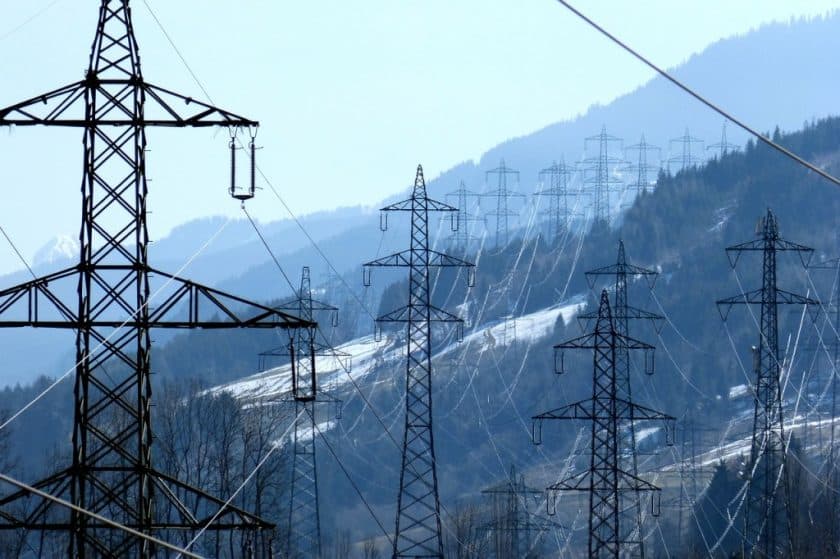
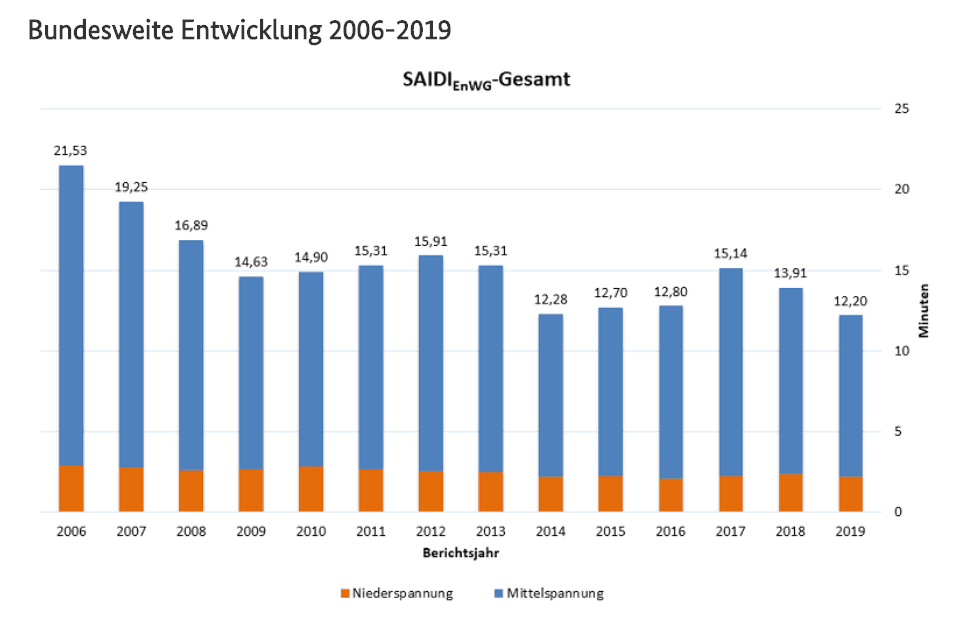
Electricity supplies in Germany were last year, according to information from the country’s energy regulator, the most reliable since 2006, when indicators for the average duration of electricity supply interruptions (SAIDI) were first recorded. Compared with the Czech Republic, this parameter is several times lower.
According to data from the country’s energy regulator, Germany can boast very high-quality electricity supplies. The result is even the best in the past 14 years. According to Bundesnetzagentur President Jochen Homann, this is evidence that the growing share of decentralised sources still has no impact on the quality of electricity supplies:
“The energy transition and the growing share of decentralised sources still have no negative impact on the quality of electricity supplies,” said Jochen Homann, president of Bundesnetzagentur, Germany’s energy regulatory authority.
The quality of electricity supplies is determined primarily by the SAIFI and SAIDI indicators, which express respectively how long customers did not have access to electricity supplies during a specified period and how many times their supplies were interrupted during that period in the case of SAIFI.
The average customer in Germany therefore experienced supply interruptions for just 12 minutes and 12 seconds in 2019, a result almost two minutes lower than in 2018. Data published on the BNetzA website also show that the trend is rather downward, indicating improving electricity supply reliability (note: when calculating SAIDI, the German regulator considers only unplanned supply interruptions and excludes exceptional events).
Data on the average duration of electricity supply interruptions are also published annually by the Czech Energy Regulatory Office in its quality report. For 2019, the indicator was calculated at 258 min. However, the Energy Regulatory Office’s statistics also include the duration of planned supply interruptions, including exceptional events, in the SAIDI calculation.
The lowest SAIDI indicator was traditionally recorded in the distribution system of PREdistribuce, primarily because this system has a significant share of underground cable lines.
Supply reliability in Germany is primarily determined by the substantially higher share of cable lines. According to data from the BDEW association, only 18 % of the length of electricity lines is overhead.
SAIDI and SAIFI calculations are not harmonised in the EU
It should be added that the calculation methodology may not be the same in every country, as a unified procedure for calculating SAIDI and SAIFI indicators has not yet been established at European Union level. Differences may include, for example, whether planned supply outages or supply interruptions at all voltage levels are included in the calculation.
A European comparison of supply reliability was carried out by the Council of European Energy Regulators (CEER) in 2018, taking into account data from 2016.
A comparison of 2016 data shows that, using the same method applied by the Czech regulator, the duration of supply interruptions in Germany was 23.55 minutes, while the same indicator in the Czech Republic was 258.29 minutes. Conversely, using the German regulator’s method, the SAIDI indicator in 2016 was 12.8 minutes in Germany, compared with 73 minutes in the Czech Republic.
Lead image source: Pixabay.com
EDIT 26.10.2020: Added information on the SAIDI calculation methods used by the Czech Energy Regulatory Office and BNetzA in the fifth and sixth paragraphs, as well as a section on the CEER study and the harmonisation of SAIDI and SAIFI calculations
Translation disclaimer
This article is a machine translation of the Czech original and has not yet been fully reviewed. In case of any doubt, please refer to the Czech version.
Sdílejte článek prostřednictvím:
You might also like
3 October 2026, 07:43

2 October 2026, 21:55

2 October 2026, 15:14