
9 October 2026, 06:22
Loading...
Prague–Olomouc by EV in six hours? That is long gone, says Prague Energy manager
Ekonews.cz
3 October 2023, 14:39
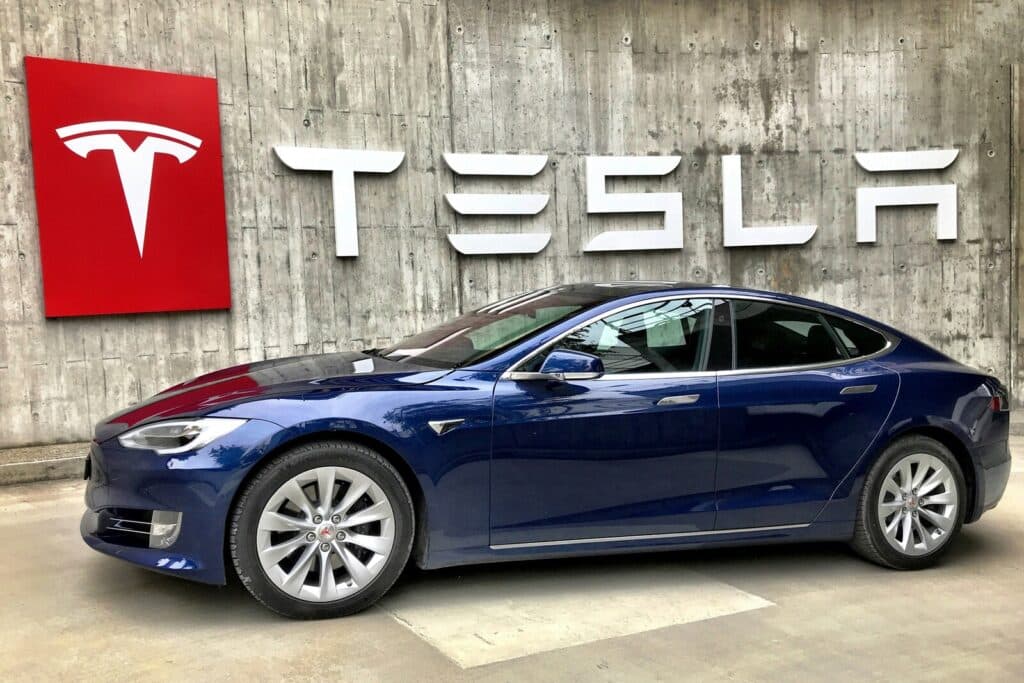
Electric mobility is making inroads into companies. Prague Energy, as an electricity retailer, is among those naturally switching to this type of propulsion first. Manager Vojtěch Fried has been driving exclusively on electricity for three years. He mainly charges at work and praises the low operating and servicing costs.
When the head of electric mobility development at Prague Energy (PRE) first encountered a battery-electric car, he was not yet in charge of electric mobility at the company. Gradually, however, his work and personal interest in electric cars increasingly converged. Today, Vojtěch Fried has two fully electric vehicles – a family Volkswagen e-Golf and a work Volkswagen ID.3.
“For me personally, electric mobility began sometime when PRE started taking the idea more seriously. The definitive turning point came three years ago, with the birth of my daughter. I still drove to the maternity hospital in a diesel Octavia, but the next day I started working on selling it. Since then, an electric car has been my only means of transport; I have been emission-free for three years,” Fried says.
At PRE, it would have been difficult for him to avoid battery-electric cars. The company installed its first public charging station around 2008, although it was still for slow charging. The first “fast charger” followed three years later.
“Back then, electric mobility was more about riding electric bikes. The first tests took place in strange Citroën ‘boxes’, and exciting stories were told, such as how PRE employees drove the Prague–Tábor route and almost made it,” Fried laughs.
This was followed by the more promising first generation of test Volkswagen e-Up! cars, with a stated range of 150 kilometres. “In reality, it was 120 kilometres in summer and 90 in winter,” says the head of electric mobility, adding that PRE’s fleet now includes more than 120 “fourth-generation” battery-electric vehicles, which have become a routine part of operations.
Once an adventure, now standard
In the early days, electric mobility was a great adventure. Journeys around Czechia had to be planned over a map. The likelihood that a charging station would start up on the first attempt was very low. “Once I drove the Prague–Olomouc route in six hours; that was around 2016. This year, however, I spent two weeks in Italy and it was completely trouble-free,” says Fried, adding that the car can plan the journey itself so that its batteries do not run flat. “Last week I drove the Prague–Vienna route in one go without charging, with the air conditioning on, at normal speed and with the radio on,” he adds.
PRE’s fleet also includes plug-in hybrid vehicles, but fully battery-electric cars predominate. “When I carried out analyses, they showed that hybrids carry too high a risk of double servicing, because they have both an engine and a battery. Hybrids may make sense for sales teams travelling from Prague to the Czech Highlands, but they are not worthwhile in the city. “I myself drive seven kilometres to work and seven back every day. Charging once a week is more than enough for me,” says the manager.
“Most of our service organisations’ work is around Prague, which tends to be door-to-door, and that is bad for conventional combustion-engine cars. Electric cars, on the other hand, do not mind it,” Fried lists.
He is not an avid motorist and has never been interested in car magazines, but he has come to appreciate the characteristics of an electric car. He praises the fact that he does not have to change gears, the car drives quietly and can accelerate sharply. “I believe people who follow cars closely may find it boring. You open the bonnet and there is plastic everywhere… but it suits me,” Fried says.
He installed a charger at his cottage
During a normal working week, he charges at work. He had a charger installed at his cottage so he would not have to drive to the neighbouring village. “At first I had a standard extension lead and charged overnight. Of course, I learned that you cannot just plug it into an old ‘cottage’ socket. So this year I got a charging station instead. I do not have to charge overnight; it is charged in three hours,” says the manager.
The charger, including excavation work, cost him around CZK 60,000. According to him, his employer is now focusing on ensuring that people interested in photovoltaics from its subsidiary are also offered charging stations directly.
What Fried appreciates most is the undemanding maintenance. He goes for servicing once a year, and far less is checked than in a combustion-engine vehicle. “During a regular warranty inspection, they asked me whether my wipers were wiping, so that there would be something to deal with at all,” he says jokingly.
He experienced a complication only once, when a marten chewed through the cables running from the battery to the ignition. “That was when I understood the unnecessary panic surrounding electric-car fires. I was only accepted by the fourth service centre, but in the end it was fixed in five minutes,” he says. In general, he believes the service network is still inadequate. In Prague, he knows of only two non-authorised garages willing to take on an electric vehicle or hybrid.
Growing pains of a new sector
According to Fried, the low operating costs are pleasing. This concerns both less expensive servicing and cheaper “fuel”, although given his job, he is not a typical user. Reimbursements at PRE are calculated under a decree, which he considers the best approach. The only period when the decree failed to keep pace with developments was during the energy crisis.
“You do not have to show invoices from your cottage and share them with the accounting department; it is more advantageous that way. Another good method, although a newer one, is to obtain journey data directly from the vehicle’s control unit. The data can then be more easily matched with receipts,” he explains.
“In general, like every new thing, it is problematic. In an established accounting system, you commonly find that employees do not know how to account for electricity as fuel. But it is similar to when data tariffs were introduced. These are the growing pains of a new sector,” Fried adds.
There is no risk of queues for chargers at work. At PRE, every electric car has its own charging point. Fried sees more of a problem in the fact that newcomers may be unsure how to use public chargers. When they join, they are therefore tasked with trying charging at competitors’ stations as well.
“Charging stations used to be built wherever possible. Today, locations are improving. We primarily build them at shopping centres, filling stations or housing estates, where we expect growing demand in the future,” Fried says. In terms of materials, he sees the future of electric mobility in battery recycling. “I do not understand why governments are treading water on electric mobility. It is clearly a trend; carmakers will not reverse course,” he claims.
Republished from the online portal EkoNews.cz, a website covering business and sustainability.
Translation disclaimer
This article is a machine translation of the Czech original and has not yet been fully reviewed. In case of any doubt, please refer to the Czech version.
Sdílejte článek prostřednictvím:
You might also like

8 October 2026, 10:05