27 September 2026, 08:37
Loading...
Czech nuclear industry fights for survival. Jordan offers an unexpected opportunity
Jan Žižka
19 September 2016, 19:57
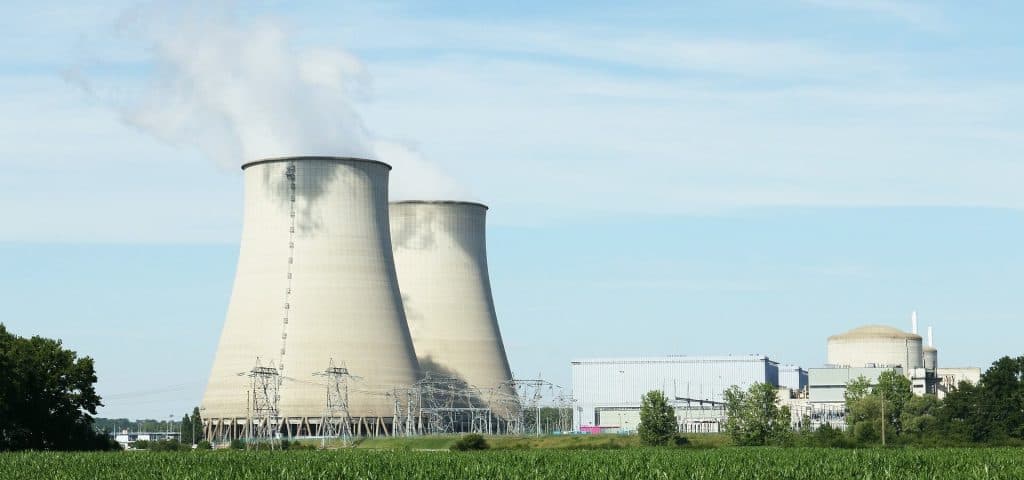
Traditional Czech suppliers to the nuclear power industry face a major dilemma. After sixty years of developing the nuclear industry across the former Czechoslovakia, it is difficult to find further “nuclear” business, and the sector’s future is highly uncertain.
Building additional reactors in the Czech Republic is a matter for the rather distant future, if it happens at all. And builders of nuclear units abroad often prefer subcontractors from within their own group or – in the interests of so-called localisation – companies from the countries where new nuclear power plants are being built.
The key question now is this: Is there a potential nuclear power plant project anywhere in the world that could attract Czech subcontracts on a larger scale – worth at least many billions, or even more than ten billion Czech crowns? Ideally, such a project should become a reference project for further developments…
An emerging kingdom
Of all the projects mentioned so far, Jordan currently appears to be the most promising. Consultancy firm Procorre has placed this country among three rapidly emerging countries in nuclear power – rather unexpectedly for many.
China’s presence in this trio comes as no surprise. However, the inclusion of Jordan and Vietnam in such company attracts greater attention. “Five years after the Fukushima accident, some countries began investing heavily in their nuclear sectors for the first time and are taking steps to increase the amount of energy generated by nuclear power plants,” Procorre said.
King Abdullah II expressed the direction of the Middle Eastern country’s ambitions: according to him, Jordan is to become a model for the peaceful use of nuclear energy in the region’s troubled environment.
In cooperation with Russian state corporation Rosatom, Jordan plans to build the new Qasr Amra nuclear power plant. Its first 1060-megawatt unit could be completed in 2025.
Why the Czechs?
Czech companies naturally have no contracts guaranteed in advance. Nevertheless, greater opportunities are currently emerging in Jordan than anywhere else.
How is this possible? The explanation lies in the chosen financing model for the future power plant. Jordanians and Russians will together provide only 30 percent, contributing equal shares. The future subcontractors would therefore have to “bring in” the remaining 70 percent of the funding.
Czech companies would thus need to secure loans from domestic banks for their supplies and insurance from state export insurer EGAP. This is by no means unrealistic, given the support the government has promised nuclear exporters.
Czechs preferred to Chinese
It naturally depends on agreements between Czech companies and both the Jordanians and Rosatom. Czech firms must succeed against other companies – according to Jordanian sources, primarily German, Chinese and Japanese firms, which can likewise count on support from their respective governments.
The Czech side may benefit from the traditional cooperation between the Czech nuclear industry and Rosatom, which clearly has no reason to particularly encourage its Chinese competitors. The Czechs are in an entirely different position – unlike the Chinese, they have no ambition to develop their own reactor type.
In Jordan, at any rate, the model is entirely different from cases where the Russians fully finance power plant projects themselves – whether in Russia itself or, for example, under the planned project to build a new nuclear power plant in Turkey.
Given the traditional cooperation, some Czech subcontractors are involved in these cases as well, but logically Russian firms should be expected to win the bulk of the contracts there.
On the other hand, in Rosatom projects the Czechs currently have far better prospects overall than in any other nuclear power plant projects.
The turbine is key
A key role among potential Czech suppliers could be won by the Plzeň-based, Korean-owned company Škoda Doosan Power, a traditional turbine supplier. This was also confirmed by Rusatom Overseas vice-president Leoš Tomíček in a recent interview with the online magazine Dotyk. According to him, potential supplies from Czech companies could be worth €500 million or more for each VVER-type unit. The specific value of supplies depends on many factors. “It could, for example, be the entire turbine hall including the turbogenerator, which would be supplied by Doosan Škoda Power,” Tomíček told Dotyk.
Leoš Tomíček further stated that Rosatom also envisages cooperation with Czech companies on further projects and optimistically assumes that Czech-Russian cooperation could ultimately extend to the construction of new units in the Czech Republic – at Dukovany and Temelín.
What Mochovce showed
The theoretically possible scale of Czech companies’ involvement is illustrated by a project that is, to a considerable degree, “saving” the Czech nuclear industry at present – the completion of the nuclear power plant at Mochovce in Slovakia. Alongside the aforementioned Doosan Škoda Power, companies participating in the project include Škoda JS, Modřany Power, Královopolská RIA, ČKD Praha DIZ and Chladící věže Praha. State insurer EGAP has concluded insurance contracts for Czech supplies to Mochovce worth more than 20 billion Czech crowns. This case is exceptional, however; achieving a similar level in the construction of a nuclear power plant in a more distant country would be tantamount to a miracle.
Jordanian sun and nuclear power
As for Jordan, the country is interesting from another perspective as well – given its substantial energy needs, it intends to provide maximum support for the development of both nuclear power and renewable sources. Unlike some views in Europe, Jordanians see no contradiction in this.
This is hardly surprising – according to consultancy firm Procorre, Jordan has until now imported 95 percent of its energy. It is currently launching tenders for solar and wind power plants, while renewables are to meet one-tenth of the country’s total energy needs by 2020.
Jordan undoubtedly has highly favourable conditions for using solar energy – it has 300-320 fully sunny days a year.
However, this does not diminish Jordan’s nuclear power ambitions in any way. Amman expects nuclear power to account for almost half of electricity generation by 2030.
Besides the Russians, Jordanians have also established contacts with the Koreans. They are currently involved in building Jordan’s first research reactor.
There is also strong public support for nuclear power in Jordan. According to research by the country’s Centre for Strategic Studies, 77 percent of people consider building nuclear power capacity the highest strategic priority. Experts believe the boom in this area should contribute to the development of human resources, an overall “nuclear culture” and, gradually, contracts for domestic suppliers, including construction companies.
The author works as a consultant and energy project specialist for the HATcom agency.
Translation disclaimer
This article is a machine translation of the Czech original and has not yet been fully reviewed. In case of any doubt, please refer to the Czech version.
Sdílejte článek prostřednictvím:
You might also like
26 September 2026, 13:54
26 September 2026, 07:42
25 September 2026, 11:17
25 September 2026, 09:51