In Klučenice in the Central Bohemian Region, 476 residents are seeking a path to energy self-sufficiency. Part of the municipality has already been heated for several years by a biogas plant, while the school uses wood chips from surrounding forests for heating and rooftop solar. And further measures are planned.
At the beginning of February, the heating season is in full swing. There is no gas pipeline to Klučenice, near Příbram, and local residents heat with electricity, coal or wood. Even though temperatures outside are several degrees below zero, some chimneys remain cold. Dairy cows from a nearby cowshed help provide heat not only for households. Their manure serves as fuel for a biogas plant that has supplied the municipality with heat for nine years.
The village of just under 500 residents has two shops, a post office, restaurant, school, kindergarten and soon also a children’s group. Klučenice also has its own campsite. For several years, it has also managed a museum through a civic association, documenting the history of the area. This is closely connected with the nearby Orlík reservoir.
One of the two local shops is among the most distant buildings connected to heat from the biogas plant. The district heating pipeline was extended there back in 2017. Around noon, the grocery shop is busy. Three customers stand at the checkout, choosing items from the deli counter before paying. While it is windy and freezing outside, the shop is pleasantly warm. “We’re heating, so I’m satisfied so far,” laughs Monika Štecherová, who took over the grocery shop this January. They had no heating problems here before either, confirms a sales assistant who has worked there longer.
A household pays ten thousand a year for heat
Štecherová arrives at work at half past five in the morning and turns on the heating. She likes not having to stoke a boiler herself or deal with an electric boiler. By the time she opens the shop at seven in the morning, it is pleasantly warm. She chooses the temperature herself. On a shelf behind the till, she has a thermostat set to 20 degrees. “Actually, there was only one time when we weren’t heating: I left the thermostat in the sun and it warmed up. I called the biogas plant and asked why it wasn’t heating. Only then did I realise the problem was on our side,” Štecherová says. “Since then, I’ve made sure to leave it in the shade,” she adds.
Neither of the shop assistants minds the smell from the plant; they have become used to it. “I live by a field, and when they spread manure, it is much worse than the whole biogas plant,” says Štecherová. They notice the plant most when waste from electricity and heat production is being removed. “You can smell it outside, but it’s nothing terrible,” she adds.

Similarly, municipal apartment blocks, another 19 family homes, the second shop, gym, post office, fire station and kindergarten are heated. The kindergarten also has a wood-chip boiler, which is started during severe frosts. Overall, the village’s district heating network has 31 connection points, with approximately 2.5 thousand gigajoules of heat flowing through it each year.
“At first everyone was cautious, but today everyone here would like heat from the biogas plant,” says Klučenice mayor Václav Vozábal. Connection allows households to make significant savings. Last year, they paid 305 crowns for one gigajoule of heat from the plant. In a municipal apartment block, one household pays an average of ten thousand crowns a year, less than for heating with solid fuels.
According to statistics, heating an average Czech household with wood costs around 20 to 30 thousand crowns a year, while the figure is higher for briquettes. Brown coal costs more than 30 thousand. People pay the most for electric heating.
There is not enough “fuel” for expansion
The company Zemědělská Klučenice built the biogas plant at the cowshed site 15 years ago. “At the time, we were looking for ways to make the farm more efficient. A biogas plant came out best for us,” says Stanislav Žák, father of the current chairman of the same name. The construction cost 67 million crowns at the time, with a 20 million crown subsidy from the Ministry of Agriculture.
“We have worked with the municipality from the beginning,” Žák notes. After several years, a district heating pipeline was added to the plant and was gradually expanded. The European Regional Development Fund helped finance it. Individual houses and the municipality have contracts directly with Zemědělská Klučenice.
“Residents keep asking me whether they can still join,” the mayor adds. But capacity has now been exhausted. The plant would have to be expanded, but that is not planned. There would not be enough fuel.
I walk through the extensive cowshed complex with current chairman Stanislav Žák. “Do you mind if you can smell it a little?” he asks as we enter one of the halls. They care for more than 500 Holstein-Friesian cows and another 200 calves here. Their excrement serves as “fuel” for the biogas plant.
Scraper blades gradually move it from the floor into a collection tank, from where it is pumped via pipes and channels to the plant. The cows produce 65 tonnes of fuel a day, approximately 60 percent of what the biogas plant needs. It also processes low-quality feed, as well as maize, wheat, rye and grass silage.
“For us as a livestock operation, it is an ideal way to dispose of manure and residues. Otherwise, we would have to transport them away,” Žák explains. “It would not make economic sense for us to bring fuel in from greater distances; we have everything here,” he adds.
Biogas provides certainty
Vladislav and Ondřej Vopička run the facility. They gradually show me how heat and electricity are produced. Manure, feed residues and other crops are compacted in a receiving tank. The unappealing-looking mixture is stirred and sent into the large fermenter vessel. The brownish liquid with lumps is gradually heated without access to air.
The plant operators take me up the steps to a small window that looks inside. “If you look, you can see bubbles of biogas,” Ondřej Vopička tells me. The biogas is released through the action of bacteria. It is essentially controlled decomposition, or fermentation. Digestate is produced as a by-product and can be used as fertiliser.
The gas produced drives a large “engine” in the technical building next to the plant. The installed capacity of this combined heat and power unit is 703 kilowatts, and the equipment produces almost six thousand megawatt-hours a year. The plant could theoretically supply electricity to up to two thousand households, but most of it goes into the grid. Eight percent is consumed at the site, with roughly the same share used to run the plant itself.
“Biogas has its advantages. Today, I can tell you how much we will produce in a year. It does not matter to us whether the sun is shining or the wind is blowing; we provide certainty for the municipality,” chairman Žák adds. “Compared with the time when people heated their homes themselves, the air here has really cleared up in winter. In my view, every cold chimney is a good thing,” he says.
“A grant-mad workaholic”
Thanks in part to the positive experience with the biogas plant, Klučenice has started seeking further ways to use green energy. Current mayor Václav Vozábal, who took over the municipality after the latest local elections, is also pursuing this path. Before that, he taught physics at the local school.
“My election was unexpected both for me and for the residents. As a young newcomer, I was as low as seventh on the candidate list,” he says. The foundations of energy self-sufficiency had already been laid by his predecessors. “If the municipality had not been so well underway, perhaps I would never have taken it on,” the mayor admits. “Getting started costs a lot of money, work and worries. You have to think ahead,” he explains.
“I am a bit of a grant madman and a workaholic. You have to be a bit crazy, otherwise you would really go crazy from it,” Vozábal says, playing on the words. He points to two pages listing projects in bullet points: fire station, children’s group, shelters for cyclists... “So that something remains here after me, as they say,” he laughs.
Klučenice residents have varying views of his decisions. “That is normal. For example, we are now preparing a public discussion on a new public space. I believe people will come and have differing opinions. One will not like a tree, another would prefer to move a bench two metres further away,” he says.
The school is heated with wood chips
The school is one of Vozábal’s key concerns. Sixty pupils currently attend the nine-year school. “There are often only five or six children in a class. Yet the school plays a crucial role for the municipality. Without it, families would have no reason to stay here,” he adds. His goal is to double the number of pupils. He is already partly succeeding. The kindergarten is at full capacity, so a children’s group is being built.
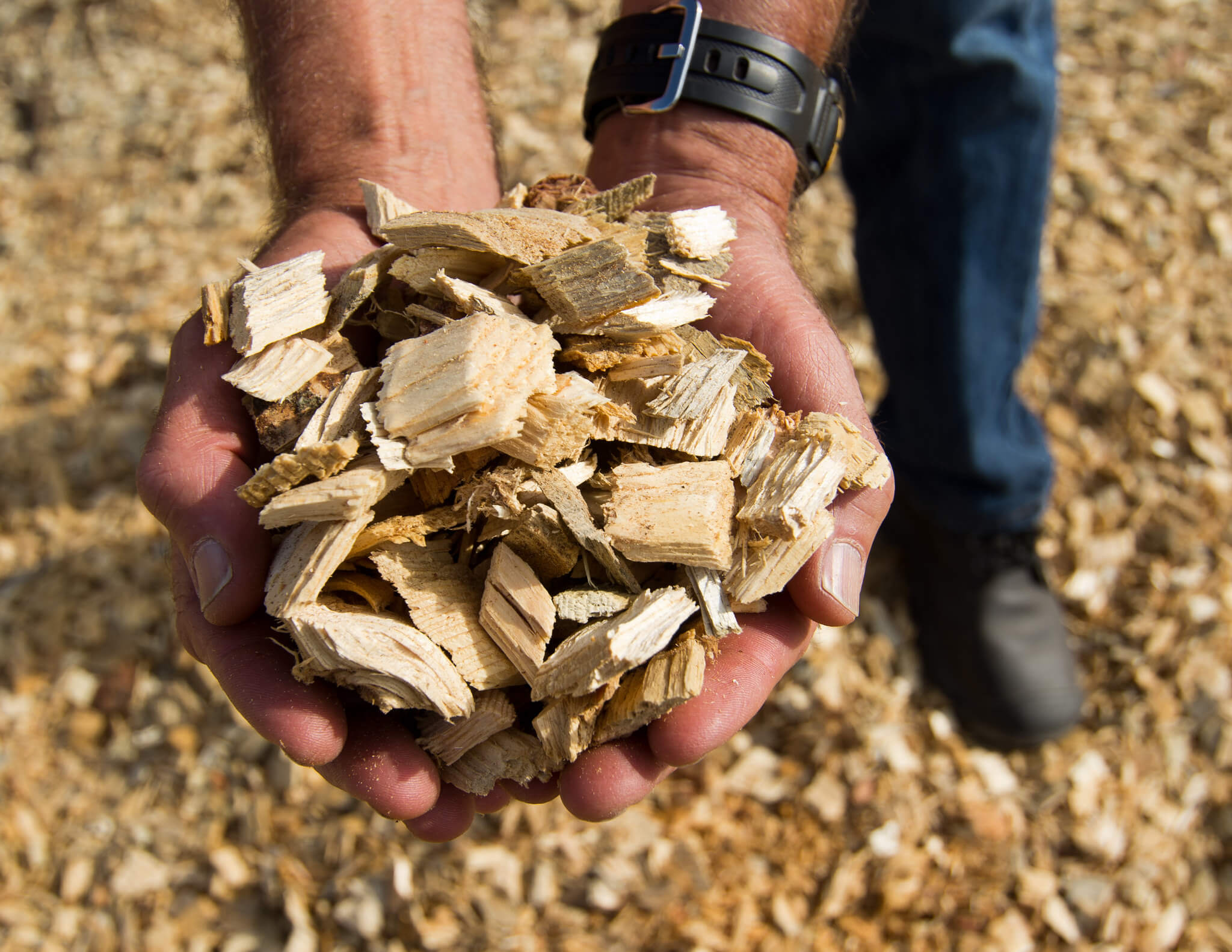
The municipality is continuously seeking to reduce the school’s operating costs. More than ten years ago, an old coal boiler was replaced with a wood-chip boiler. “Previously, someone had to spend several hours a day on it to keep the classrooms warm. Classic dirty work,” says school principal Aleš Suchý, who looks after the boiler. “Now I have to check it every day, but the amount of work is incomparable,” he adds.
The village has plenty of firewood. Last year, it even sold surpluses. “Municipal employees make wood chips from branches and offcuts, and that is what we use to heat the school. If I disregard diesel and wage costs, it is basically free,” mayor Vozábal adds.
How to attract new people to the municipality
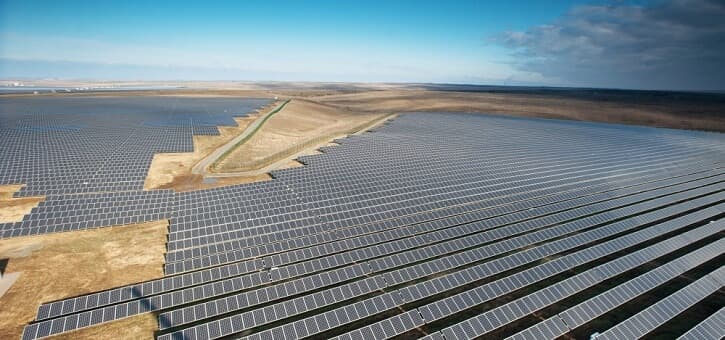
The school has also been insulated, and a solar power plant was added to its roof last year. The electricity generated is consumed on site. “All we still need to do is replace the radiators. We will see what else the mayor comes up with,” says the principal. “They have somewhat poached him from me at the municipal office. When he teaches physics, he is my subordinate. But as mayor, he is my superior,” Suchý laughs.
Solar power should also be added at the wastewater treatment plant. “So that we do not have to raise wastewater charges, we want to invest in our own generation source here as well. I am not in favour of unnecessarily subsidising operations with municipal money; it is better to invest and then save,” the mayor explains.
Looking ahead, Vozábal is also considering electricity sharing. “We would like to build a large solar installation on the gym roof and lay our own cable when power lines are put underground. Electricity for municipal buildings would be much cheaper,” he says.
But energy self-sufficiency is not the only way Klučenice supports sustaining life in the countryside. The municipality is preparing new building plots, renovating older municipal houses and buying up land to prevent developer speculation. It also plans to build new flats, which it will offer to young families at realistic prices.
“My aim is to create conditions for people who want to live and work here permanently. We do not need a large profit from sales. The added value for us is that we will not have to subsidise the school as much and will gain tax revenues from new residents,” says Vozábal.
Mayors are increasingly interested in energy
The recent energy crisis showed how valuable locally owned green sources of heat and electricity can be. Building self-sufficiency is not a matter of one year, but work that takes decades. “Interest is clearly growing. Five years ago, according to our surveys, one in ten mayors of small municipalities dealt with energy; today it is already one in four,” says Michal Svoboda from the OBEC 2030 project. This platform of the Association of Local Authorities supports sustainable energy in Czech municipalities. Among other things, it helps them develop energy strategies, identify savings and use suitable green sources. “It is not just about solar power, but above all about adapting to the location and possibilities of the given area,” Svoboda points out.
For five years, the platform has mapped energy initiatives across the country and also runs a competition. “Better than any methodology is showing what municipalities have already achieved, because Czechia is certainly not lagging behind,” Svoboda explains. In his view, good examples include globally unique Kněžice in the Central Bohemian Region, which began striving for self-sufficiency in 2006, Modlany in northern Czechia and Mikolajice in the Opava region. Many municipalities are also embarking on electricity sharing, like Brumovice in South Moravia.
Svoboda advises mayors who are only beginning to address energy issues: “Go to educational events, discuss and share experience.” The second step, he says, is to create an energy strategy. It is important first to comprehensively map consumption and draw up an investment plan, from major projects to small ones such as replacing light bulbs.
This will bring municipalities not only further responsibility, but also freedom. Modern technologies and algorithms will, in his view, play an ever-greater role, helping to manage the energy mix according to current weather or consumption, for example. “I like to compare energy to mobile phones. People once said only idiots bought them. But in the end, they completely changed the way we communicate. Decentralised energy will similarly transform the existing system,” Svoboda says.
The article was published in Reportér magazine.