9 October 2026, 06:22
Loading...
Czech buildings’ path to zero emissions: the ‘worst of the worst’ must be upgraded by 2030
Ekonews.cz
3 December 2024, 11:07
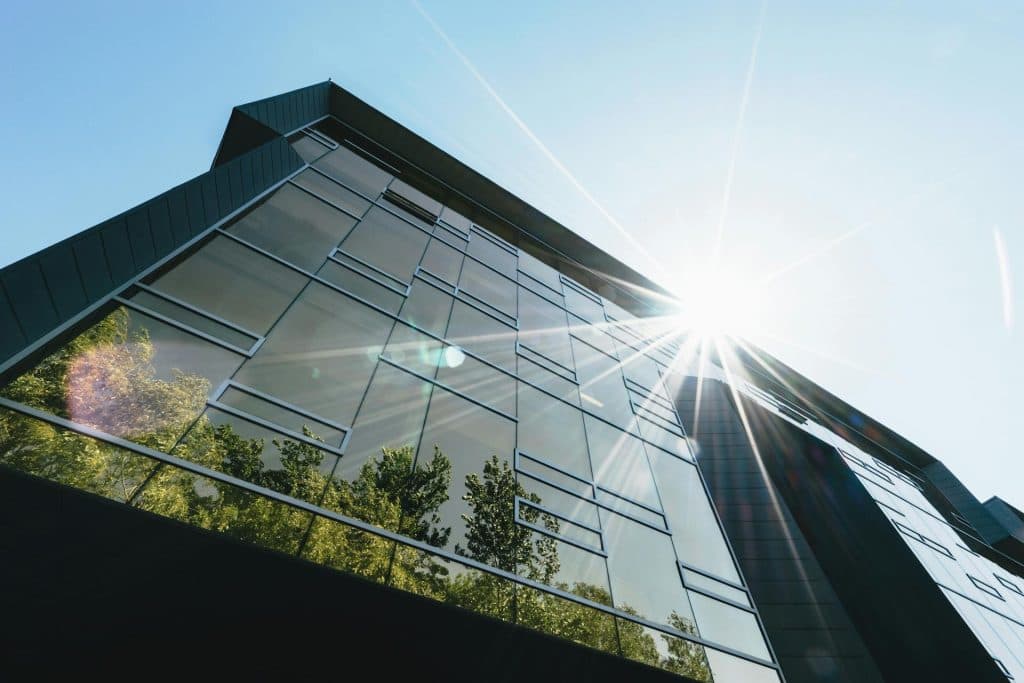
Buildings account for more than 40 percent of energy consumption in the European Union and produce more than one-third of carbon dioxide emissions. Improving their energy efficiency and reducing CO2 emissions therefore plays a major role in addressing climate change.
The EPBD4 directive is one of the key pieces of European Union legislation aimed at improving the energy efficiency of buildings and reducing carbon emissions. This fourth revision of the directive, approved by the European Parliament, responds to commitments arising from climate agreements (the European Green Deal and Fit for 55) and targets the decarbonisation of the construction sector. EPBD4 aims for the entire building stock to achieve zero carbon emissions by 2050.
New buildings first, then the rest
New buildings should be the first to be addressed, with permits gradually no longer being granted for standards other than zero-emission buildings (ZEBs). For these buildings, the directive does not allow the use of fossil fuels directly within the building, which will particularly affect still-popular gas boilers. The main options remaining for heating and hot-water supply will be electric heat pumps, wood or pellet boilers, and efficient district heating. These main sources should be supported primarily by solar panels. Energy that a building cannot generate on site and must purchase externally must be guaranteed to come 100 percent from zero-emission sources.
“Typically, this will involve ‘green’ electricity, where the zero-emission source will be operated by—or the electricity purchased by—either an electricity trader directly, or it may be shared through community energy schemes, for instance from other buildings,” explains Jiří Cihlář of consultancy CEVRE, which operates in the field of building energy performance. “These requirements will apply to buildings applying for building permits from 2028 in the case of new public buildings, and from 2030 for other buildings,” Cihlář adds.
However, EPBD4’s biggest task is to reduce emissions from existing buildings. Existing buildings will have to undergo modifications in gradual steps to meet new energy performance criteria. This first involves reducing their energy demand, followed by a gradual switch to zero-emission energy sources. Each country must plan this entire transition so that it can be implemented by 2050.
At least 16 percent by 2030
The first step for the existing building stock is an obligation to improve at least somewhat the worst-performing buildings under the building energy performance certificate rating scale. By 2030, 16 percent of the least environmentally friendly buildings should be upgraded, compared with their status in 2020. After this date, those failing to meet the requirements will face problems when selling, leasing, donating or changing the use of a building where this involves registration in the land registry. The registry will newly require the submission of a valid energy performance certificate.
EPBD4 also places emphasis on the digitalisation and modernisation of buildings through smart technologies. It supports the introduction of systems enabling real-time monitoring and optimisation of energy consumption. Technologies in smart buildings that automatically regulate heating, lighting and other energy-intensive systems enable greater energy efficiency. At the same time, they monitor and safeguard the quality of the indoor environment (air, light, etc.), which has a positive impact on both users’ financial savings and their health. The directive also introduces a requirement to establish electric-vehicle charging stations in buildings and provide bicycle parking spaces.
Heritage buildings will not be damaged
The directive gives individual countries broad scope to tailor requirements to their specific circumstances, particularly with regard to renovating existing buildings. The aim is to ensure that renovations do not compromise, for example, the heritage or architectural value of buildings. For such buildings, Czechia may set its own exemptions and mechanisms to prevent this.
Buildings with certain constraints—for example, a valuable street-facing façade—will simply not be able to achieve such a high standard directly at the building itself. This does not mean they cannot reach a zero-emission standard. They will just have to purchase more “green” energy.
“It should not mean the reckless demolition of old houses and new zero-emission construction. We should not forget the embodied carbon footprint of building materials either, which is lower in the case of renovations than for new construction, as well as some negative environmental impacts of manufacturing green technologies, raw-material extraction or logistics, which often take place outside the EU,” warns Karolína Barič, a sustainability specialist in construction at Rethink Architecture. According to her, it is also important to monitor and properly regulate the entire life cycle of buildings and products (so-called LCA), as well as address how they are manufactured.
Expanding the adviser network will help
Measures to meet EPBD4 requirements will require considerable financial resources. With its highly successful New Green Savings programme, the Czech Republic is a European leader and a good example for others. This and other subsidy programmes will have sufficient long-term financial resources secured thanks to the directive. What currently requires greater attention is free and, above all, independent basic advice for everyone affected—not only owners of family and apartment buildings, but also towns, municipalities and businesses. The network of advisers should be significantly expanded. At the same time, from 2026 the directive introduces a so-called renovation passport, which will provide building owners with information on options for phased renovation of their properties.
The EPBD4 directive represents a major step towards achieving energy-efficiency and construction-sector decarbonisation goals. For Czechia, it means both challenges and opportunities. Architecture and construction are complex fields—sustainable solutions must therefore also be implemented holistically. For example, rather than creating new “green suburban satellite developments” on greenfield sites, the focus should be on existing structures. Although considerable effort still lies ahead, sustainability can be expected to become a standard part of construction output.
Republished from EkoNews.cz, a website covering business and sustainability.
Translation disclaimer
This article is a machine translation of the Czech original and has not yet been fully reviewed. In case of any doubt, please refer to the Czech version.
Sdílejte článek prostřednictvím:
You might also like
8 October 2026, 10:05