9 October 2026, 06:22
Loading...
Most common mistakes in Czech ‘Repair your grandmother’s house’ scheme. ‘Some people will have to repay the subsidy,’ experts warn
Ekonews.cz
10 September 2024, 15:20
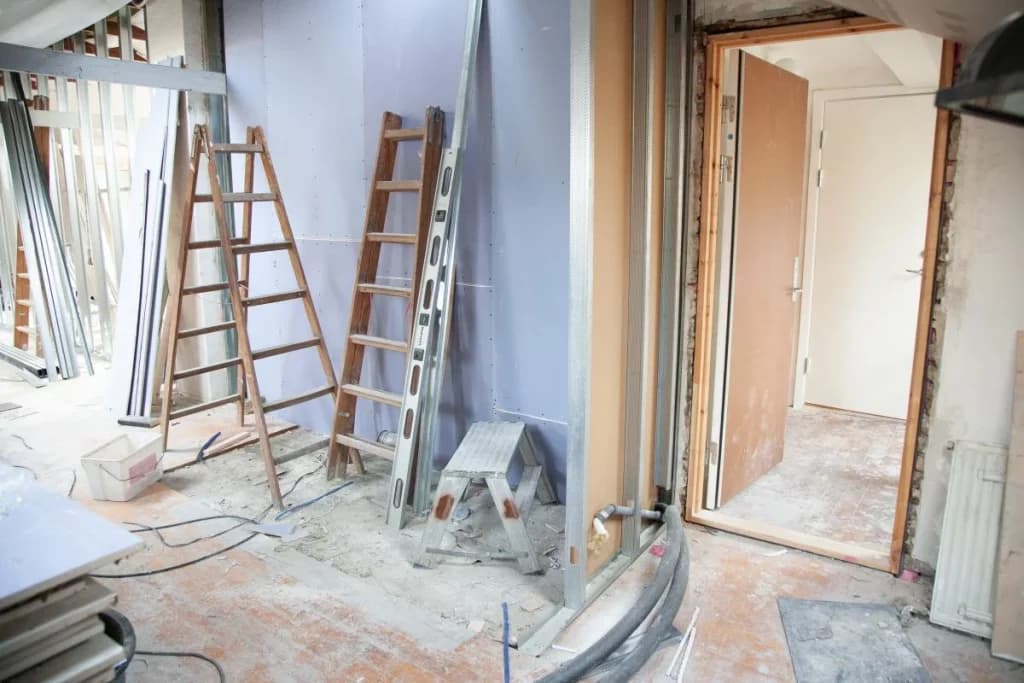
The Repair your grandmother’s house programme has been running for nearly a year. According to experts, the conditions of the so-called Grandmother scheme, which helps people renovate older properties, are extremely demanding. Ekonews brings an overview of the most common mistakes made by people applying for the subsidy.
Repair your grandmother’s house promises subsidy support of up to one million crowns, with applicants also receiving the money in advance in the form of a deposit. But the reality is not quite so idyllic. Builders who decide to renovate an older property with the help of this subsidy face so many pitfalls and problems that most do not even submit an application.
And when they do submit one, they encounter difficulties that a layperson can hardly resolve. Companies specialising in renovations under the Grandmother scheme, as the subsidy is colloquially known, say desperate clients come to them with renovations already under way and ask for help.
According to Luděk Lošťák, commercial and technical director at Comfort Group, it is beyond the capabilities of an ordinary citizen even to submit the application. “People often confuse the New Green Savings programme with the Repair your grandmother’s house programme and are unclear about what requirements they must meet in each case to obtain the subsidy. This includes seemingly minor details, such as a change made this June. Previously, it was necessary to own only one residential property; since 1 June, it has also been possible to own an additional property,” says Lošťák.
Banks offer loans at reduced interest rates
Further problems arise once renovation work begins and alterations to the house do not adequately take into account the proper insulation of the facade and other elements of the building envelope. “For example, people insulate a house insufficiently and then do not qualify for the subsidy. But that is not all. They often cause themselves problems with moisture and mould because they cannot size the insulation correctly or choose a suitable technical solution. It is like wanting to race at a high level but taking an ordinary city car,” Lošťák compares.
Another pitfall is misunderstanding the subsidy rules. There is supposedly a myth that the applicant must have 50 percent of the planned investment ready at the outset, in the form of funds held in their bank account. That is not true.
According to Lošťák, applicants often do not understand that they receive the entire subsidy in advance, as a deposit for implementation. They can therefore arrange any additional financing for the construction from their own resources or through a preferential mortgage loan at 3.5 percent interest, up to the amount of the approved subsidy support, later.
“If the State Environmental Fund approves a subsidy of 750 thousand crowns for me, I can apply to a bank for a loan at a reduced interest rate of 3.5 percent for another 750 thousand. This in itself is a very advantageous solution, because there is currently no other preferential support of this kind in Czechia for renovating and insulating residential buildings,” says Lošťák.
People must calculate the subsidy amount themselves
However, calculating the subsidy is not at all simple. “Most applicants understand that they must contribute their own financial resources to the investment. What they do not understand is that the total financial cost depends on what construction work they will carry out and to what extent. In other words, the subsidy amount cannot simply be stated off the top of one’s head,” Lošťák explains.
To illustrate, he gives an example: an applicant wants to renovate a building and wants to know how much the whole project will cost. They know they can obtain between 1300 and 4900 crowns per square metre in subsidy support, depending on the type of structure. If they calculate the elements of the building envelope, they can then calculate the subsidy support to within plus or minus 20 to 50 thousand crowns.
“To this, one can add a subsidy for replacing the heating source, for the project, and support for dependent or student children, and suddenly there is a fairly clear outline of the total subsidy support,” Lošťák sums up.
Beware of experts who only understand paperwork
Lukáš Donné, director of the Stavby All Inclusive programme at 1. jihomoravská stavební, also believes that in most cases laypeople have no chance of arranging the subsidy themselves. They often find an adviser who at most reads the subsidy call and its conditions and relays them to people. “But that person is not an expert who can devise how to put it all together so that the combination of individual elements works. They only understand paperwork; they do not understand construction,” Donné says.
He illustrates the problem with an example: the owner of a property wants to insulate her house and modernise its heating system, using the Repair your grandmother’s house subsidy. The adviser recommends a heat pump by sitting down at a computer and starting to search for a pump to offer her. But they do not calculate the overall energy balance with that pump, so in the end the owner meets the subsidy conditions but buys technology that makes no sense for her house. She then pays far more in operating costs than she would with technology carefully selected for her specific home.
To qualify for the subsidy and make the renovation worthwhile, the house needs to be moved into a lower energy category. “By insulating the roof, you prevent sixty percent of heat losses. Insulating the roof is therefore certainly necessary, replacing windows is great, insulating the facade is advisable, and insulating floors is also advisable in most cases. However, whether the house can be moved into a lower energy class is also affected by the type of heating,” Donné notes.
Another bad practice, he says, is when a construction company demands an advance payment too early. “They say: We want half a million paid immediately, then we will deal with the subsidy. But that is the wrong approach, because they are only interested in extracting money from people, even though they know the whole thing may fall through,” Donné warns.
No subsidy is available for a former pub
So what does the correct procedure for a contractor look like? When a client comes in, the company should first check whether they are eligible for the subsidy at all. “We find out how many properties they own, in which cadastral district those properties are located, how they are situated, and whether it would be better to demolish the house or repair it. All this should be clarified at the first meeting,” Donné states.
For example, obtaining the subsidy is prevented if the building is not approved for use as a house but as a recreational property, i.e. a cottage. Or it may be a former pub, making it a commercial property.
According to Luděk Lošťák, a major mistake people often make is not taking photographs of the construction work. “Although we tell everyone repeatedly that the entire process must be documented, after a few weeks they ask us the same thing again and again. The implementation must be photographed for the so-called final technical assessment report on the measures. But people have too few photographs, or none at all. They may then be unable to document their implementation activities to the fund,” Lošťák notes.
People also reportedly do not understand that it is possible to obtain a subsidy for renovating a house even if they demolish the original building and construct a new one. “The building authority correctly calls it a new build, but for the subsidy programme it is a renovation with full support for construction of the house, or rather for the building envelope and new technologies. This is precisely where people make mistakes: when demolishing the original structure, they have not photographed the original structures of the old building and the heating sources connected to the chimneys. Nor do they have a certificate of the environmentally sound disposal of the source,” Lošťák explains.
Among other things, these shortcomings may result in the builder having to repay the subsidy. This has not happened so far, but according to Lošťák it will. “For now, it is still too early. Applicants have 24 months from receiving the subsidy and drawing down the funds to complete the work and document its implementation. But it is entirely clear that this will happen, because many people carry out the construction themselves and do not understand the basic principle – namely, what eligible costs can be included in the subsidy and how to subsequently document them,” Lošťák is convinced.
Nine builders repay subsidies
The State Environmental Fund says that repayments of subsidies under the Repair your grandmother’s house programme have so far been rare. It recorded no cases last year; in the first half of this year, there were nine applications in total. Most involved the repayment of part of the subsidy.
“Given that more than 3.5 thousand applications have already been submitted under the Repair your grandmother’s house programme (the programme has been running since 26 September last year, editor’s note), the number of repayments is entirely negligible,” the fund’s director, Petr Valdman, told Ekonews. The most common reason for repaying part of a subsidy is that actual implementation expenditure is lower than the planned expenditure on which the deposit was calculated and paid.
“Another reason is that one of the supplementary measures is not implemented. In cases where the entire subsidy amount is returned, this is usually because the project is not implemented at all, as the applicant decides for various personal reasons not to carry out the renovation,” Valdman explains. However, he adds that it has long been the case under the New Green Savings programme, including Repair your grandmother’s house, that if inspectors find shortcomings in an application or documents, they start communicating with the applicant, alert them to the discrepancies and provide sufficient time to remedy them.
Republished from the online portal EkoNews.cz, a website covering business and sustainability.
Translation disclaimer
This article is a machine translation of the Czech original and has not yet been fully reviewed. In case of any doubt, please refer to the Czech version.
Sdílejte článek prostřednictvím:
You might also like



8 October 2026, 10:05