
25 September 2026, 09:51
Loading...
Overheating of the UK battery storage market may be a warning for Germany
Daniel Grecman
14 August 2025, 07:01
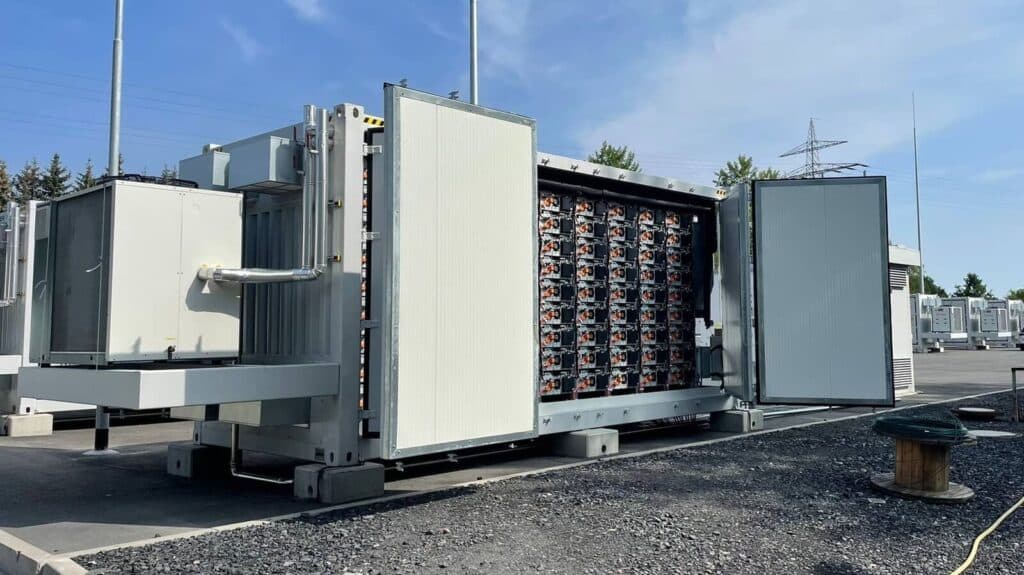
The UK experience shows that a rapid increase in large-scale battery installations can lead to market saturation and falling revenues. These currently flow to investors primarily from the provision of balancing services, i.e. services ensuring grid stability. Analysts predict that Germany will face similar developments within the next few years. However, this may bring both downsides and new opportunities.
The German battery energy storage system (BESS) market is facing developments similar to those already underway in the United Kingdom. There, market saturation is beginning to significantly reduce BESS operators' profits. According to analysts at Aurora Energy Research, revenues from participation in German balancing services should decline significantly by 2030.
"By 2030, we expect price saturation in balancing services, at least in the capacity reservation segments," said Thaddaeus Kreisig, Aurora's lead adviser for Germany.
Revenues from providing balancing services are of two types: 1) reservation payments, where a given asset is ready to deliver balancing energy – i.e. is on standby; and 2) payments for the actual delivery of balancing energy – i.e. when the asset is activated. Both take place on a competitive basis, with the price determined by the intersection of supply and demand. The greater the competition, the lower the price.
The Czech Republic has lagged considerably in implementing legislation that allows standalone battery assets to participate in the grid. Until now, batteries were treated solely as consumers and could not be assigned reserved capacity, making their operation impossible. However, the amendment known as LEX OZE III has been in force since 1 August, meaning this obstacle has been removed. And interest in connecting BESS is high.
Therefore, similar developments will occur domestically, as described above, and the payback period for BESS investments will lengthen. However, this also has its advantages – once this happens, batteries will seek other revenue sources and begin moving to intraday and day-ahead markets. Volatility within individual hours is currently high there. During periods of peak photovoltaic (PV) generation, prices often fall into negative territory, while in the evening hours they frequently exceed 200 EUR/MWh.
It is therefore likely that the price curve will flatten in the future. The extent of this, however, is a question that depends on individual countries' generation mixes and on the regulatory setup – for example, distribution charges or capacity mechanisms. Flattening the curve could ultimately improve the economics of photovoltaic plants, which deteriorate as installed capacity rises and the effects are beginning to show on the market.
Translation disclaimer
This article is a machine translation of the Czech original and has not yet been fully reviewed. In case of any doubt, please refer to the Czech version.
Sdílejte článek prostřednictvím:
You might also like

24 September 2026, 11:23

24 September 2026, 10:30
24 September 2026, 06:56