RWE launches revolutionary battery capable of providing synthetic inertia

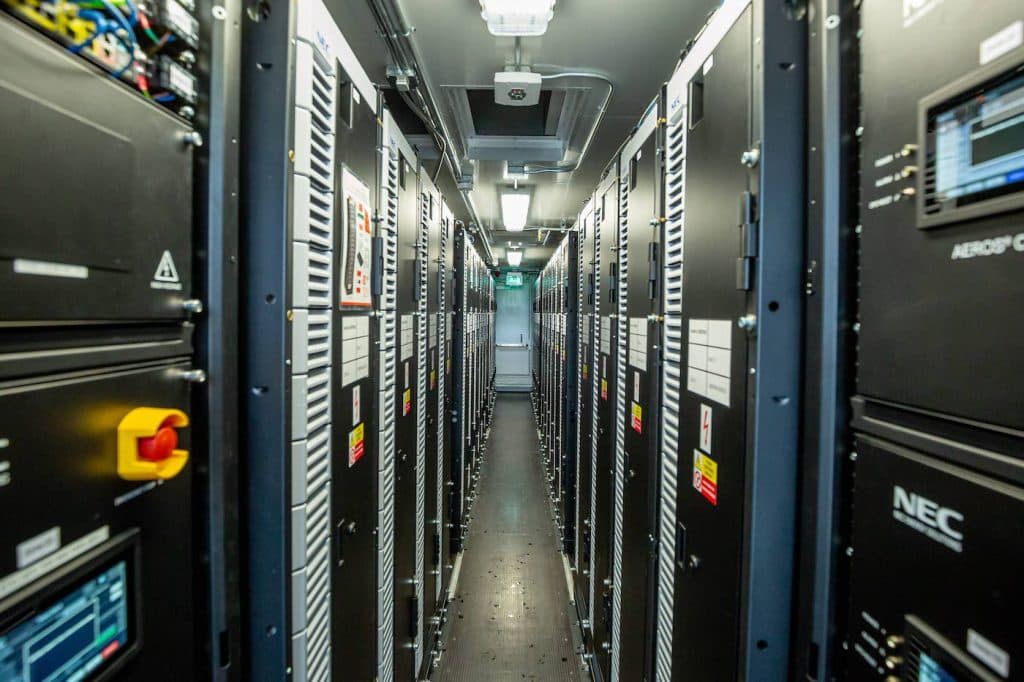
Energy company RWE has launched its ultra-fast battery in the Netherlands, which can provide so-called synthetic inertia. The battery storage facility, with an installed capacity of 7 MWe and a storage capacity of 11 MWh, is the first of its kind to be commissioned in Central Europe. RWE said in a press release.
The advanced technology at the newly launched battery storage facility in Moerdijk, the Netherlands, can start supplying electricity or charging within a few milliseconds, helping to stabilise the power system through synthetic inertia. European legislation defines this as the ability of a non-synchronous power-generating module or a high-voltage direct current system to replace the effect of inertia provided by a synchronous power-generating module, in accordance with prescribed functionality.
A replacement for large rotating machines
Inertia is the ability of an energy system to resist changes in frequency thanks to rotating masses connected to the system, which maintain steady rotation and angular momentum. The inertia of rotating masses is needed in the power system to maintain the balance between electricity generation and consumption in the event of sudden incidents, such as faults at power plants or in transmission system components.
When inertia is low, a fault at a large generating unit or in direct current transmission interconnectors can cause a greater-than-usual instantaneous frequency deviation. If the frequency deviation, or power imbalance, were too large, the secure operation of the power system could be at risk.
"Our latest facility in Moerdijk shows that ultra-fast battery storage can provide inertia, which was previously supplied exclusively by conventional power plants. As fossil-fuel power plants are gradually phased out, more and more systems like this will be needed to stabilise the power system," said Nikolaus Valerius, CEO of RWE Generation SE.
Alongside the start of commercial operations at the Moerdijk battery storage facility, a two-year pilot phase of the project has also begun, aimed at developing standards for future battery systems capable of providing synthetic inertia. RWE will use the data and experience gathered to develop technical requirements for similar facilities together with transmission system operator TenneT.
Translation disclaimer
This article is a machine translation of the Czech original and has not yet been fully reviewed. In case of any doubt, please refer to the Czech version.




