9 October 2026, 06:22
Loading...
Czechs breathe bad air like almost all of Europe. EU limits are lax
Ekonews.cz
19 October 2023, 13:59
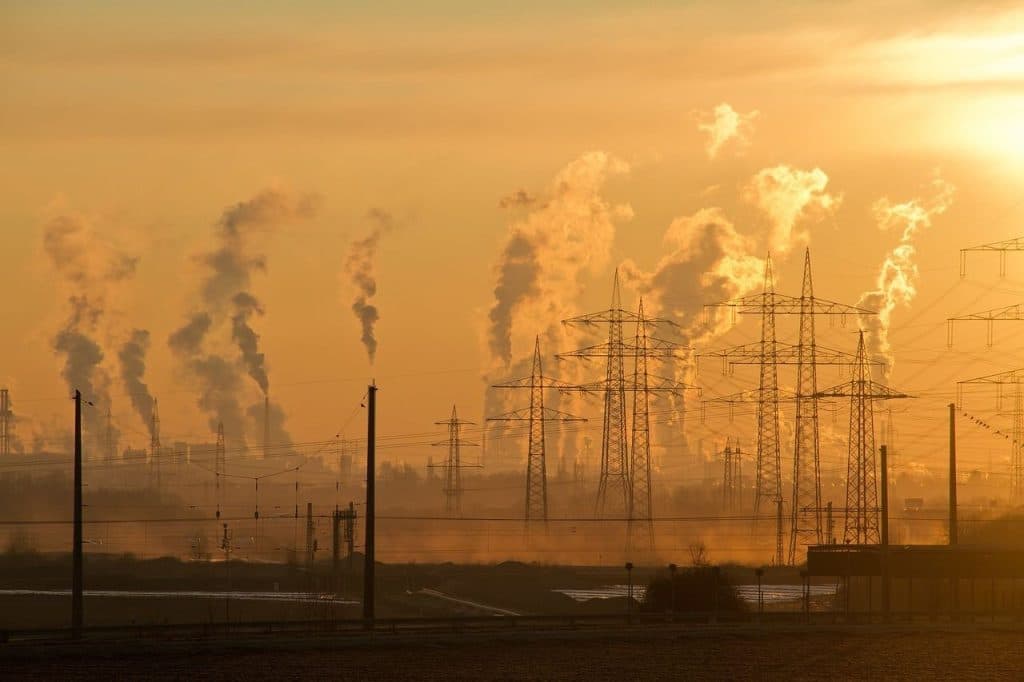
Almost all residents of Europe live in areas where the air is highly polluted with fine particulate matter. In many places, its concentration is several times higher than the limit set by the World Health Organization. Around ten thousand people die from it every year in Czechia alone.
Particulate matter smaller than 2,5 micrometres (PM2,5) is generated wherever dust is produced: from burning coal or wood, at construction sites, in transport and in agriculture. The World Health Organization recommends that its concentration in the air should not exceed five micrograms per cubic metre. This reduces the risk of the particles entering the lungs and causing significant problems there. However, European Union countries have set the threshold at 20 μg/m3.
Highly polluted air is breathed by 98 percent of Europeans, according to an analysis of satellite data from the Copernicus Atmospheric Monitoring Service, produced with the involvement of Deutsche Welle and the European Data Journalism Network. The results of the study showed higher concentrations of PM2,5 particulate matter across almost all of Europe. Around two-thirds of people live in areas where PM2,5 concentrations exceed the World Health Organization limit by more than twice.
Eastern Europe breathes worse air
Czechia meets the EU standard, but not that of the World Health Organization. “Over the past eleven years, annual average PM2,5 concentrations have been gradually declining. Compared with the ten-year average concentration across all stations of 19,5 micrograms per cubic metre, the annual average concentration of particulate matter last year fell to 14,3 micrograms, according to official sources from the Czech Hydrometeorological Institute,” says Michael Lažan, chairman of the Senzor vzduchu association.
“The relatively low concentrations of suspended PM2,5 particles last year can be attributed to favourable meteorological and dispersion conditions, as well as continuing measures to improve air quality – replacement of boilers, the ongoing renewal of the vehicle fleet and measures at major sources, Lažan explains.
The highest levels of microparticles were measured by stations in the Ostrava, Karviná and Frýdek-Místek urban area. “The air quality limit for the annual average PM2,5 concentration was exceeded there at five stations in 2022. The highest reading, 23,4 micrograms, was measured in Ostrava-Radvanice,” says Lažan.
The study results show that air quality tends to be worse in Eastern Europe. Across almost all of Serbia, Albania, Romania, North Macedonia, Poland, Slovakia and Hungary, PM2,5 concentrations exceed the World Health Organization limit. North Macedonia is worst affected, with particulate matter concentrations in the capital Skopje reaching as much as six times the limit. Only Italy matches Eastern Europe in terms of air “dirtiness”. More than a third of residents in the Po Valley in the north of the country breathe air that exceeds the recommended health limit fourfold.
The Nordic countries performed best in the analysis. For example, no location in Sweden exceeds the recommended limit by more than twice. The British daily The Guardian reports that nearly 30 million Europeans live in areas where PM2,5 concentrations are up to four times higher than the recommended limit.
Ten thousand deaths a year
The European Union intends to revise the limit for fine particulate matter concentrations by 2030. It should be reduced from the current twenty to ten micrograms per cubic metre. Experts, however, are calling for faster action and a stricter threshold. A number of studies show that particulate matter has a major impact on public health even at lower concentrations.
The Guardian reports that PM2,5 air pollution causes up to 400 thousand deaths across Europe each year. Research shows that PM2,5 microparticles can affect almost every organ in the body and cause a wide range of health problems, including heart, lung and cancer diseases, as well as diabetes. Polluted air may also be linked to low birth weight in newborns.
“EU limits are not only about health, but also take economic considerations into account. By contrast, the World Health Organization limits are set by experts who consider only the health aspect,” Mark Nieuwenhuijsen, director of the Barcelona Institute for Global Health (ISGlobal), told Deutsche Welle.
According to the European Environment Agency’s 2019 air quality report, 10,2 thousand people in Czechia die prematurely because they breathe poor-quality air. “Fine airborne dust causes 9 600 people to die earlier, nitrogen emissions cause 240 deaths, and excessive ground-level ozone concentrations cause the deaths of 350 people,” Lažan explains.
Republished from EkoNews.cz, a website covering business and sustainability.
Translation disclaimer
This article is a machine translation of the Czech original and has not yet been fully reviewed. In case of any doubt, please refer to the Czech version.
Sdílejte článek prostřednictvím:
You might also like


8 October 2026, 10:05