3 October 2026, 13:01
Loading...
The world's largest source of methane emissions is a landfill in Chile
Klára Čeperová
7 May 2026, 13:33
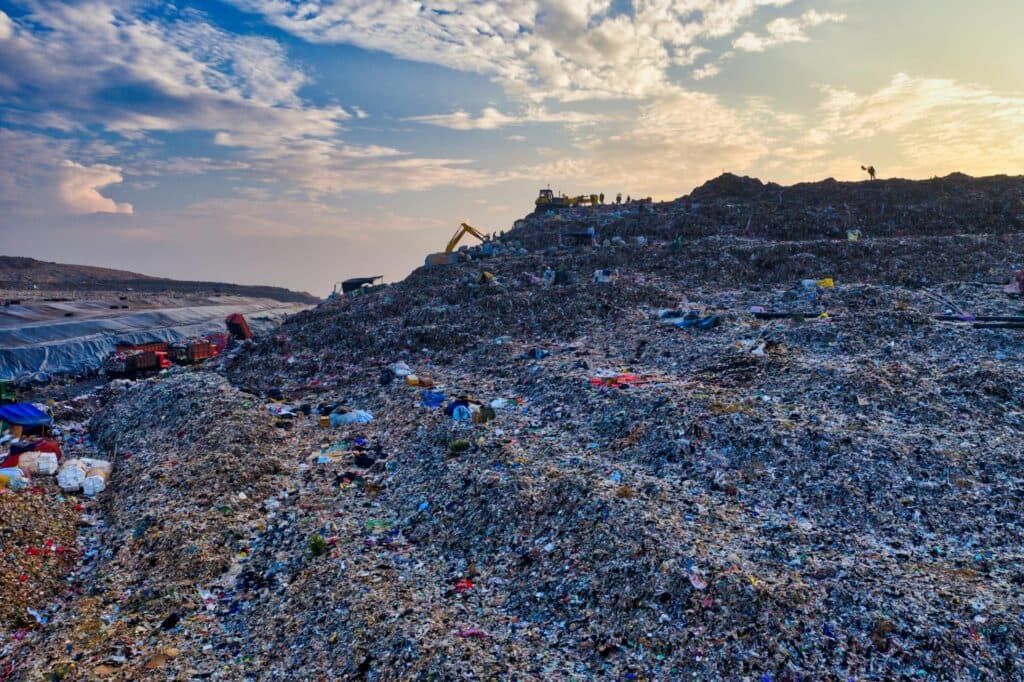
One of the largest sources of methane, which contributes to global warming, is a landfill rising from the hills on the outskirts of the Chilean capital, Santiago. This is shown by a study from the UN Environment Programme.
The Methane Alert and Response System (MARS) of the United Nations Environment Programme (UNEP) has issued an updated overview of the 50 human-made sites with the highest methane emissions in the world. It aims to alert countries to significant methane emissions and enable action to be taken.
The authors aggregate data from more than 30 satellites that can observe methane emissions. These are significant emission sources in the oil and gas, coal and waste management sectors, emitting either continuously or very frequently. Satellites capture only the largest methane emissions. Although the 50 most significant sources identified here account for only a small share of total global emissions, they are priorities for reducing emissions.
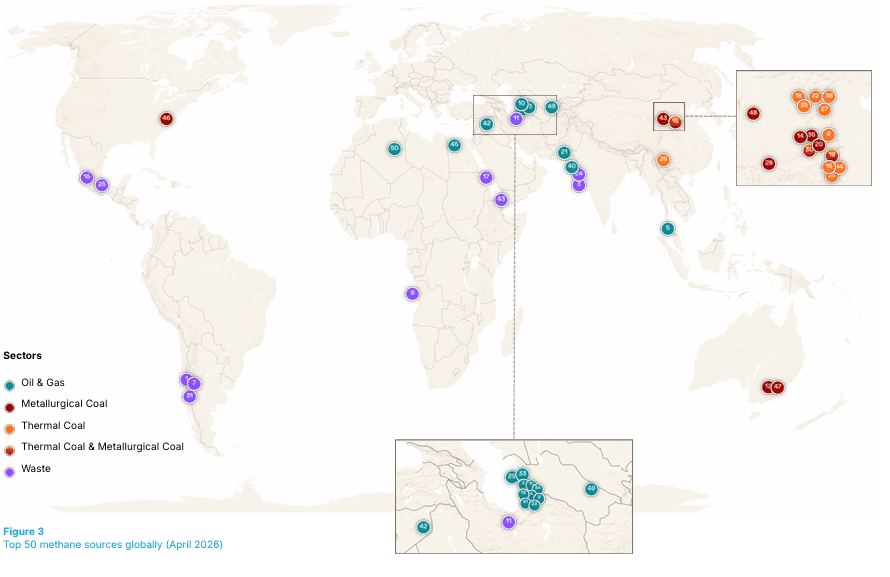
50 human-made sites with the highest methane emissions in the world Source: UNEP
Largest emitter
The ranking is topped by the Lomas Los Colorados landfill in Chile.
"This is a huge source of methane, which can have impacts not only in Chile but also globally," said Juan Jose Garces, head of the Department of Civil and Environmental Engineering at the University of Santiago.
The pyramid-shaped landfill, located about 60 km north of the city, receives household waste from an area with more than 7 million residents.
Since 2007, however, it has helped fuel a nearby power plant as part of a programme to convert captured methane into biogas, management company KDM Empresas told Reuters, which reported on the issue.
Energy recovery
The group also said that between 2007 and 2025, the biogas capture and energy recovery project, which is desirable, prevented the emission of more than 700 million cubic metres of methane and 11 million tonnes of carbon dioxide. The resulting energy output, which can reach up to 100 000 megawatt-hours (MWh), then supplies the Lomas Los Colorados power plant.
"This not only significantly mitigates the greenhouse effect, but also turns an environmental burden into a source of clean and useful energy," the company said in a statement.
Nevertheless, according to estimates in the UN study, the mound of compacted waste produces 102 667 tonnes of methane each year, equivalent to the annual emissions of nearly 2 million cars.
That is 20 000 tonnes more than the second-ranked site, an oil and gas facility in Turkmenistan. The other 20 sites on the list produce an average of 60 000 tonnes less.
KDM Empresas, part of the US-Spanish Urbaser Danner group, criticised the UNEP analysis as being based on a single measurement from early 2026 that did not reflect changing weather conditions and daily operations over time.
Translation disclaimer
This article is a machine translation of the Czech original and has not yet been fully reviewed. In case of any doubt, please refer to the Czech version.
Sdílejte článek prostřednictvím:
You might also like
3 October 2026, 07:43

2 October 2026, 21:55

2 October 2026, 15:14