
17 October 2026, 13:09
Loading...
EU summit to address Iran and energy prices, Czech PM Babiš pushes for ETS changes

oEnergetice.cz, ČTK
18 March 2026, 13:01
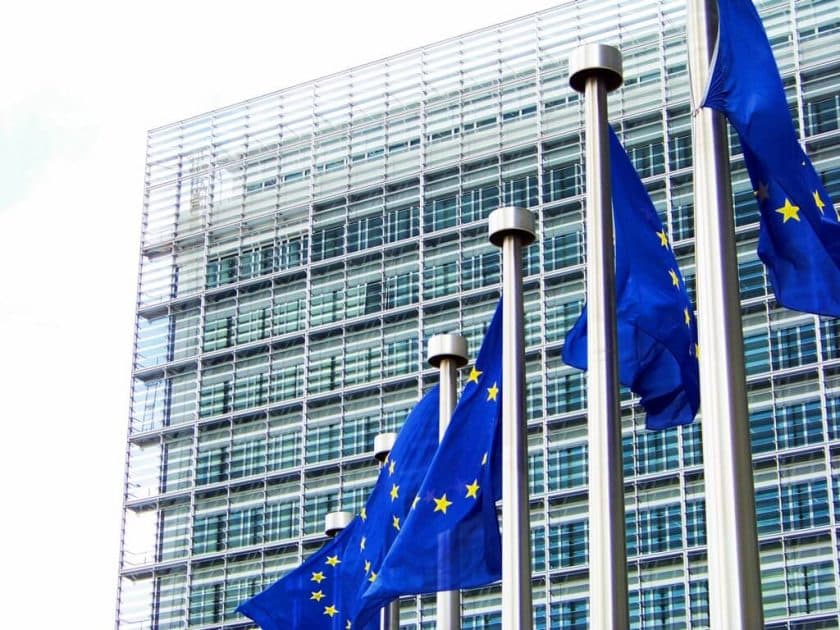
Brussels, 18 March (CTK correspondent) - Strengthening the European Union’s competitiveness was supposed to be the main topic of the EU summit beginning on Thursday in Brussels. But the situation changed with the US-Israeli attack on Iran, and EU leaders will also have to address the escalating situation in the Middle East, including its impact on Europe, particularly energy prices and energy security. European Council President António Costa also expects Hungarian Prime Minister Viktor Orbán to lift his veto as soon as possible and honour the agreement on an EU loan to Ukraine, which was approved back in December.
Czechia will be represented at the meeting by Prime Minister Andrej Babiš. At the summit, he plans to push above all for changes to the EU ETS emissions trading system. Czechia and other countries want the European Commission to address high energy prices, which they say are a fundamental obstacle to the competitiveness of European industry.
According to Babiš, Prague will support an Italian proposal to suspend the application of the EU ETS 1 emissions trading system, which covers the energy sector, heavy industry and aviation. Prague is also putting forward its own proposals: it wants a price cap on allowances and energy-intensive sectors to be excluded from the system. It also wants the Market Stability Reserve to be strengthened, so that the mechanism can better address excessive price volatility and help keep allowance prices under control in the short term.
The Czech prime minister has previously called the current system an “absolute disaster”, saying that Czechia has lost almost 160 billion crowns from it so far. Italy, Germany, Austria, Slovakia, Poland and Hungary support the Czech position calling for changes to the ETS 1 emissions trading system.
Babiš also raised his demand in a letter he sent to colleagues from other European countries before the informal February summit at Alden Biesen Castle. He criticised the trend in ETS 1 allowance prices and called for a delay to the launch of ETS 2, which would extend the system to road transport and building heating.
In a separate letter signed by eight countries, the Netherlands, Denmark, Finland, Portugal, Spain, Sweden, Luxembourg and Slovenia, by contrast, defended the ETS system and urged Brussels not to weaken it. They say it is a cornerstone of European climate policy.
European Commission President Ursula von der Leyen defended the system in Strasbourg last week. “Without this system, the EU would be even more vulnerable and dependent. The Union needs the emissions trading system, but it must be modernised,” she told MEPs.
The ETS 1 system is Europe’s main emissions allowance market, covering the energy sector, heavy industry and aviation in the EU. The ETS 2 system does not yet physically exist; after a one-year delay, it is due to start operating in 2028.
Diplomats have been negotiating the wording of the summit conclusions for several weeks, but there is not yet agreement on everything, and some points will probably be settled only on Thursday itself. According to information obtained by CTK, Czechia proposed specific additions to the summit conclusions on the ETS system. But under the latest draft, this section remains fairly general.
“Given that the conflict in the Middle East is having an immediate impact on energy prices for European citizens and businesses, the European Council stresses the need for a coordinated response,” says a draft of the conclusions from Tuesday evening, seen by CTK.
EU leaders could therefore call on the Commission to “swiftly present a package of targeted temporary measures to address recent price fluctuations in imported fossil fuels”.
The document also calls on the European Commission to “present targeted measures across all components of electricity”, focusing on concrete steps to reduce electricity prices in the short term, taking account of the differing circumstances in Member States and “while preserving long-term investment signals for energy generation from renewable and low-carbon sources”.
“The European Council also calls on the Commission to present a review of the emissions trading system (ETS) by July 2026 at the latest, with the aim of reducing allowance price volatility and mitigating its impact on electricity prices, while preserving the ETS’s essential role in climate action and the energy transition,” the draft conclusions add. They may still change.
The opening section of the conclusions concerns Ukraine. Leaders are expected to reaffirm their unwavering and steadfast support for the country’s independence, sovereignty and territorial integrity as it enters its fifth year of resisting Russian aggression. “The European Council commends the courage, determination and resilience of the Ukrainian people and their leadership in resisting Russian aggression and defending their country,” the document says. EU presidents and prime ministers will also recognise that Ukraine has managed to hold out and withstand enormous pressure from Russia, preventing it from achieving its military and strategic objectives. “In this context, it is essential to ensure that Ukraine has the budgetary and military resources to continue exercising its inherent right to self-defence and to resist and deter Russian aggression,” the draft conclusions add.
Financial assistance to Kyiv for both budgetary and military purposes was meant to be provided by an EU loan worth 90 billion euros (about 2.2 trillion crowns), which EU leaders agreed on at their summit in December. Hungary has now blocked it. Prime Minister Viktor Orbán is demanding that Ukraine first resume Russian oil deliveries through the Druzhba pipeline to Hungary and Slovakia. Ukraine says the pipeline was damaged in Russian attacks, while Budapest says Kyiv is blocking oil deliveries for political reasons.
Costa and von der Leyen announced on Tuesday that Ukraine had accepted an EU offer of assistance with repairing the pipeline, which some say could mark a breakthrough. Ukrainian President Volodymyr Zelenskyy also announced that repairs were nearing completion and that the pipeline could be operational again in a month and a half. But will that be enough for Orbán to lift his veto? Brussels media are asking.
According to an unnamed EU official, Orbán and Costa had a lengthy phone conversation on Tuesday morning. “The message was clear. The European Council president told him that he expected him to honour his previous decision. He also told Orbán that he could count on him to help resolve the situation around the pipeline and that he was in contact with the Ukrainian side,” the source said.
In addition to the EU loan to Kyiv, Hungary is also blocking the approval of the 20th package of sanctions against Russia and Ukraine’s path to the European Union by refusing to approve the opening of specific accession chapters.
Hungary will probably not join the section of the conclusions on Ukraine, and Slovakia will not support it either, Prime Minister Robert Fico announced today. The text will therefore have the backing of only 25 countries.
The meeting of EU leaders will begin at 10:00 with the traditional discussion with European Parliament President Roberta Metsola. Later in the day, EU presidents and prime ministers will connect by videoconference with Ukrainian President Zelenskyy. UN Secretary-General António Guterres will attend the working lunch. He wants to discuss above all the situation in the Middle East, as well as other crises around the world.
The March meeting was originally scheduled to last two days, but in a recent letter to leaders, Costa wrote that, as always, he would try to keep the meeting to one day.
Translation disclaimer
This article is a machine translation of the Czech original and has not yet been fully reviewed. In case of any doubt, please refer to the Czech version.
Sdílejte článek prostřednictvím:
You might also like




16 October 2026, 10:16