20 October 2026, 10:49
Loading...
Ribera: Czechia’s energy mix, including nuclear power, must be respected

oEnergetice.cz, ČTK
13 November 2024, 11:45
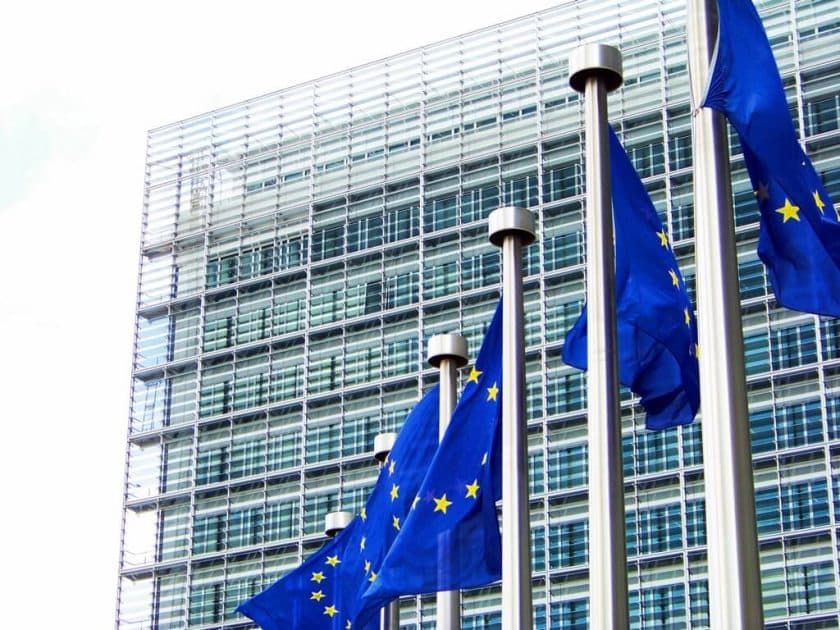
According to Teresa Ribera, a candidate to become a member of the new European Commission, it is important to respect the energy mix of each member state, including nuclear power. Ribera said this yesterday during a hearing before European Parliament committees. She was responding to a question from Czech MEP Alexandr Vondra (ODS), of the European Conservatives and Reformists (ECR) group. Czechia is one of the countries in the so-called nuclear alliance, which brings together EU states that have agreed to closer cooperation on nuclear energy. The group also includes France, as well as Hungary, Poland and Slovakia.
“Will you support extending the operating lives of nuclear reactors in the EU, and what is your view of small nuclear reactors?” the Czech MEP asked Ribera, who is set to become the European Commission’s executive vice-president for a clean, fair and competitive transition.
“It is important to respect the decisions of individual member states on how they organise their energy mix,” the Spanish candidate replied in general terms.
“We have certain decarbonisation targets for 2030 and 2050. Member states achieve these targets in their own way, and we respect that,” she added, saying that the nuclear alliance, which brings together like-minded countries, should also be supported.
Ribera has previously been criticised by several Czech MEPs. “Ribera has long been a critic of nuclear power, and I think this will not be easy for a country such as the Czech Republic or France, whose energy mix is configured as it is,” Czech MEP Tomáš Zdechovský of the European People’s Party (EPP) group recently told Czech journalists in Strasbourg. Filip Turek of the Oath and Motorists party (Patriots for Europe) also said that the energy portfolio, which had originally been discussed in connection with the Czech candidate for European commissioner, had gone to “activist opponents of nuclear energy”.

Several hearings with the European Commission’s nominated executive vice-presidents took place in the European Parliament yesterday. In the morning, Italy’s Raffaele Fitto and Estonia’s Kaja Kallas were in the spotlight; in the afternoon, Romania’s Roxana Minzatu and France’s Stéphane Séjourné; and in the evening, the three-hour “grilling” of Spain’s Teresa Ribera and Finland’s Henna Virkkunen continued. The hearing process for all 26 candidates for the new European Commission, which began on 4 November, is now drawing to a close. If they all pass, the new European Commission could begin work as early as 1 December, following approval by the European Parliament.
However, according to information from the Czech News Agency (ČTK), the assessment of the final six candidates has been postponed, either until Wednesday or even until next week. The political groups are probably waiting to see how today’s hearings go, keeping one another “in check” and adopting a tit-for-tat strategy: if you “sink” our candidate, we will not approve yours, the Brussels-based Politico reported. The result could be that all the candidates pass. The additional written answers submitted by Hungarian candidate Olivér Várhelyi are also still awaiting assessment.
Translation disclaimer
This article is a machine translation of the Czech original and has not yet been fully reviewed. In case of any doubt, please refer to the Czech version.
Sdílejte článek prostřednictvím:
You might also like
20 October 2026, 06:13
19 October 2026, 13:15
19 October 2026, 13:05