What the Paks affair showed: Brussels does not kill off nuclear power plants. At least not directly
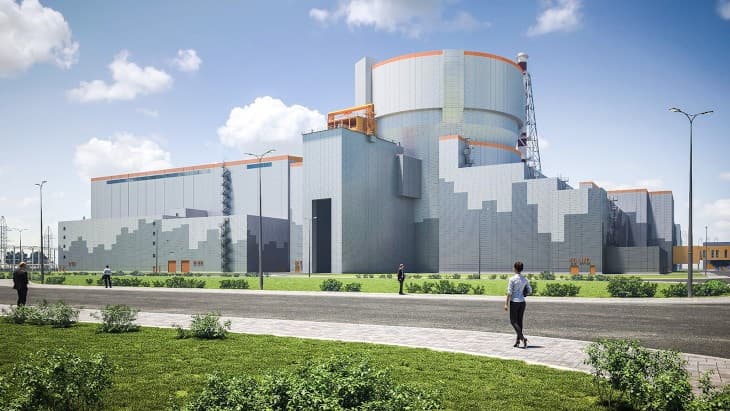
Imagine what would happen if the European Commission blocked the project to expand Hungary’s Paks nuclear power plant. Many Europeans would consider such a verdict justified – the Hungarian government intends to provide the project with controversial state aid (moreover, thanks to a Russian loan), while the supplier is to be the Russian corporation Rosatom, which did not have to go through any tender procedure.
On the other hand, Hungary would see an outcry whose echoes would certainly be clearly heard in other countries as well. How would Brussels justify having allowed public support in the case of the UK’s Hinkley Point plant or having approved the direct selection of a supplier without a tender in the case of France’s Flamanville plant, while clipping the Hungarians’ wings?
Criticism that large countries can do whatever they want in the European Union while smaller states have to obey is well known. In any case, the Hungarians succeeded in Brussels with their Paks project partly because they referred precisely to the Flamanville and Hinkley Point cases.
Hungarian Prime Minister Viktor Orbán has long been regarded in Brussels as a representative of populist politics who could become an inspiration for similar political forces in other countries. This has already happened in Poland. Few are particularly keen to create further fodder for Orbán’s critical rhetoric towards the EU and give him additional arguments – especially in a situation where the key issue in relations with Orbán remains the Union’s immigration policy.
In this situation, it is no surprise that Brussels may have had a political interest in calming the situation surrounding the Paks plant. Speculation emerged that it was European Commission officials themselves who advised the Hungarians on how to argue their case in order to defend the project for two new nuclear units at Paks during the investigations in Brussels.
The French blueprint
What is certain is that the Hungarians pursued their objective firmly and ultimately succeeded, although the preparation for this path was not entirely ideal – at the outset, they apparently did not always have the right arguments to convince the European Commission as guardian of fair competition in the EU. According to available information, it was only last year that the Hungarians added a key point to their argumentation, concerning the parallel with the aforementioned decision on the Flamanville plant in Normandy, France.
EurActiv revealed that, during last year’s consultations between Brussels officials and Hungarian negotiators, discussion also turned to the arguments of the French government, which had previously had to justify to the European Commission why the 2007 contract to build a new reactor at the Flamanville plant had been awarded without a tender to French company Areva. The French argued technological exclusivity – claiming that no one other than Areva was able to meet the technical requirements. Brussels accepted the French argument.
The Hungarians subsequently also invoked technological exclusivity. They claimed that only Rosatom could meet the criteria associated with building the new reactors at Paks. And this time, too, Brussels ultimately gave its approval.
From the Hungarian perspective, however, this may not yet be a final victory, as Austria and Hungarian Greens have indicated that they will challenge the European Commission’s decision before the European court. Vienna has already challenged Brussels’ positive verdict on the construction of new units at the UK’s Hinkley Point plant before the European Court of Justice in Luxembourg.
Where the Hungarians failed
Everything therefore suggests that, when it came to concluding a contract with Rosatom without a tender, the Hungarians gradually adjusted their arguments. Moreover, they also failed with their original argument that if the government in Budapest provided financing for the construction of new reactors at Paks – furthermore thanks to the aforementioned Russian loan – this did not constitute state aid (or public support), but rather a commercially viable project. The European Commission, by contrast, stated that it did constitute state aid.
Budapest nevertheless has no reason for regret, because a few concessions were enough for Brussels to approve this public support, and these are unlikely to hurt the Hungarians. Specifically, the Hungarians will have to use profits from Paks’ new units only to repay the original investment and ensure the plant’s operation, rather than for further investment in new units. The operator of Paks’ new units will have to be strictly separated from the operator of the old units, and electricity from the new reactors will have to be sold transparently (30 percent on the exchange, with the remainder through auctions).
Riding the Euratom wave
The fact is also that the Hungarians correctly invoked from the outset one of the founding treaties of the European Communities – the 1957 Euratom Treaty. And Brussels had to acknowledge that, under this treaty, it has an obligation to “facilitate investment” in nuclear energy and assist in the development of facilities that are “necessary for the development of nuclear energy”.
In other words, the European Commission clearly stated that its objective is not to kill off new nuclear power plant projects; on the contrary, it must support them in accordance with earlier agreements. From the perspective of nuclear energy supporters, this assurance from the Commission may be the most important message of the “Paks affair”. It is an absolutely crucial argument for further reactor projects, whether they are built by Rosatom as in Hungary or by anyone else.
Sceptics may of course note that Brussels’ support for nuclear energy is in fact highly questionable. The EU’s overall energy policy today favours renewable sources and, moreover, causes distortions in the market environment that make any investment in new power plants impossible without state support. Approving such support for nuclear plants is a far more complicated, time-consuming and uncertain matter than it is for renewable sources.
Nevertheless, Brussels’ verdict on Paks may encourage nuclear power plant developers in Europe, although it is far from removing all their doubts. It remains the case that individual Member States have the right to determine their own energy mix. And Brussels acknowledged that it does not even have the right to examine whether the same or a better outcome could be achieved in a given case using a source other than nuclear power.
Inspiration for Czechia?
From the Czech perspective, it now naturally makes sense to ask whether the Hungarian-Russian agreement to expand the Paks plant could also become an inspiration for the construction of new units at Dukovany or Temelín. At first glance, this does not appear to be the case. Unlike the Hungarians, the Czechs want to hold a competition among potential suppliers.
There is also consensus in Czech government and expert circles that it is no longer possible to repeat the cancelled Temelín tender and proceed strictly in accordance with the Public Procurement Act. That is not how it works anywhere in the world for similarly large and strategic projects. Czechia will therefore now seek an exemption in Brussels that will allow less stringent application of the aforementioned law.
On the other hand, there is no need to rule out in advance the conclusion of an intergovernmental agreement similar to the one the Hungarians negotiated with Russia. Such an agreement could, for example, follow the conclusion of the competition among potential suppliers – Czechia could therefore negotiate it with the country from which the winner of the tender came. Moreover, various solutions need to be sought in case negotiations with Brussels over the exemption become complicated.
Lawyers should now also assess the extent to which the argument that European public procurement rules do not apply to an intergovernmental agreement with a non-EU country actually helped the Hungarians. As already mentioned, the decisive factor in approving the Paks expansion project was rather the argument of technological exclusivity.
The Hungarian bulldozer
It will certainly be important to follow further disputes surrounding the entire Paks expansion project – particularly if they are heard by the European Court of Justice. The view from Luxembourg need not necessarily be the same as that from Brussels. On the other hand, it is also possible to assume that if European officials really did give the Hungarians important advice last year, they did so in their own interest as well – so that they would subsequently be able to defend their positive verdict in Luxembourg.
But if we look at the whole “Paks affair” from a slightly different angle, we can also conclude that, despite their current victory, the Hungarians are rather asking for trouble in the way they provoke Europe with their further steps. Critics accuse Budapest of restricting the independence of the country’s nuclear safety regulator, as well as Hungary’s questionable approach to spent fuel management. In this case, the dispute between Hungary and the European Commission concerns exports of spent fuel to Russia, which Brussels says are contrary to European rules.
And what else can be said about the efforts to push through the Paks project so far? The “artistic impression” of the Hungarian approach has not always been the best, but Budapest cannot be denied that it managed to get its way. Those at Dukovany, Temelín or Czech nuclear industry companies will probably be envious.
The author works as a consultant and energy projects specialist for the HATcom agency.
Translation disclaimer
This article is a machine translation of the Czech original and has not yet been fully reviewed. In case of any doubt, please refer to the Czech version.