9 November 2026, 06:13
Loading...
Europe becomes even more dependent on US LNG after Middle East disruptions

oEnergetice.cz, ČTK
13 May 2026, 10:49
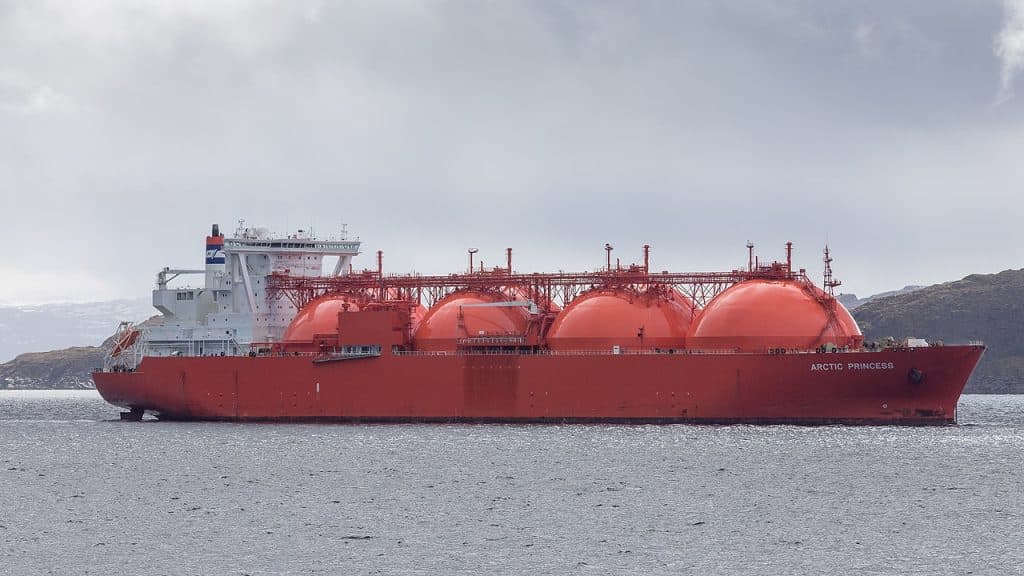
Europe's dependence on liquefied natural gas (LNG) supplies from the United States is increasing. The current disruptions to supplies from the Middle East, caused by the US-Israeli military conflict with Iran, are contributing to this trend. The United States is therefore likely to overtake Norway this year as the largest gas supplier to the European market. This is according to a study published today by the Institute for Energy Economics and Financial Analysis (IEEFA). The study also notes that US LNG is, on average, the most expensive option for European buyers. It also says that LNG imports from Russia to Europe reached a record in the first quarter, largely due to deliveries to France, Spain and Belgium.
Between 2021 and 2025, LNG imports from the US to Europe more than tripled as European countries reduced their dependence on Russian gas supplied by pipeline. This year, the United States is expected to account for about two-thirds of total LNG imports to Europe. The US share of LNG imports to the European Union could reach 80 percent by 2028, the study says.
"Europe's shift from pipeline gas to LNG was intended to ensure security and diversification of supply. But disruptions caused by the war in the Middle East and excessive dependence on US LNG show that Europe's plan has failed on both counts," said Ana Maria Jaller-Makarewicz, IEEFA's lead Europe analyst.
"LNG has become the Achilles' heel of Europe's energy security strategy, exposing the continent to the risk of high gas prices and new forms of supply disruption," she added.
IEEFA also notes that Russia remains the EU's second-largest LNG supplier, despite the bloc's efforts to phase out imports of Russian gas. According to the study, Russian LNG imports to the EU rose by 16 percent year on year in the first quarter of this year. IEEFA estimates that last year, EU member states paid about 5.9 billion euros (almost 144 billion Kč) for Russian pipeline gas and about 6.7 billion euros (around 163 billion Kč) for Russian LNG.
"The war in the Middle East has increased Europe's dependence on its two largest LNG suppliers, the US and Russia. This year's energy crisis shows that if European countries choose to rely on gas, they must accept the geopolitical risks that come with that decision," Jaller-Makarewicz said.
According to the study, the current energy crisis has intensified European countries' efforts to reduce their dependence on gas imports. IEEFA therefore expects gas consumption in Europe to fall this year and to decline by 14 percent over the 2025–2030 period. European demand for LNG could consequently decrease by about 23 percent over this period, the study says.
"While Europe has no control over disruptions to LNG supplies, it can improve its energy efficiency and accelerate the deployment of renewable energy and heat pumps to reduce its dependence on imports," Jaller-Makarewicz said.
Translation disclaimer
This article is a machine translation of the Czech original and has not yet been fully reviewed. In case of any doubt, please refer to the Czech version.
Sdílejte článek prostřednictvím:
You might also like
8 November 2026, 20:02

8 November 2026, 13:59
8 November 2026, 08:10