Gazprom to increase gas supplies to China, signs deal on Power of Siberia 2 pipeline

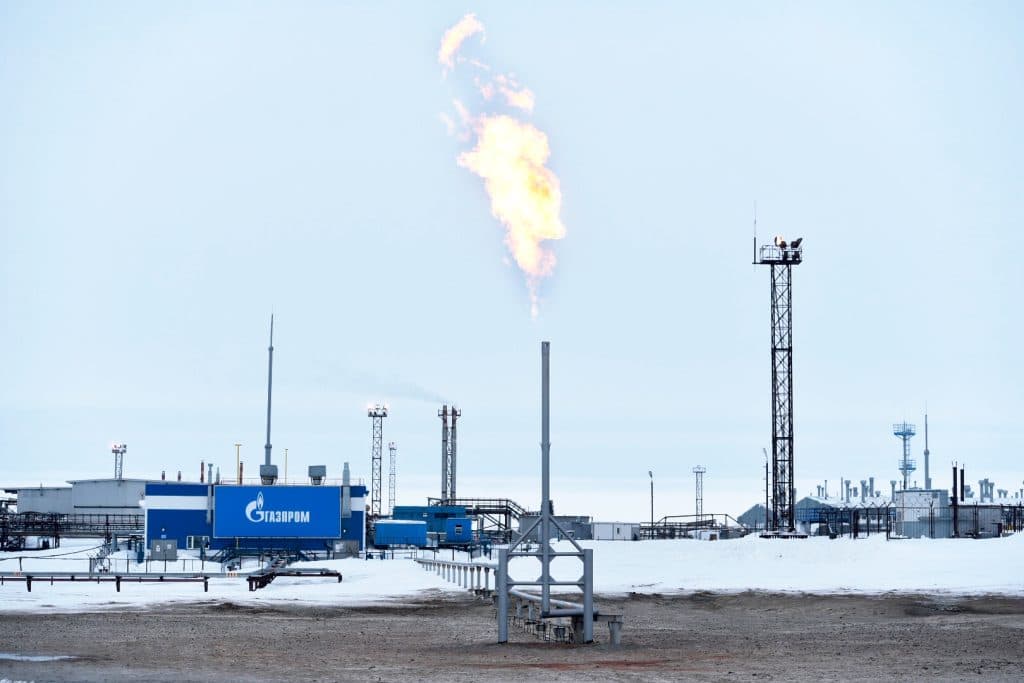
Russian state-owned gas company Gazprom has signed a long-awaited, legally binding agreement with China to build the Power of Siberia 2 pipeline. It will also increase gas supplies to China via other routes. Russian news agency TASS reported the news, citing a statement by company chief Alexei Miller, who is visiting China alongside Russian President Vladimir Putin. According to TASS, the contract runs for 30 years, and the price of gas deliveries will be lower than the price Gazprom currently charges European customers.
Beijing has yet to confirm Miller’s statements. China’s state news agency Xinhua did not mention the pipeline in its reports, but said the two countries had signed more than 20 cooperation agreements, including in the energy sector.
According to Miller, Gazprom will be able to deliver 50 billion cubic metres of gas to China annually via this new route for 30 years. “The Power of Siberia 2 pipeline project and Soyuz-Vostok, a transit link through Mongolia, as well as gas transportation capacity in China, will become the world’s largest, most extensive and most expensive gas project,” Miller told Russian news agencies.
It is unclear who will build the pipeline, and the final investment has not been disclosed, Reuters noted. Talks on the megaproject had been deadlocked for several years. Russia was determined to push ahead with it to offset lower supplies to Europe following its invasion of Ukraine. The European Union is also now considering a complete ban on imports of Russian gas by the end of 2027. China, however, is much more cautious. Gas demand growth is slowing, and Beijing is concerned about becoming overly dependent on a single supplier, Bloomberg notes.
Progress on the project is a diplomatic success for President Putin, Bloomberg reports. It is also a strong signal of the close ties Moscow has developed with China since 2022, as it grappled with the effects of Western sanctions.
Miller told Russian news agencies, according to Reuters, that his company had also reached an agreement to increase supplies via the existing Power of Siberia 1 pipeline. These are expected to rise from 38 billion cubic metres to 44 billion cubic metres a year.
Russia is the world’s largest producer of natural resources, and China is now its biggest trading partner. According to the Kremlin, Beijing is the largest buyer of Russian oil and gas, the second-largest buyer of Russian coal, and the third-largest buyer of Russian liquefied natural gas (LNG).
Gazprom currently supplies natural gas to China via the 3,000-kilometre Power of Siberia pipeline under a 30-year, $400 billion (CZK 8.4 trillion) contract signed at the end of 2019. In February 2022, China also committed to purchasing up to 10 billion cubic metres of gas annually from around 2026 to 2027 via a pipeline from Sakhalin Island in Russia’s Far East.
The planned Power of Siberia 2 pipeline is set to transport gas from the vast reserves on the Yamal Peninsula in western Siberia to northern China via Mongolia. It is expected to be 2,600 kilometres long. Its planned annual capacity of 50 billion cubic metres is slightly lower than that of the now-defunct Nord Stream 1 pipeline, which connected Russia and Germany under the Baltic Sea, Reuters reports.
Russian gas exports to China still represent only a small share of the record 177 billion cubic metres Russia supplied to Europe in 2018 and 2019. Russian gas now accounts for just 18 per cent of total gas supplies to Europe, down from 45 per cent in 2021. Russia’s share of European Union oil imports fell over the same period from around 30 per cent to three per cent. The EU plans to completely end imports of Russian energy by 2027.
Translation disclaimer
This article is a machine translation of the Czech original and has not yet been fully reviewed. In case of any doubt, please refer to the Czech version.




