US gas prices jump, but are still about a third of Europe's

Natural gas prices in the United States rose by around five percent today to USD 4.30 per million British thermal units (mmBtu). That is equivalent to about 14 euros per megawatt-hour (MWh). At the same time, gas prices for the European market were up by more than one percent to above 48 euros/MWh, leaving gas in the European Union more than three times as expensive as in the United States.
US gas prices are now at their highest since December 2022. They are up by more than 16 percent for the week as a whole, the Trading Economics website reported. The main factor is cold weather, which is driving up demand for gas, particularly for heating. The balance between supply and demand is becoming increasingly strained as an influx of frigid Arctic air hampers extraction and reduces production.
Meteorologists expect very cold air to remain over most of the United States until Saturday, meaning gas consumption will stay high. Gas production over the 15 days through Thursday fell by 6.7 billion cubic feet per day, reaching a roughly four-week low of 100 billion cubic meters per day, equivalent to 29.3 million MWh per day.
From 2015 to 2021, US gas prices ranged from roughly USD 1.50 to USD 4.50/mmBtu. They rose sharply in 2022, reaching more than USD 9 per million British thermal units. The significant increase was linked to demand for gas in Europe, which began moving away from Russian energy and seeking supplies elsewhere after Russian troops invaded Ukraine in late February 2022.
The benchmark gas price for Europe is set at the Title Transfer Facility (TTF), a virtual trading hub in the Netherlands. While a megawatt-hour cost around three euros there in spring 2020, by spring 2021 it was already about 30 euros/MWh. In summer 2022, after the war in Ukraine began and the EU decided to reject Russian gas, the price temporarily climbed to as much as 250 euros per megawatt-hour.
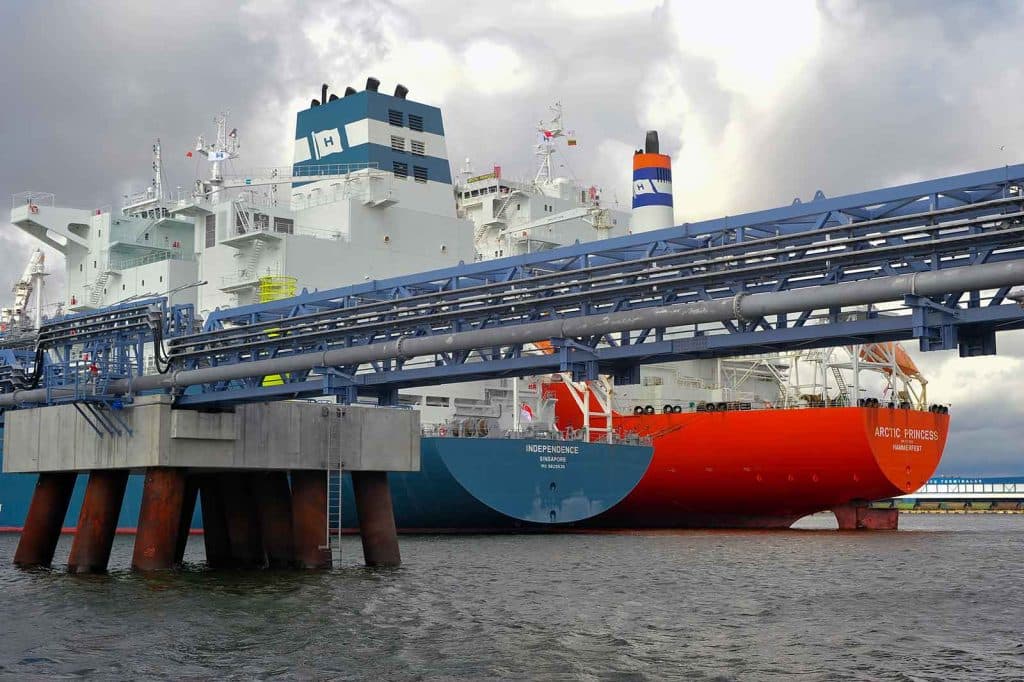
Since the start of the war in Ukraine, Europe has imported significantly more gas from the United States, in liquefied form. Liquefied natural gas (LNG) is considerably more expensive than the raw commodity, however, because its price also includes the cost of converting it from gas to liquid, shipping it across the ocean by tanker and regasifying it before it is distributed from ports to customers on the mainland through pipelines in its natural gaseous state.
The Russian invasion of Ukraine contributed to an energy crisis in Europe, sharply raising regional gas prices and subsequently LNG prices around the world. Gas prices had already begun to rise significantly before the war in Ukraine. Some economists attribute this to the so-called European Green Deal, under which the European Union set a timetable for a rapid shift away from fossil fuels.
Higher demand for US LNG also contributes to rising natural gas prices in the United States, as American LNG processors and exporters must first buy the raw material before turning it into LNG for export to Europe or customers in Asia. Data from the US government’s Energy Information Administration (EIA) show that US LNG exports to Europe increased by 119 percent between 2020 and 2022.
Record volumes of natural gas are flowing to LNG processing plants in the United States this month, with the daily average at around 15.5 billion cubic feet, equivalent to more than 438 million cubic meters. In January, the average was 14.6 billion cubic feet per day, or more than 413 million cubic meters. A record was set this Wednesday, when total gas input for LNG processing reached 16.4 billion cubic feet per day, or 464.12 million cubic meters.
Very cold weather is also causing US gas stocks to fall much faster. According to EIA data, stocks fell by 196 billion cubic feet last week, or more than 5.5 billion cubic meters. The decline was around 100 billion cubic feet the week before. The unusually large withdrawals from storage are further tightening market supply.
Translation disclaimer
This article is a machine translation of the Czech original and has not yet been fully reviewed. In case of any doubt, please refer to the Czech version.




