
17 October 2026, 13:09
Loading...
A dispute over the future of heating in Germany: CDU and FDP want to repeal recently adopted law

David Vobořil
6 February 2025, 13:45
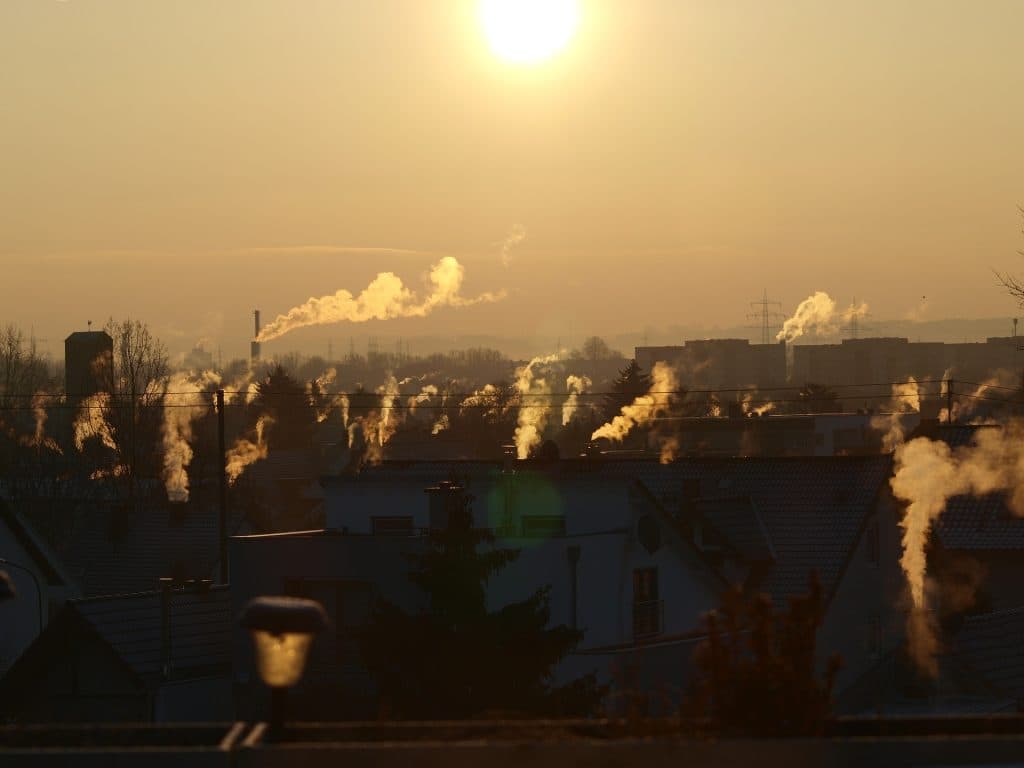
Germany’s CDU and FDP parties said ahead of the snap elections that they plan to repeal a law drawn up by the Green Party that aims to decarbonise heating in Germany. Economy Minister Robert Habeck of the Green Party warned that repealing the law, which aims to reduce unacceptably high emissions from heating, would be “fatal”.
Germany’s Building Energy Act, sometimes called the Heating Act, requires heating systems installed in new buildings in new residential areas to use at least 65% energy from renewable sources. New buildings outside new residential areas can still install conventional heating systems for a transitional period. From 2045, it will no longer be possible to operate fossil fuel boilers.
The law, approved by the coalition of the Green Party, centre-left SPD and pro-business FDP, came into force in January 2024 after extensive debate, much of it focused on the higher costs of climate-friendly heating systems such as heat pumps.
The conservative Christian Democrats (CDU) and the FDP said in their election manifestos that they would repeal the law, according to Rheinische Post. The CDU said it instead wants to support low-emission heating solutions that are open to all technologies, and rely on emissions trading, which will make gas or heating oil more expensive as CO2 prices rise.
In response to the CDU’s statement, Habeck, who is also the Green Party’s candidate for chancellor, said that relying solely on rising CO2 prices to help phase out fossil fuel heating would ultimately make heating more expensive for citizens.
“By switching to climate-friendly heating, citizens will save money in the future. We are supporting them across all income brackets with the most attractive funding available to date,” Habeck stressed.“Calls to repeal the law will cost citizens dearly in the long run and lead to uncertainty in the economy and among the population,” Habeck added.
Depending on household income, state subsidies can cover up to 70% of the cost of a new climate-friendly heating system. The CDU’s repeal of the law would not automatically mean that subsidy programmes would also be scrapped. However, the CDU’s plans for the future of support for replacing heating systems are unclear.
Germany’s heating challenges
Heating is one of the Achilles’ heels of Germany’s decarbonisation efforts. While climate-friendly heating technologies are now widespread in new buildings, existing buildings in the country still rely largely on fossil fuel heating. Of the nearly 20 million residential buildings, 79% are still heated with natural gas or heating oil.
Around 15% of Germany’s CO2 emissions come from heating buildings. To bring the country closer to its goal of climate neutrality by 2045, significant progress in decarbonising this sector will be needed.
According to the German Heat Pump Association (BWP), heat pump sales in Germany fell by almost half in 2024 due to uncertainty surrounding the controversial law, municipal heating plans and a lack of public awareness of support programmes.
However, the BWP said it was confident that heat pump sales would grow more strongly this year, adding to Rheinische Post that the CDU’s plans to repeal the Heating Act should not cause further confusion.
The Association of German Cities and Municipalities has also warned against repealing the Heating Act. It said that calling the law into question as part of the transition process would not be the right move.
“However, it is important to make the law clearer and easier to understand. In addition, all climate-friendly energy sources must be recognised in the spirit of genuine technological openness,” said DStGB energy expert Timm Fuchs.
Translation disclaimer
This article is a machine translation of the Czech original and has not yet been fully reviewed. In case of any doubt, please refer to the Czech version.
Sdílejte článek prostřednictvím:
You might also like




16 October 2026, 10:16