German CO2 emissions under EU ETS fell by a record 18% last year

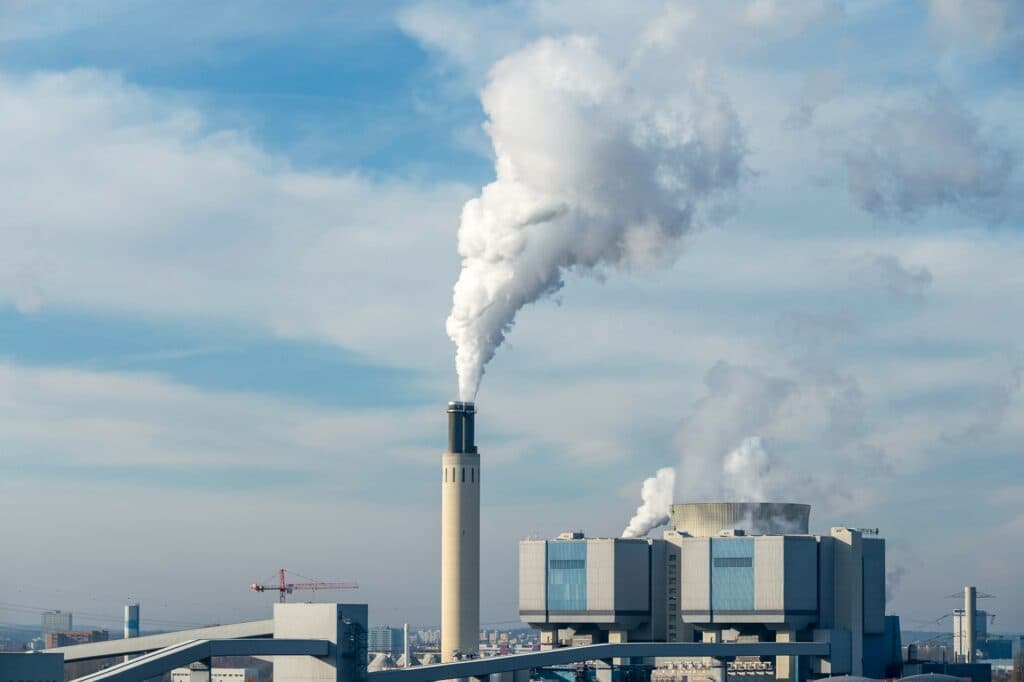
Weakened German industry, combined with the expansion of renewable energy sources, led last year to a record year-on-year decline in reported greenhouse gas emissions from installations covered by the European Union Emissions Trading System (EU ETS). Clean Energy Wire reported.
The EU ETS covers CO2 emissions from energy-intensive industries, the energy sector and intra-European aviation. It includes, among other sources, stationary installations burning fossil fuels with a rated thermal input exceeding 20 MWt.
In Germany, more than 1,700 stationary installations covered by the EU ETS emitted a total of 289 million tonnes of CO2, an 18% year-on-year decrease. This was the largest year-on-year decline recorded since the EU ETS was introduced in 2005.
The energy sector was the main driver of the decline, with emissions falling by 22% year on year. In industry, emissions fell by 10%.
“The significant decline in emissions from the energy sector represents a major step towards achieving our climate protection goals. It is the result of the expansion of renewable energy sources and a drop in electricity generation from coal-fired power plants,” said Dirk Messner, president of the German Environment Agency (UBA).
The data from the industrial sector are viewed less optimistically, as the decline in CO2 emissions is primarily the result of falling production, which is linked to the effects of Russia’s war on Ukraine.
“We must rely on a consistent strategy for transforming industry that combines economic competitiveness with ambitious climate protection,” Messner added.
Translation disclaimer
This article is a machine translation of the Czech original and has not yet been fully reviewed. In case of any doubt, please refer to the Czech version.