Germany aims for clean heating by 2045, energy companies warn target is unattainable

Three out of four German municipal utilities consider achieving climate-neutral heating by 2045 unrealistic under current conditions. A survey by the VKU association shows that the biggest obstacles are not just high investment costs, but especially unclear rules for developing district heating and new heat sources.
Germany aims to achieve climate neutrality by 2045, five years ahead of the EU-wide target. The same target applies to the heating sector. Of the 225 respondents, 51% said the deadline was unrealistic and a further 24% considered it very unrealistic, while only 7% thought it was realistic.
Municipal utilities operate most of Germany’s district heating networks and will therefore be key to transforming the heating sector. Friedrich Merz’s government is also preparing a so-called heating networks package, which is intended to consolidate existing legislation under a new law on heat supply networks. This is where it will be decided whether the political target is translated into investments that can actually be carried out.
Heating networks are intended to accelerate decarbonization in cities
The German government describes district heating as a key tool for decarbonization, particularly in densely built-up urban areas and where individual heat pumps are not a suitable solution. Current rules stipulate that renewables and waste heat should account for an average of half of the energy supplied to these networks by 2030, while their share today is only slightly above 30%.
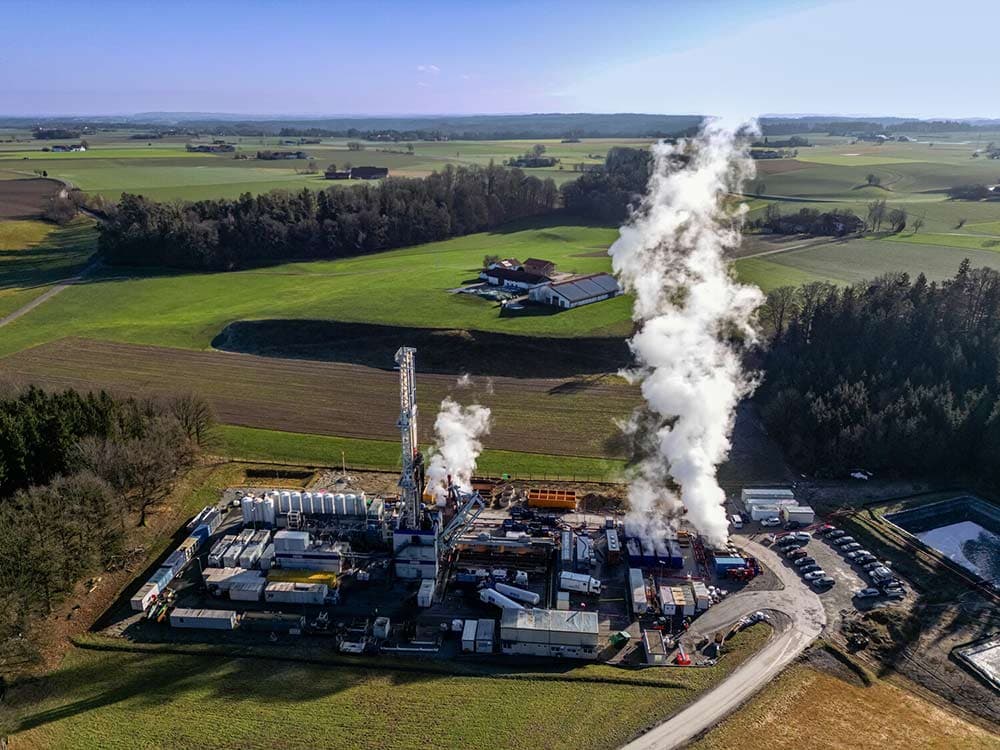
The advantage of heat supply networks is that the source of heat can be changed centrally, reducing emissions across a large number of connected buildings and industrial customers. Germany’s economy ministry therefore proposed in 2025 that the development of geothermal heating plants, large heat pumps and heating infrastructure be granted the status of overriding public interest. The previous German government, meanwhile, planned to connect up to 100,000 buildings to heat supply networks each year.
Dispute over boilers shifted responsibility to fuel suppliers
The repeal of the requirement that new heating systems use at least 65% renewable energy has introduced significant uncertainty into the sector. The new framework is expected to allow the installation of gas and oil boilers, while responsibility for gradually reducing emissions is to shift to fuel suppliers.
From 2029, they are to supply energy with a share of at least 10% biomethane, hydrogen or liquid biofuels, although the requirements for subsequent years have not yet been published. At the same time, subsidies for heat pumps and decarbonized heat supply networks are to continue at least until 2029.
In the VKU survey, 86% of respondents said legal certainty was essential for further investment. Fifty-six percent of companies consider financing conditions inadequate, and 61% of businesses say the legal framework is unclear. In addition, one in two companies expects its spending on climate-neutral heating to more than double by 2030 compared with 2024.
Translation disclaimer
This article is a machine translation of the Czech original and has not yet been fully reviewed. In case of any doubt, please refer to the Czech version.