
17 October 2026, 13:09
Loading...
Germany aims to launch tenders for new gas-fired power plants by year-end

David Vobořil
9 June 2025, 10:31
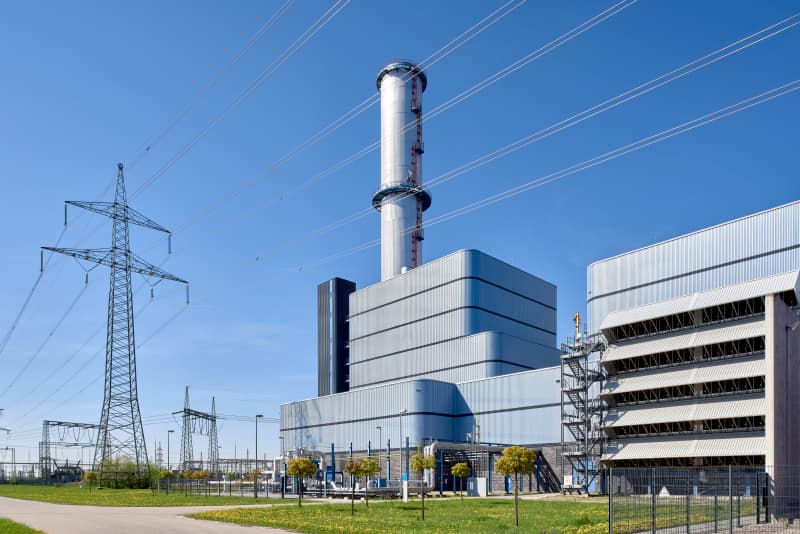
The German government hopes to launch tenders for 5-10 GW of gas-fired power plants by the end of the year. The European Commission still needs to approve the support, German Economy Minister Katherina Reiche said on Wednesday.
The coalition parties agreed in their coalition agreement to install up to 20 GW of new power plants to ensure electricity supplies during periods of low renewable energy generation. Reiche said at least the first 5 GW should be put up for auction by the beginning of 2026.
Speaking at a public utilities conference organised by industry lobby group BDEW, Reiche said the government was negotiating with the European Commission over state aid, as the EU requires justification for the use of public funds.
She said the Commission would likely ask Germany to introduce a capacity mechanism by 2028, as part of a plan to ensure security of electricity supply as renewables account for a growing share of power generation. Only then could the Commission approve the auctions.
The previous government negotiated an agreement with the European Commission to install 10.5 GW of new hydrogen-ready gas-fired power plants, but after the government collapsed last November, it ran out of time to implement the plan.
Many criticise the construction of the planned power plants because it means continued investment in fossil fuels. Germany aims to become carbon-neutral by 2045.
Reiche said that Germany’s aim to bring some of the new power plants online by 2030 meant that time was of the essence. “In our first salvo, it will definitely be gas, because it is quicker [to build],” she added.
Hydrogen power plants are themselves considered controversial because they rely on technology that has yet to prove itself. Reiche said Germany had created such a complicated set of rules that it had become impossible to make further progress with hydrogen. The new government, she said, would push for a flexible framework that gave industry room to experiment with the technology.
“We need flexibility, storage and dispatchable power,” the minister said, outlining the next steps in Germany’s energy transition. The coalition parties agreed in their coalition agreement to prepare a monitoring report aimed at improving cost-effectiveness and ensuring long-term security of electricity supply by better estimating expected electricity demand and coordinating grid expansion with the development of renewable energy sources. BDEW said it expects the report to be completed in September.
Translation disclaimer
This article is a machine translation of the Czech original and has not yet been fully reviewed. In case of any doubt, please refer to the Czech version.
Sdílejte článek prostřednictvím:
You might also like




16 October 2026, 10:16