9 October 2026, 06:22
Loading...
Czech households applying for a boiler subsidy in August can get tens of thousands more; the dirtiest boilers banned from September
Ekonews.cz
12 August 2024, 11:13
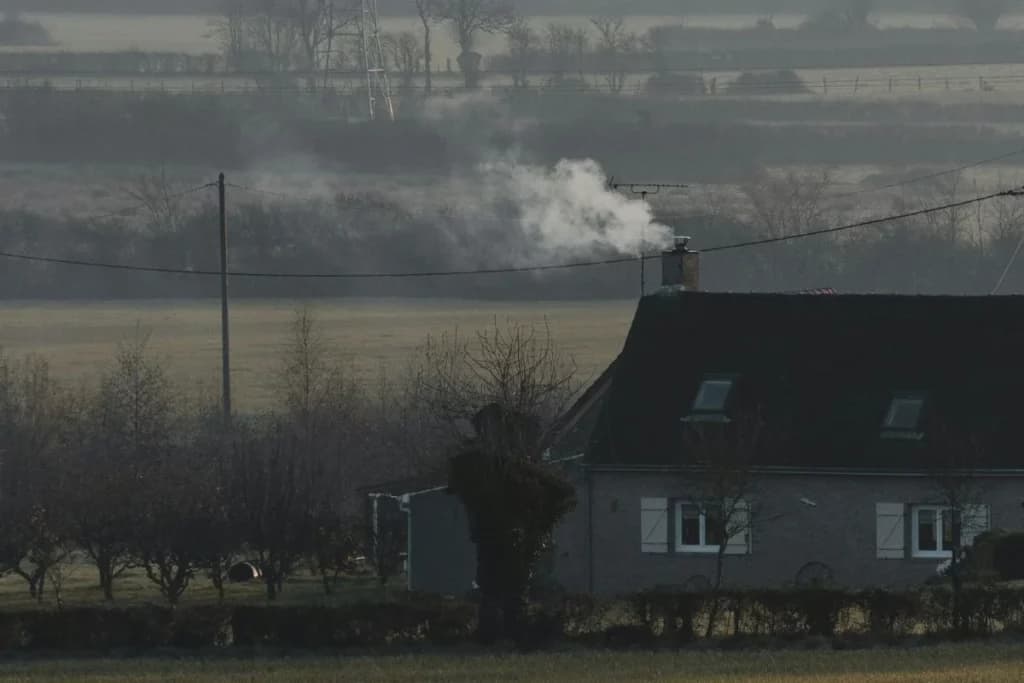
The ban on old, environmentally unfriendly boilers is approaching. It affects 150,000 Czech households. Many of them are not rushing to replace them, even though subsidies for replacements will be cut by tens of thousands of crowns from September. However, the state will now also subsidise boiler replacements for those with relatively modern coal-fired boilers.
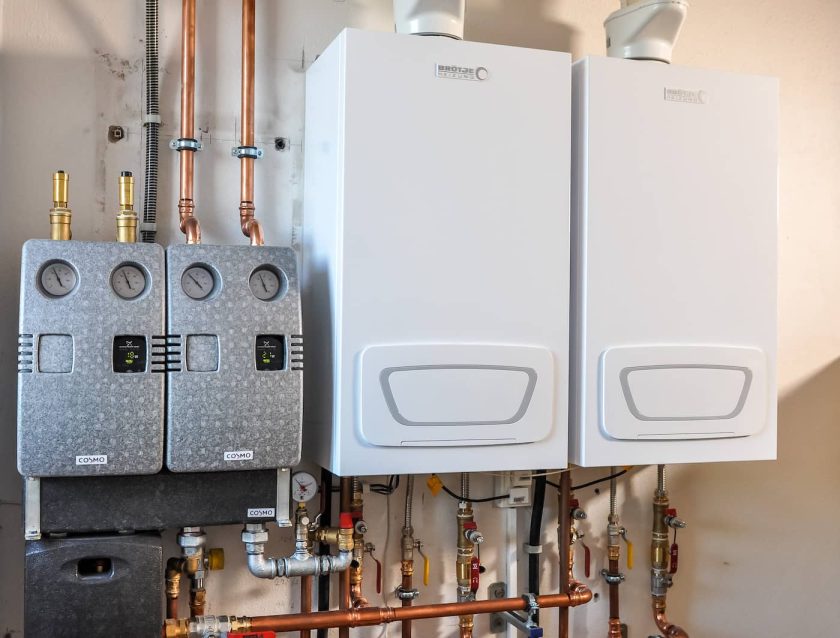
Czechs will no longer be allowed to heat with first- and second-emissions-class boilers, which cause the most environmental pollution, from 1 September. Anyone who breaches the ban faces a fine of up to CZK 50,000. However, almost a third of owners of solid-fuel boilers still heat their homes or cottages with non-compliant boilers. This follows from a survey by Stiebel Eltron conducted in June this year.
Although less than a month remains to replace a boiler with a greener one, more than half of those affected have not even contacted a heating company yet. This concerns around 150,000 households.
How can people tell whether they have a non-compliant boiler at home? First, they should check whether their boiler falls into the category covered by the ban. “You can find the emissions class on the rating plate or in the certificate of inspection of the boiler’s technical condition and operation. If the boiler has no emissions label, it is the oldest type and is also subject to mandatory replacement,” says René Milota, managing director of Acetex.
Sometimes the label may be illegible. “In that case, the emissions class can be found in the technical documentation, or the matter can be discussed with a heating engineer,” advises Lukáš Ingr, product manager of DEK’s Water, Heating and Sanitary division.
Expert: Do not stick with coal
Heating engineers recommend that people do not simply replace a coal boiler with another one of a higher class. “The Ministry of the Environment recently announced that it plans to phase out coal completely by 2034. In practice, this will mean a gradual ban on all types of coal boilers, including low-emission, new and modern ones. Buying the same boiler in a higher class today would therefore merely mean robbing Peter to pay Paul,” Milota warns.
He also says it is a mistake to choose a technology without consulting an expert. “Such a decision should be based on a non-binding consultation with a specialist who personally assesses the situation at the property and evaluates the possibility and suitability of installing various technologies. Ideally, this should be a specialist who does not focus solely on heat pumps or solely on gas boilers, for example, but can assess the specific situation objectively,” Milota stresses.
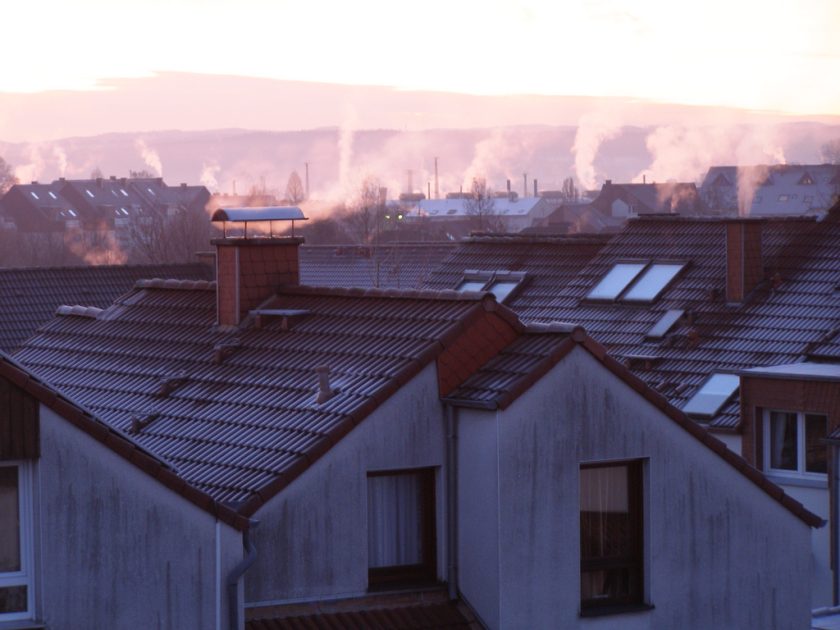
Modern environmentally friendly boilers may be fitted with exhaust fans, integrated or add-on smart electronic controls. For proper operation, it is sometimes necessary to add thermal water storage tanks.
“We should not forget adequate electrical wiring and the physical capacity of the boiler room itself, so that all the equipment can fit there at all,” Ingr notes. According to him, the flue is a separate issue. “Every chimney in use should be inspected by a chimney sweep at least once a year,” Ingr says.
Condensing gas boilers are the simplest option
A coal boiler can be replaced, for example, by a condensing gas boiler or a heat pump. “Condensing boilers are ideal for older, uninsulated buildings, while heat pumps are better suited to newer buildings or low-energy homes,” specifies Karel Hanzelka, spokesperson for Prague Energy (PRE). PRE is already seeing increased interest in condensing gas boilers, approximately double the level seen in 2022.
“At the same time, they are the simplest and most affordable alternative to original first- and second-emissions-class solid-fuel boilers. Condensing gas boilers burn not only natural gas, but also propane. A gas connection is therefore not necessary; for example, a stationary propane tank is sufficient for properties with a garden. Condensing boilers are also ready for the future planned blending of hydrogen into natural gas,” Hanzelka adds.
The deadline for boiler replacement, 1 September 2024, was postponed from the original deadline of 1 September 2022. Two years ago, the war in Ukraine created major uncertainty in the market regarding gas availability. Energy prices soared, and nobody knew which heating option was the right choice.
“After the deadline was changed, we observed weakening interest in solid-fuel boilers. Now, as we approach the new deadline again, interest is rising sharply. Sales grew by 40 percent year on year in April, while May was already up 400 percent. This is difficult for manufacturers, wholesalers and heating companies to predict. The market cannot respond so quickly to sharp swings in demand. We can therefore expect shortages of goods again, a lack of labour for replacements and rising prices,” Ingr warns.
People should not wait until the last minute to arrange a replacement, as they may have to wait several months for a heating engineer. However, owners of old boilers need not fear that officials carrying ticket books will visit everyone who does not yet have a new boiler at home on 1 September. “The important thing is that the boiler owner has submitted an application for replacement by 31 August 2024,” Milota reassures.
Subsidies of up to CZK 180,000
Subsidies for a new boiler can currently be drawn from three programmes: New Green Savings, NZÚ Light and boiler replacement grants. The individual programmes are intended for different types of applicants and also cover different measures that can be used. For example, the highest amount, up to CZK 180,000, can be drawn from boiler replacement grants intended for seniors and low-income households. However, the Ministry of the Environment plans to reduce subsidies for boilers and heat pumps from September, making replacement more expensive for people.
Current boiler replacement grants can cover up to 95 percent of eligible replacement costs, or up to CZK 180,000 depending on the type of new heat source, for low-income households and seniors. For others, a subsidy of up to 50 percent of costs, or up to CZK 140,000, is available.
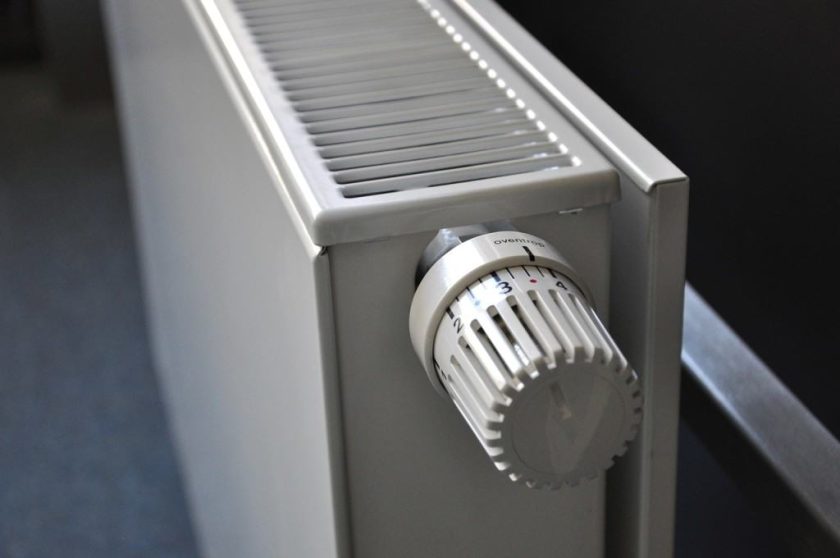
From September, boiler replacement grants will move under the New Green Savings Light programme. Support for boiler replacement from the New Green Savings programme will likewise be reduced in September; this programme is intended for households with incomes too high to apply for boiler replacement grants.
Subsidy levels from both programmes will be reduced by thousands to tens of thousands of crowns, depending on the type of heating source, compared with current amounts from 1 September 2024. “It is therefore worthwhile submitting an application by 31 August 2024, while the installation can be carried out later if necessary,” explains Petr Valdman, director of the State Environmental Fund.
Advisers help submit applications free of charge
Going forward, those wishing to replace a third- or higher-emissions-class coal-burning boiler with greener heating sources, such as a heat pump, biomass boilers or stoves, can also apply for a subsidy. “We will begin incentivising the replacement of all coal boilers – around 60,000 third-emissions-class boilers alone are in operation. The aim is to move away from burning coal in local heating sources within ten years,” announced Environment Minister Petr Hladík. When submitting an application, people should follow the current conditions on the programme websites. From September, applications for boiler replacement grants will no longer be submitted to regional authorities, but to the State Environmental Fund.
The state offers free consultations to help people transition to greener heating methods. Advisers from the so-called Local Action Groups (MAS) are available. “There are more than 700 advisers throughout Czechia trained to help senior households and people receiving housing allowance or disability pensions free of charge with the complete application process under the New Green Savings Light programme,” notes Tomáš Novák of MAS Třeboňsko.
Republished from EkoNews.cz, a website covering business and sustainability.
Translation disclaimer
This article is a machine translation of the Czech original and has not yet been fully reviewed. In case of any doubt, please refer to the Czech version.
Sdílejte článek prostřednictvím:
You might also like
8 October 2026, 10:05