9 October 2026, 06:22
Loading...
Commercial use of green hydrogen cautiously gets under way in Czechia, with new project in Napajedla showing potential
Ekonews.cz
14 November 2023, 13:47
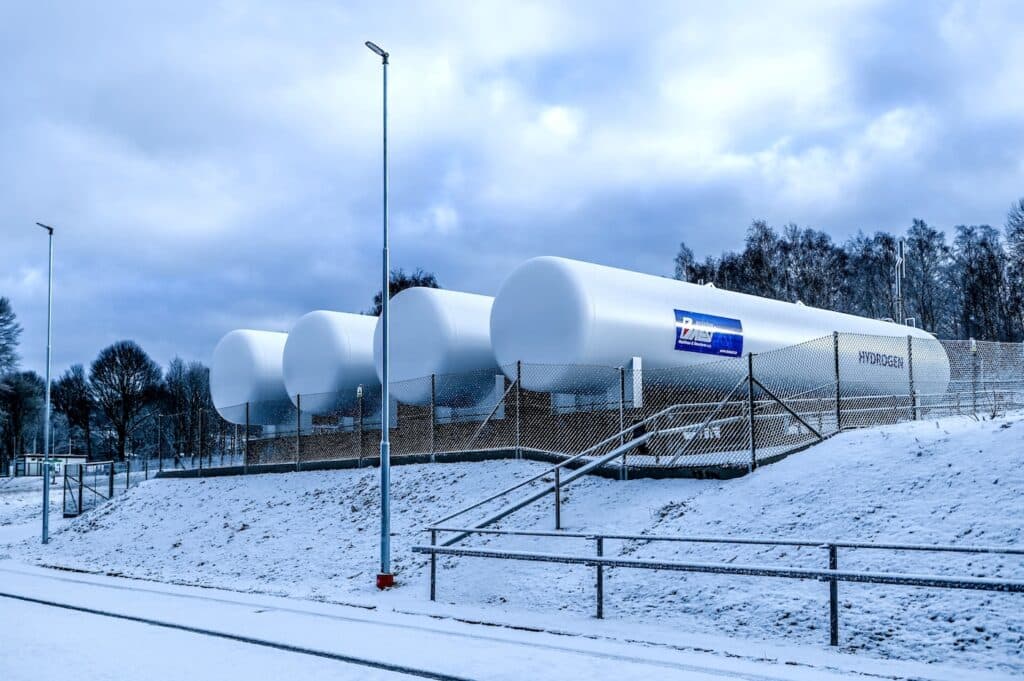
Czechia’s first electrolyser producing green, or zero-emission, hydrogen has been built and will be used in domestic industry and transport. Environmentally produced hydrogen is set to play an important role in decarbonising Czech industry and the economy.
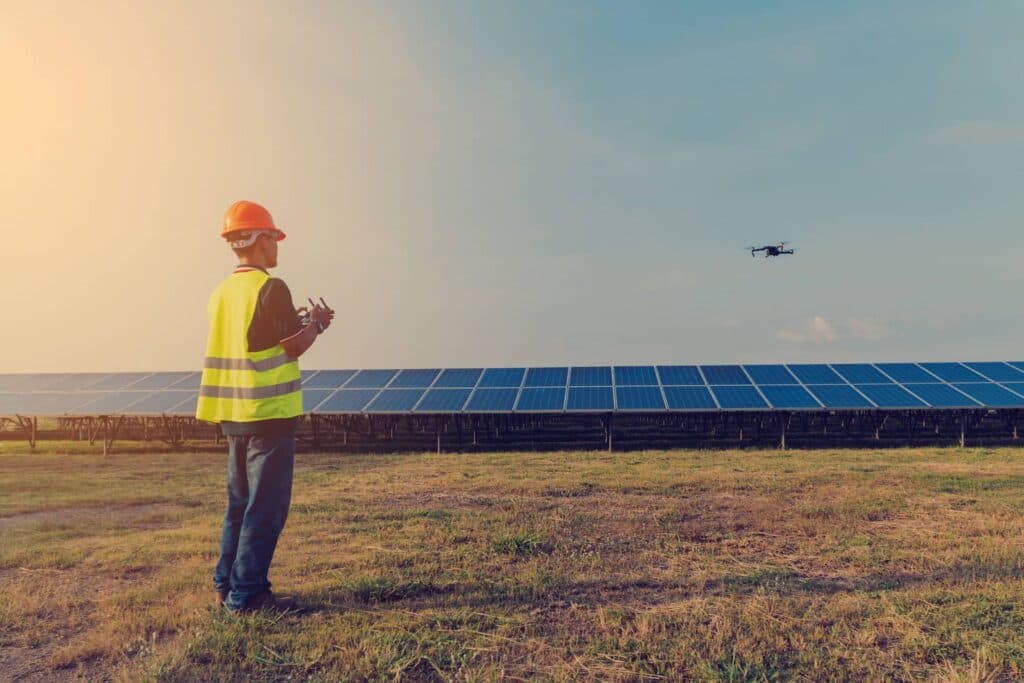
The electrolyser, which produces hydrogen using energy from the sun and partly from wind, was launched on Monday by Solar Global in Napajedla in the Zlín region, making the company a pioneer of this technology in Czechia. The company, a leading domestic producer of photovoltaic power plants, produces green hydrogen using photovoltaics installed on the roof and wall of its headquarters, supported by a wind turbine.
Hydrogen produced by water electrolysis using electricity from renewable energy sources is referred to as green. The electrolyser in Napajedla, complemented by battery storage, will produce 8000 kilograms of zero-emission hydrogen annually. According to the company, a hydrogen-powered passenger car, currently produced by companies such as Toyota or Hyundai, could travel 800 thousand kilometres on this amount, while a hydrogen bus could travel 80 thousand kilometres.
Although the market for green hydrogen is still in its infancy, according to Solar Global owner Vítězslav Skopal, it is being sought by companies with decarbonisation targets that want to use it to replace fossil fuels. Skopal also believes that hydrogen buses will one day refuel at his site. “Cities are interested in them, but they will not buy them until they have somewhere to refuel,” Skopal explains, adding that a hydrogen refuelling station for passenger cars and trucks should be built at the site within two years.
The market is only just emerging
However, Solar Global primarily wants to use green hydrogen for energy storage. The associated pressurised storage tank can hold 400 kilograms of the gas, equivalent to a large-scale battery storage facility with a capacity of 13 MWh. The total potential for storing photovoltaic energy is 246 MWh annually. In addition to hydrogen, the electrolyser will also produce zero-emission oxygen that can be used in industry, food processing or healthcare.
The company financed the investment, worth 35 million koruna, partly through a bank loan, with nine million coming from a grant. According to Vítězslav Skopal, payback remains out of sight, as the technology is at a very early stage and the market for it is only just being built.
“The payback is not ideal right now, but it is only a matter of time. And someone simply has to start. We hope to learn how to produce green hydrogen through this project and that it will give us a competitive advantage in the future,” he believes.
According to him, the company is already preparing another project in Kolín, where it wants to build a 9 MW photovoltaic power plant to supply an electrolyser with a capacity of one MW, a project four times larger than the one in Napajedla.
Fuel of the future
Hydrogen is set to become key to decarbonising Czech energy and the economy. Besides providing long-term storage for energy from clean sources, it is also meant to help replace some imported fossil fuels and decarbonise industrial sectors that cannot be electrified and where reducing the carbon footprint is problematic.
“This primarily concerns the chemical or metallurgical industry, or heavy freight transport. Until now, this fuel of the future has only been produced in Czechia in small pilot projects, but the energy complex in Napajedla is proof that we can produce green hydrogen in Czechia on an industrial scale,” said Martin Sedlák, Programme Director of the Modern Energy Association.
According to Environment Minister Petr Hladík, the recently approved Czech National Energy and Climate Plan envisages around 30 thousand tonnes of green hydrogen being produced domestically by 2030, with a similar amount to be imported. However, this represents only a few percent of the Czech energy mix.
“However, according to calculations, green hydrogen should replace natural gas as such between 2030 and 2040, and we expect it to grow massively in both industry and transport,” Hladík said, adding that more similar projects are now being prepared in Czechia.
The European Union plans to produce ten million tonnes of green hydrogen by 2030 and import another ten million tonnes as part of its decarbonisation target to reduce greenhouse gas emissions by 55 percent by 2030.
Republished from the online portal EkoNews.cz, a website covering business and sustainability.
Translation disclaimer
This article is a machine translation of the Czech original and has not yet been fully reviewed. In case of any doubt, please refer to the Czech version.
Sdílejte článek prostřednictvím:
You might also like
8 October 2026, 10:05