Entrepreneur Dalibor Dědek: We are establishing a hydrogen economy in Jablonec
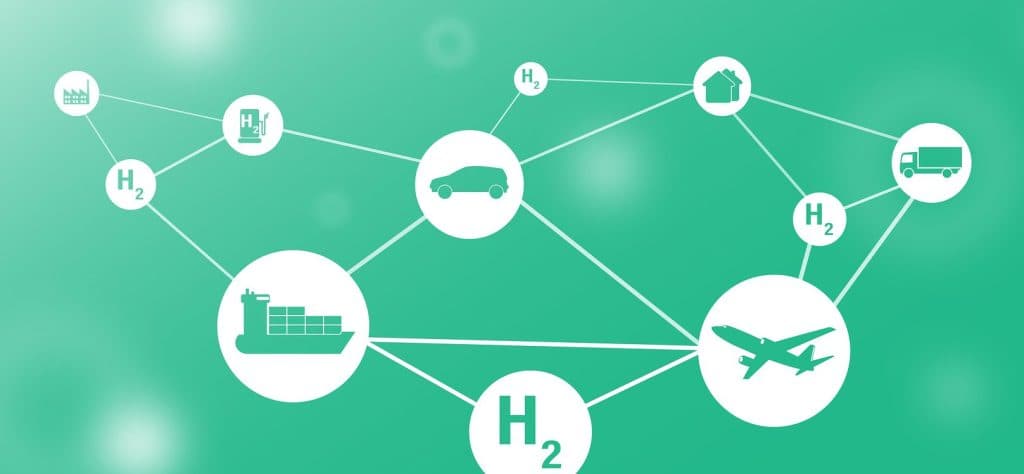
Entrepreneur Dalibor Dědek expects the enthusiasm for battery electric vehicles to cool. In his view, hydrogen is the solution for the future. The Jablotron Group, which he co-founded and long headed as its chief executive, began investing in hydrogen technologies around five years ago. As Dalibor Dědek told Export.cz in an interview at the company’s headquarters in Jablonec, many people looked down their noses at hydrogen technologies at the time. “Today, they already understand that these technologies really do have a future,” adds the entrepreneur, who remains Jablotron’s majority owner and supports the Neuron Foundation Fund.
Five years ago, you supported the research of Vladimír Matolín from Charles University’s Faculty of Mathematics and Physics, who had already obtained a patent for an economical catalyst for hydrogen fuel cells. What led you to invest in hydrogen technologies?
For the long term, we have sought to use the financial resources generated by our Jablotron Group elsewhere as well. Alongside charitable activities, we are also looking at modern technologies. It has always paid off for us to follow what may come in the future. We encouraged our developers not to be overly constrained by generic, precisely specified development work, and to have room to explore. This led to a number of new projects, which sometimes ended up in a drawer but at other times could be used in an entirely different field. One example is a baby monitor for monitoring infants’ breathing. We came to hydrogen precisely because we noticed Professor Matolín’s patent. I am convinced that hydrogen has great potential, including in transport. I consider the loudly promoted shift to battery electric mobility to be nonsense. I expect a gradual sobering-up. I think hydrogen is the right solution.
I noted your remarks that the market is not entirely fair and that it depends on what can be sold to customers, or directly forced on them. Does that not apply to battery electric vehicles too?
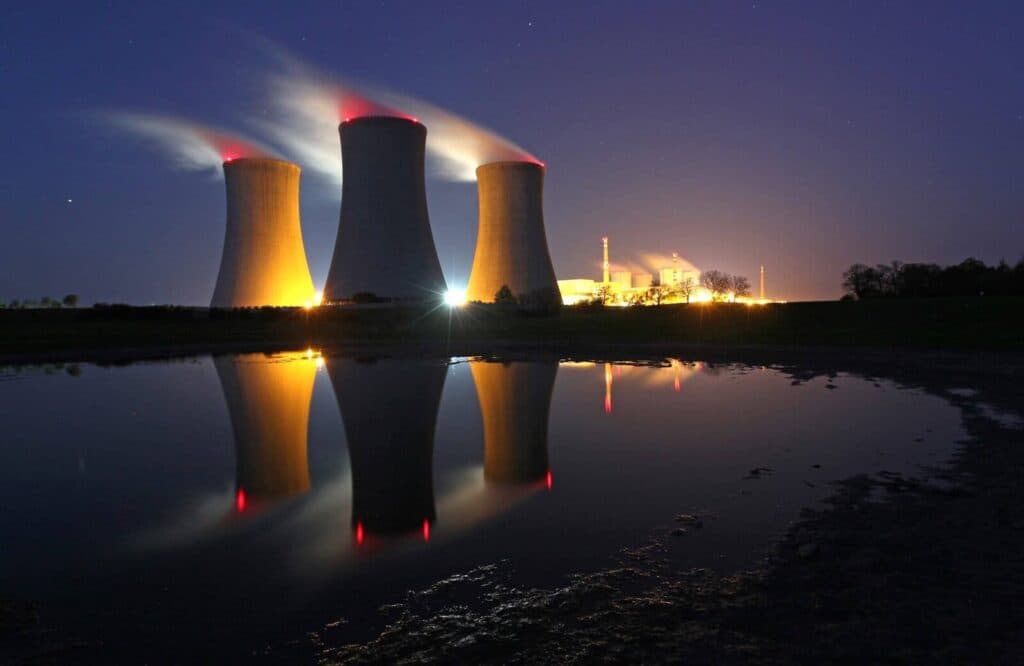
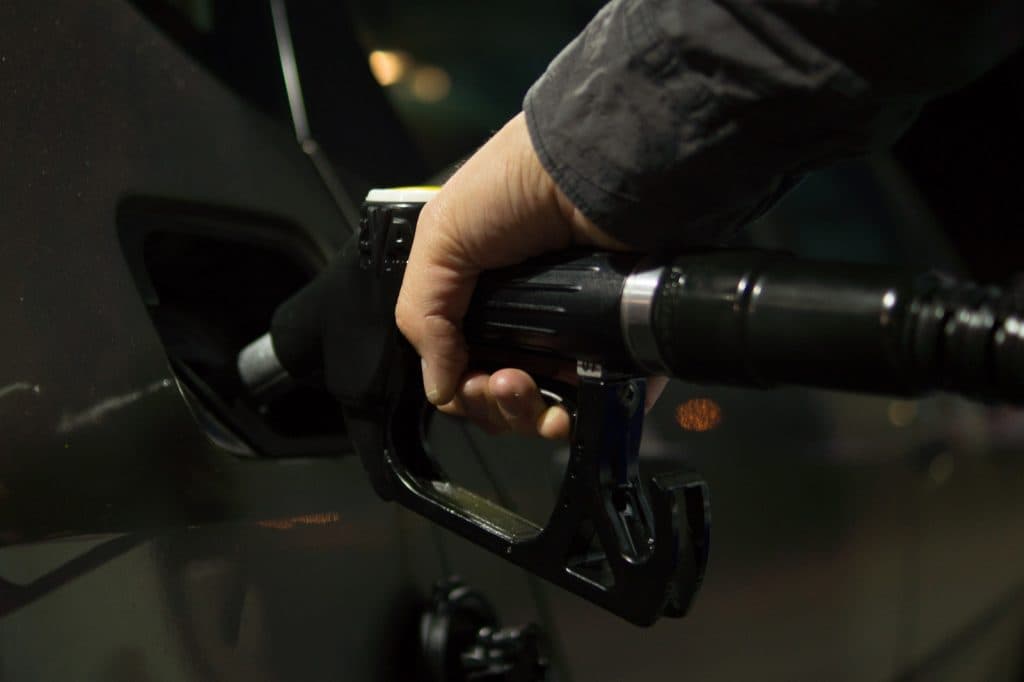
I see it differently. Just consider how much energy is stored at a small petrol station nearby in Jablonecké Paseky – in its tanks, which are completely refilled four times a week. It is two gigawatt-hours. That is two hours of full output from a Temelín reactor. Now imagine electric mobility taking hold on a larger scale. Where will so much energy come from? How will it flow? It is complete nonsense. I also draw on our own experience. We have manufactured products with lithium batteries for years, and we know what lithium burning looks like. (At the time of the interview, Dalibor Dědek had no idea that just a few days later Jablotron’s new production hall in Jablonec would burn down, and that, according to experts, the cause of the fire would be the spontaneous ignition of a small, seemingly harmless lithium button-cell battery…)
What do you say to the argument that current global research is moving towards safer batteries with a lower risk of ignition?
There is one problem with that. The laws of physics and the effort to reduce battery prices work against each other. The separator inside the battery is crucial. When you make the separating layer thinner, you increase the battery’s efficiency: it will have greater capacity at lower weight and volume. But at the same time, you increase the risk of the separator being pierced by dendrites – protrusions that form on the surface of lithium. The pressure for more efficient and cheaper batteries is enormous. Above all, people forget where to obtain the necessary energy and how to get it to consumers. Electric mobility is a similar folly to the boom in photovoltaic power plants in the Czech Republic around ten years ago.
IN THE BLACK
You doubt where the energy needed for electric vehicles will come from and how it will flow. But hydrogen will also require new refuelling-station infrastructure to be built…
Of course. But hydrogen distribution is essentially comparable to that of oil and petroleum products. You drive up to a filling station and refill the tank as before. A hydrogen-powered car produces no emissions; only distilled water drips from it. Or it emits water vapour. If such a car also has a 30-kilowatt three-phase socket in the boot, to which you can connect household appliances, that is not to be dismissed either. I think we had a very good vision five years ago. Many of those who looked down their noses at hydrogen technologies at the time now understand that they really do have a future. Suddenly, there is a huge boom. I never had any illusion that our hydrogen investments would move into the black in a historically short period…
So they are still far from being in the black?
Paradoxically, they are. But thanks to an effect we did not anticipate at all at the outset.
If I understand correctly, it was not the catalyst for hydrogen fuel cells that succeeded in the market, but something else.
The catalyst has not yet succeeded. Physicist Vladimír Matolín correctly worked from the assumption that once hydrogen technologies begin to be deployed on a larger scale, there will be a major problem with a global shortage of platinum, which is used in fuel-cell production. Professor Matolín’s patent concerns the manufacture of membranes with an extremely low platinum content. But this problem is not troubling anyone yet.
So the time for your catalysts is still to come…
It will certainly come. Platinum is already very expensive today, but the volume of production using this raw material is so small that, at the moment, it essentially does not matter. In the future, it will probably also become apparent that the world will not actually have any further usable platinum deposits available. We experimentally verified Professor Matolín’s idea and developed it into a final product. We offered it to several manufacturers, who tested it, congratulated us, but that was the end of it for now. Using our technology, they would save only a negligible amount at present. But then something happened: while developing the catalysts, we found that it was impossible to buy sufficiently good equipment for testing fuel cells anywhere. We obtained a test station from North America, which was initially our biggest investment. Only later did we discover everything it lacked and could not do. What we bought for a great deal of money was unusable for our purpose. I thought: instead of developing our product, we are constantly dealing only with the tools meant to help us do so. The next investment therefore went into developing our own test station. And today, quite surprisingly even to me, we are in the black thanks to sales of test stations of our own, highly unique design.
So test stations are another export product of the Jablotron Group?
Yes. In addition to European countries such as the United Kingdom and Italy, we have supplied them to India and China. This is logical, because Indians and Chinese are currently pushing hydrogen technologies hard. Carmakers have also woken up, and we are preparing a large test station for them. For them, it is something entirely new. The number of orders is starting to grow to such an extent that we are now establishing a hydrogen economy in Jablonec and a large test station for external customers.
What else are you planning in hydrogen technologies?
We are learning to manufacture fuel cells ourselves. They are still extremely expensive, and the range available for different purposes is limited. Hydrogen technologies are currently caught in a vicious circle. If the price of fuel cells is too high, you cannot use them even in areas where they are particularly suitable. Take toll gates, for example, which today can hardly do without grid power because diesel generators have many disadvantages. They are crying out for fuel cells. We developed a great product that could be used: a two-kilowatt generator that you fill with hydrogen and which runs for weeks entirely unattended. But do you know what you run into? There is no affordable fuel-grade hydrogen.
WHERE TO GET HYDROGEN
Are you trying to develop the entire hydrogen infrastructure?
We have to. We are building an entire hydrogen economy so that we can distribute hydrogen. We have learned that it will not work without it. We are not able to build a network of filling stations ourselves, but we want to distribute hydrogen in small quantities. I mean the right hydrogen, because you can also buy hydrogen as an industrial gas. But that is terribly expensive; you cannot use such hydrogen efficiently as a fuel.
Where will you get hydrogen? Is your aim to distribute so-called green hydrogen, the production of which generates no carbon emissions?
Hydrogen is already a by-product of certain technologies. In some production processes, it can be obtained almost for free. A major future potential lies in using electricity from intermittent sources such as wind and photovoltaic power plants. If politicians were a little wiser, they would link subsidies for building these energy sources to an obligation to contribute to the construction of the necessary storage systems – including hydrogen ones. Temporary surpluses of electricity from renewable sources can be used to produce hydrogen through water electrolysis and used later.
Do you also manufacture electrolysers?
Yes. We are also working on the reverse process – not only producing energy from hydrogen, where water is the by-product, but also producing hydrogen from water. I would also mention one more source of hydrogen. One of the key environmental problems today is the disposal of plastic waste, and technologies exist that can convert it into hydrogen very efficiently.
You support the Neuron Foundation Fund, whose aim is also to connect science with business. However, you focus more on basic rather than applied research. Why?
Unlike some other businesspeople, I am convinced that we should primarily support basic research. Applied research is already pursued by specialised companies. And I am opposed to subsidies, which distort the market terribly.
If I understand correctly, you believe the state should play a significant role in basic research.
Of course. Let subsidies be directed towards basic research, social care and the like. Certainly not towards business…
In the past, connecting scientists and businesspeople often ran into mutual misunderstanding…
Many companies do not realise that it makes sense to invest even in research whose results nobody can foresee today. But basic research is the be-all and end-all. Without it, applied research would soon be exhausted. That is why I am active in Neuron. Besides, I am an extremely curious person. According to current physics knowledge, we perceive around five and a half percent of the universe around us. The rest is dark energy and dark matter. And we have no idea what it actually is. Yet from that tiny fraction we know about, we have been able to do amazing things. If we understand just a little more about how everything around us works, enormous new possibilities will open up to us.
The article was published on the Export.cz website.Translation disclaimer
This article is a machine translation of the Czech original and has not yet been fully reviewed. In case of any doubt, please refer to the Czech version.