25 September 2026, 09:51
Loading...
GasNet opens first gas industry training facility in Czech Republic
oEnergetice.cz
9 June 2026, 10:11
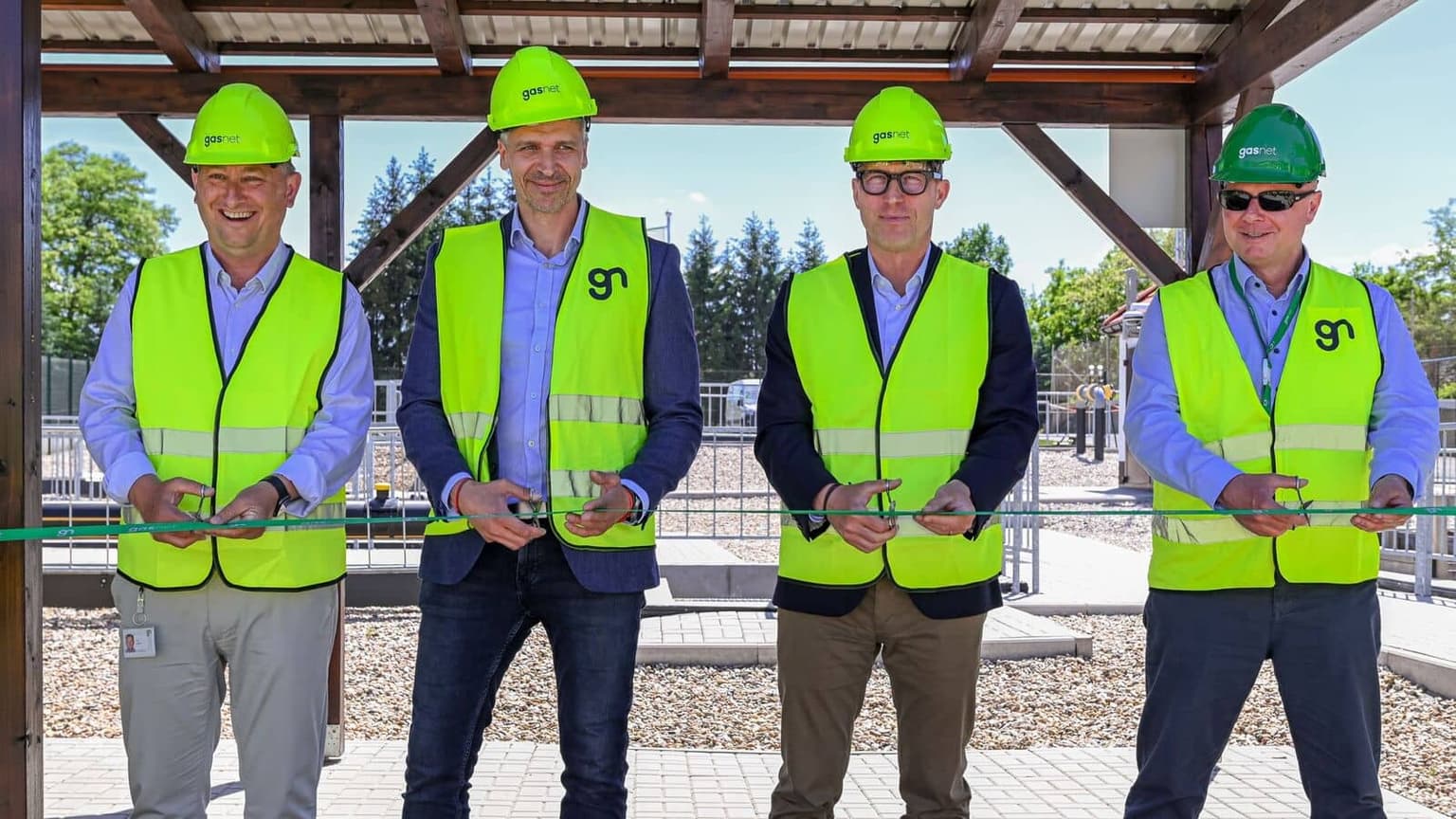
GasNet Group, the Czech Republic’s largest gas distributor, has opened a unique gas industry training facility at its site in Pardubice. The modern training and testing centre is the first and only facility of its kind in the Czech Republic, and is also unique on a European and global scale. It will enable gas workers to receive practical training, simulate hazardous situations and test technologies for the distribution of natural gas, hydrogen and their blends. In addition to gas workers, firefighters, gas infrastructure construction workers and vocational secondary schools will also be able to use the facility for training and instruction.
By building the facility, GasNet is strengthening the safety and reliability of the operation of its gas distribution network. It will enable the further development of the professional skills of gas technicians and fitters, while also serving as a safe site for verifying new procedures and technologies related to the modernisation of the Czech gas sector. These include, in particular, new methods for reducing methane emissions and preparations for the possible future distribution of low-emission gases.
Source: GasNet
“The opening of the Pardubice facility marks an important milestone for the Czech gas sector. It will allow us to test not only gas equipment itself in a controlled and safe environment, but also to try out innovative working procedures. This significantly advances the possibilities for the practical training of gas workers. The facility will also be open to our suppliers, with whom we are working to modernise our network and on whom we place very high safety demands,” says Andrzej Martynek, CEO of GasNet Group.
In addition to natural gas, hydrogen will also be used at the facility. Preparing for the possible future distribution of this low-emission gas is important for gas workers. In early May, GasNet began the regular distribution of a blend of natural gas and 10% hydrogen in Hranice near Aš, in the Karlovy Vary Region, as part of a pilot project.
“In addition to testing and training, the site will provide a space for teaching a new generation of gas workers from secondary schools, as well as for firefighters, who will be able to practise responses to gas leaks here together with us,” Martynek adds.
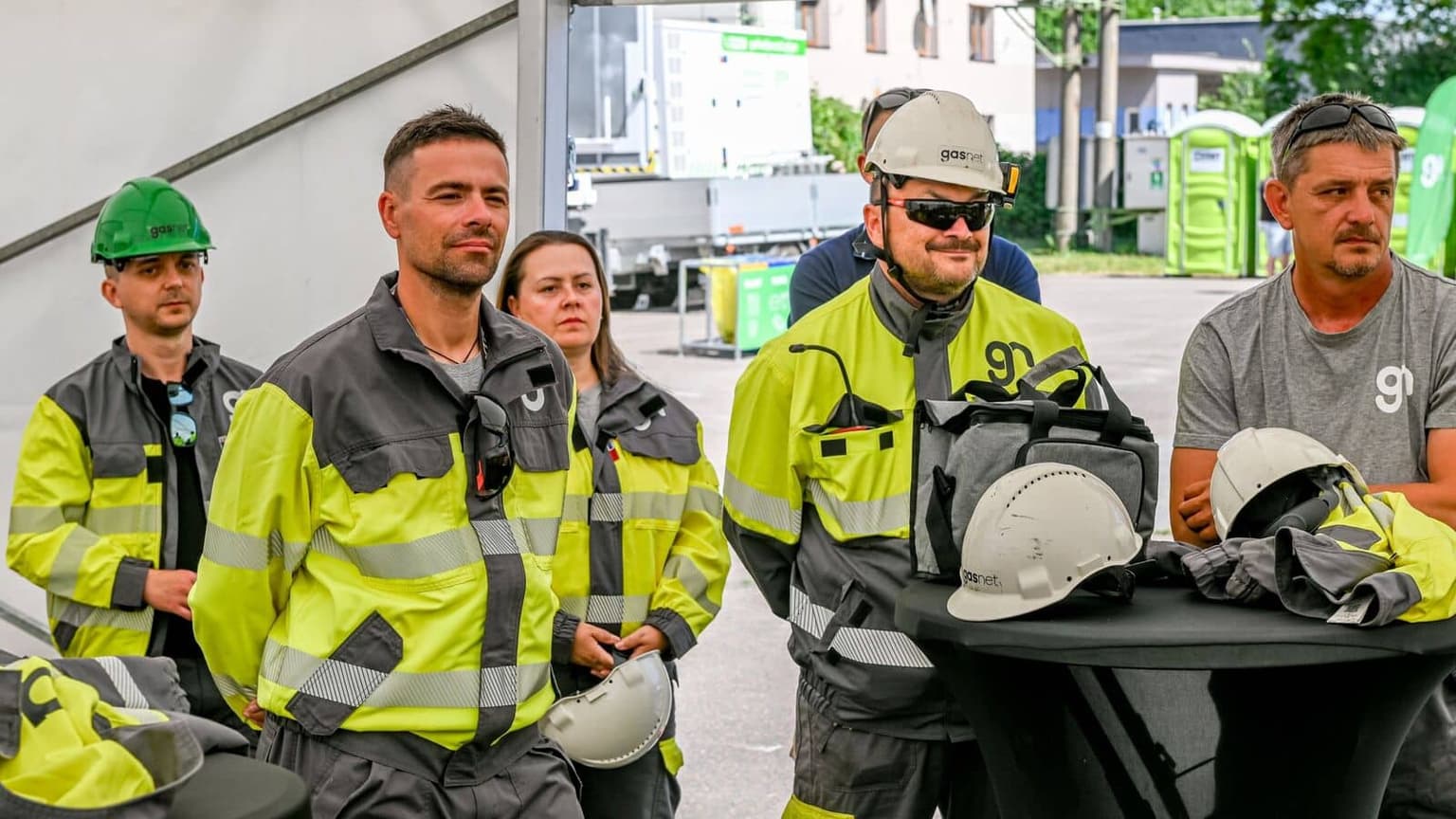
Gas workers have long cooperated with firefighters; together, they protect property and public health in the event of equipment failures. The main objective of the facility is to increase the security of gas supplies in the Czech Republic.
Source: GasNet
“Our emergency service most often encounters firefighters in the field in situations where a gas pipeline has been damaged by a third party. For example, during excavation work, when construction workers have not checked in advance where the gas line runs. We have now created safe conditions in one place where we can jointly practise such emergency situations and improve our coordination. During an actual response, everything must run smoothly and there is no time to explain the basics,” explains GasNet Operations Director Petr Koutný.
Practice with air, live work with gas
The gas industry training and testing centre is divided into two parts. The first is an air section, where gas workers practise hazardous situations without gas. Instead, they use compressed air, which faithfully and safely simulates the effects and properties of gas. At one of several stations in the air section, for example, gas workers can demonstrate the force with which a pipeline plate closure can be propelled if it is not properly tightened and checked.
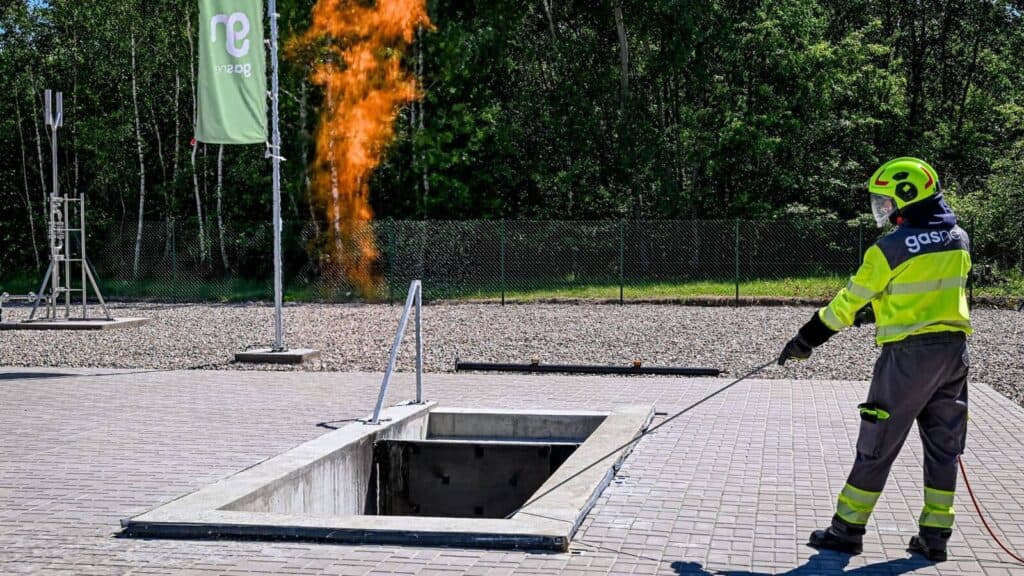
The second part of the facility uses natural gas. Where necessary, it can also use a blend of natural gas and hydrogen, or even pure hydrogen. The gas section also consists of several stations, including an area for practising the safe extinguishing of a flame from burning gas escaping from a pipeline. The gas section also offers the possibility of testing so-called flaring, i.e. burning off gas released from a pipeline. The method is used to reduce methane emissions during repairs and investment projects, when gas must be removed from the pipeline to carry out the work safely.
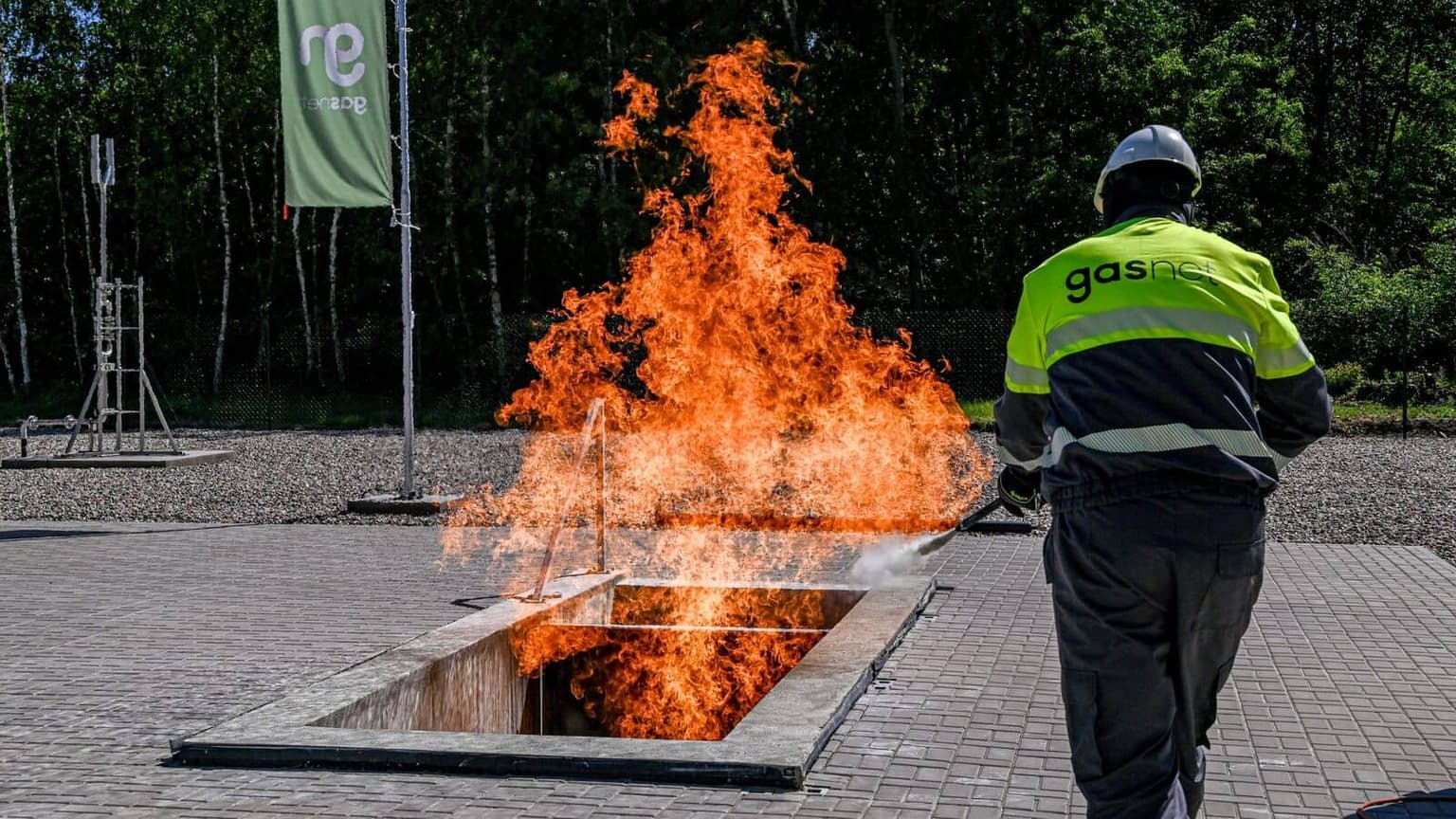
Source: GasNet
Natural gas is supplied to the facility from a nearby medium-pressure gas pipeline connected to a compressed gas storage tank, while hydrogen is available from a cylinder bundle. It will also include blending equipment to prepare gas mixtures with different hydrogen-to-methane ratios. For pressure levels, GasNet plans to use pressures ranging from 1 bar to 25 bar. Gas workers can work with a wide range of pipeline diameters.
“The facility allows us to simulate a range of operational situations under real conditions. The pipelines are installed in excavations, and we work here with the same tools we use every day and the materials that make up our distribution network. We can train meter replacement here, as well as the initial response to pipeline damage, including its subsequent comprehensive repair. We place extreme emphasis on properly handling both our emergency responses and standard maintenance activities, and we built the facility to provide the best conditions for safe and realistic practice,” Petr Koutný explains.
The facility will serve not only to train GasNet employees, gas construction suppliers, firefighters and apprentices, but also to test materials, valves, regulators and other components of gas infrastructure. It will play a significant role particularly in testing technologies related to the gradual introduction of hydrogen into gas distribution.
New experience for future construction
From the perspective of building gas infrastructure, this is also an exceptional project that placed high demands not only on the construction itself, but above all on safety standards and technological preparation.
“There is no similar facility in the Czech Republic. We sought inspiration, for example, in Germany. Nevertheless, we had to address a number of issues as the first in the country, and the construction of the facility has given us valuable experience that we can also draw on in preparing and delivering our regular projects involving investment in the renewal and modernisation of our distribution network. In particular, delivering the hydrogen section of the facility was a major learning experience for us,” adds GasNet Construction Director Pavel Komsa.
Last year, GasNet invested nearly six billion crowns in modernising its gas infrastructure and plans to make investments of at least a comparable volume this year. Across 580 key construction projects, GasNet is focusing this year on refurbishing strategic gas pipelines and local networks, as well as modernising regulator stations.
GasNet expects the new facility to make a significant contribution to improving workplace safety and the operation of gas infrastructure, more effective training of gas workers, and faster deployment of further innovations in the Czech gas sector.
Translation disclaimer
This article is a machine translation of the Czech original and has not yet been fully reviewed. In case of any doubt, please refer to the Czech version.
Sdílejte článek prostřednictvím:
You might also like
24 September 2026, 11:23

24 September 2026, 10:30
24 September 2026, 06:56