A chance for US nuclear power: Trump’s contest with China
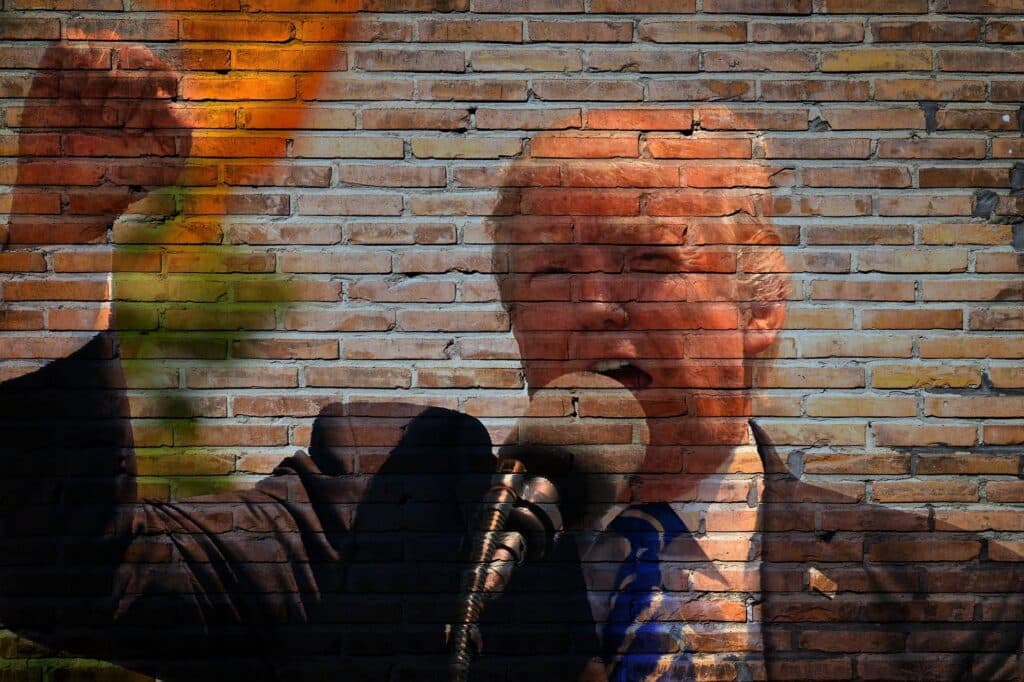
US nuclear power faces an uncertain future. The former superpower still operates the most reactors in the world, but its position is weakening in global competition with Russia, China, Japan and South Korea.
What hope is there that the new “shale” president Donald Trump will help nuclear power in his country regain its momentum? In any case, nuclear advocates should start from the following assumption: Trump will not want to save the world. But he may want to save America, or at least try to. The question is how this could relate to nuclear power.
Perhaps the strongest argument for nuclear power is the effort to tackle climate change in today’s world. Without nuclear power, global climate agreements cannot be met. However, nothing suggests that such an argument would persuade Donald Trump in any way – known for his strong scepticism about the theory of global warming (and especially humanity’s contribution to it).
Another argument, that America risks falling far behind in its contest with China, may prove much stronger. Trump may not care about the environment, but he undoubtedly cares about the strength of US industry. And rivalry with China will most likely become a central pillar of Trump’s foreign policy.
The Bill Gates case
Unlike Trump, the renowned entrepreneur and visionary Bill Gates sees zero-emission nuclear power – just like renewable sources – as an opportunity linked to efforts to tackle climate change. This is why he financially supports Terrapower, which is developing a next-generation nuclear reactor.
Nevertheless, it is not inconceivable that Gates’s project could encourage Trump himself to adopt a favourable stance towards nuclear power. The future president and his team may reflect on why Gates agreed in 2015 to develop and manufacture new reactors specifically with China.
The authors of a letter to Donald Trump and future Energy Secretary Rick Perry decided to use the Gates case in their campaign to save US nuclear power. These authors include leading US scientists, economists and environmentalists.
“We are forcing innovative and financially strong entrepreneurs such as Bill Gates to build their new projects abroad,” they state critically in the letter. Its authors further note that China is investing heavily in at least five different advanced designs for new nuclear reactors.
Falling behind China
It is not only a matter of the distant future; the fundamental difference between America and China is already evident today. While the Chinese are building new reactors on a large scale, Americans are instead facing their shutdown. Over the past three years, they have closed six of the roughly one hundred reactors in the US, which were built predominantly during the nuclear boom of the 1960s and 1970s.
If current trends do not change, it is only a matter of time before the number of Chinese reactors exceeds one hundred and China overtakes the US in this respect.
US nuclear power is currently struggling mainly because of the shale boom of recent years, which has sharply driven down gas prices in the US. Gas-fired power plants are currently in vogue, while heavily subsidised renewable sources are also taking over a substantial share of electricity generation. Under these circumstances, building new nuclear power plants does not pay off, and Westinghouse will likely be glad if it completes its projects for four modern AP1000 units. Further new units are nowhere in sight.
But that is not all – in competition with gas, even existing nuclear power plants often cease to be economical, while their advanced age also requires new investment to extend their operating lives. US states such as New York and Illinois, which take their climate commitments seriously, are trying to counter this. They offer support to nuclear power plants because closing nuclear reactors would lead to increased greenhouse gas emissions. The logic of their approach is therefore in direct conflict with Donald Trump’s thinking to date.
Against bureaucracy
On the other hand, nothing suggests that Trump has any negative bias against nuclear power. Quite the contrary. He voiced strong support for nuclear power even after the Fukushima accident, noting that no one stops flying or driving because of individual plane or car accidents.
Nuclear power advocates may perhaps find hope in Trump’s declared fight against excessive regulation and bureaucracy. The fact is that approving a new reactor design in the United States is, compared with China, an enormously complicated process that takes many years.
However, these are sensitive matters of reactor safety, to which the US public will probably remain much more sensitive than the Chinese public. While many Chinese will be proud primarily that their country is assuming a leadership role in this sector, many Americans will focus more on the risk of a possible accident. The US regulator, the NRC, imposes very stringent safety requirements on nuclear reactors, but this is also why it enjoys high authority.
Much will therefore depend on the extent to which bureaucracy can be eliminated without undermining the high safety requirements imposed on nuclear unit operators.
Keeping feet on the ground
Trump’s administration certainly cannot be expected to support the construction of new nuclear power plants (or renewable sources) in order to replace old fossil-fuel facilities. Donald Trump has positioned himself as an advocate of continued US coal, oil and gas extraction. And although his ability to fulfil his campaign promises on coal may be questioned, his overall preferences are unlikely to change.
When this is combined with an analysis of the current US market, especially the assumption that wholesale electricity prices (and forecasts of future prices) will not rise at a breakneck pace for now, it is highly likely that no new boom in nuclear power plant construction will occur in the US during Trump’s upcoming term.
Extending the operating lives of existing nuclear power plants may be another matter. Trump’s transition team, preparing to take over the administration in Washington, was in any event fairly actively interested in this issue – as well as, for example, the possibility of reviving plans to build a permanent nuclear waste repository at Yucca Mountain in Nevada.
Strict regulation and bureaucracy are, after all, barriers not only to building new reactors but also heavily burden the operation of existing ones. According to one estimate, a US nuclear power plant must employ an average of 86 full-time staff dealing solely with the “paperwork” associated with meeting information-reporting obligations to the NRC.
Overall, however, the Trump administration’s options in extending reactor operating lives will be limited. Decisions on whether individual nuclear power plants continue to operate will be made primarily at state level – as in the cases of New York and Illinois.
Preserving future opportunities
From the perspective of the future of US nuclear power, however, the most important issue may ultimately be neither whether one nuclear power plant or another closes in the coming years nor how many new reactors Americans do or do not begin building during Trump’s presidency.
What will be absolutely crucial instead is whether the US nuclear industry continues developing its capabilities to build new projects, export, participate in power plant construction abroad, and prepare for the time when next-generation (fourth-generation) nuclear reactors – whether large or small modular ones – begin to be deployed worldwide. The Department of Energy currently places great hopes in the NuScale small modular light-water reactor project.
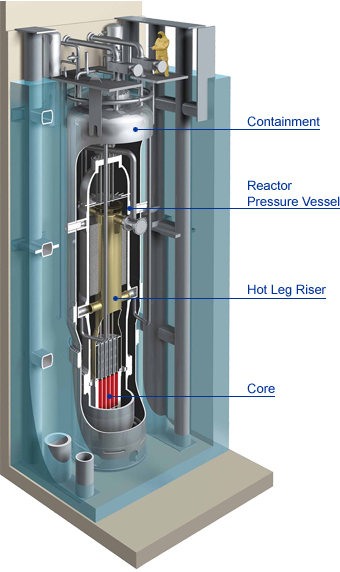
These are matters concerning the overall strength of the US economy, so they may not be overlooked in Washington under President Trump. All the more so because the US defence industry should also benefit from the development of nuclear technologies. Under some proposals, the US armed forces themselves should order new types of reactors.
The future viability of US nuclear power may also be indicated by the number of domestic nuclear start-ups and activities of entrepreneurs, including the aforementioned Bill Gates.
Funding for research and development
While market conditions in America do not yet favour the construction of new nuclear power plants, potential opportunities abroad may come into focus. And it is in third markets that US companies can expect another confrontation with China, which has set the export of its nuclear technologies as another major goal. Chinese company CGN has also joined the bidders interested in completing the Czech Dukovany plant, and according to available reports is currently much more active in negotiations with the Czechs than US company Westinghouse.
Even for a pragmatist of Trump’s type, it may not be all that important in this case that global demand for new nuclear reactors will be driven by that “dubious” theory of global warming. What will matter is that Americans do not surrender their positions in global competition.
Many have so far expected that, given his “fossil-fuel orientation”, Donald Trump and his administration would oppose further financial injections from the Department of Energy intended to support research and development into other energy sources. Bill Gates indicated that in such a case private funds such as the recently established Breakthrough Energy Ventures would have to play an even more important role. But it will be interesting to see whether rivalry with China (and others) and increased interest in the future position of US industry ultimately “shift” Trump in a different direction than many have expected so far.
Czech appendix
And finally, a brief Czech appendix. The head of the foreign affairs department at Prague Castle, Hynek Kmoníček, is set to become the next Czech ambassador to Washington. He has said in the past that there are not many topics through which Czechs could capture America’s interest. He named potential US interest in building new nuclear units in the Czech Republic as one of the few such topics.
For now, however, there appears to be no major US interest – also in view of Westinghouse’s entirely understandable doubts over whether the announced new Czech tender will end in a similar way to the cancelled Temelín procurement process. But the future of the entire US nuclear sector also remains uncertain.
The author works as a consultant and energy projects specialist for the HATcom agency.
Translation disclaimer
This article is a machine translation of the Czech original and has not yet been fully reviewed. In case of any doubt, please refer to the Czech version.