Armenia between the EU and Russia: Kremlin points to energy dependence
Armenia is a small country, but one that is slowly attracting Europe’s attention. Part of a Russia-led economic bloc and burdened by conflicts in the region, the country is now trying to position itself as a bridge “between East and West”. On Monday, however, Moscow said the country could lose the “attractive prices” it pays for Russian gas.
Last year, Armenia adopted a law launching its EU accession process. The EU is the main Western actor Yerevan is turning to. European Commission President Ursula von der Leyen and European Council President Costa visited Yerevan recently. The Caucasus country also hosted US Secretary of State Marco Rubio this week, and the two countries signed a strategic partnership agreement.
Against the backdrop of these events, a Kremlin spokesperson said Armenia currently enjoys a very attractive, preferential price for Russian gas, but that things are different within other integration frameworks.
Armenian Foreign Minister Ararat Mirzoyan sought to calm the situation, saying his country was not interested in severing political ties with Russia. “We want to, and will, work to maintain and deepen our normal relations,” he told Russian media.
Energy
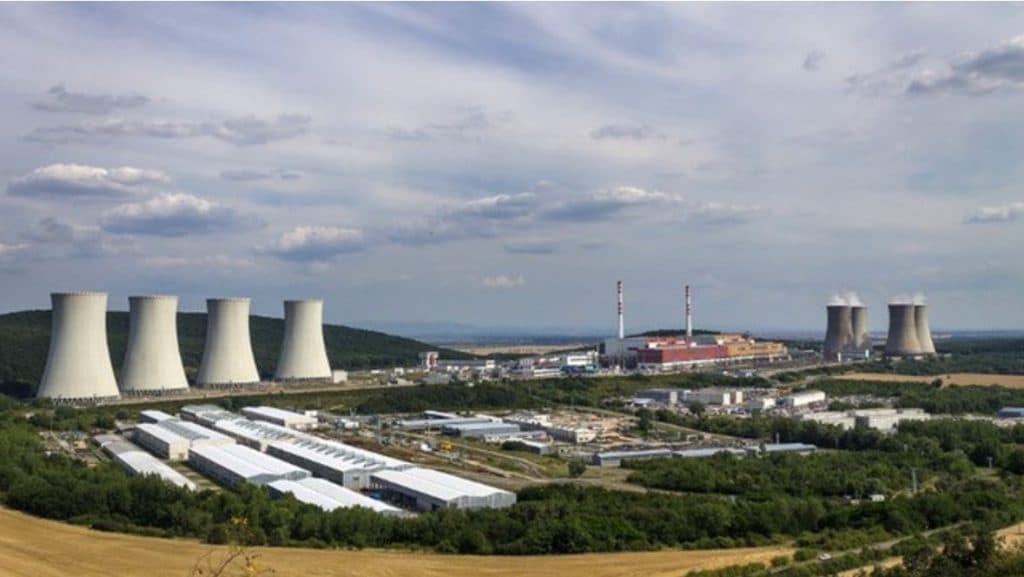
Armenia’s energy sector is built on gas. Gas accounts for around 56% of total energy consumption and approximately 42% of electricity generation. Yerevan also has a nuclear power plant, plans to expand which it has been considering for some time. The plant accounts for around 30% of electricity generation, followed by a series of hydropower plants (under 19%) and solar power plants (over 8%).
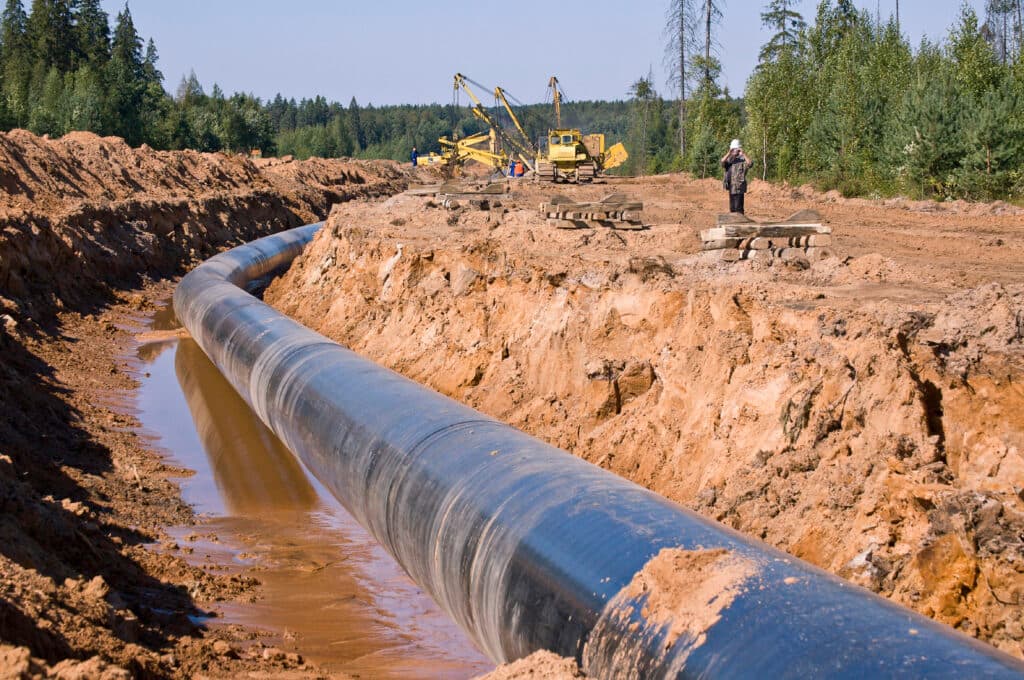
Gas is therefore enormously important to the Caucasus country. Russia is, however, essentially its only dominant supplier, while neighbouring Azerbaijan is openly hostile. The only alternative available to Armenia is a roughly 140-kilometre-long pipeline from the Iranian city of Tabriz. Yerevan has a 20-year agreement with Iran for what is known as a gas-for-electricity swap, which runs until 2029. Under the arrangement, Iran supplies gas and Armenia sends the electricity it generates back into the Iranian grid.
Tehran is Armenia’s second-largest supplier after Russia, but Armenia does not have the capacity to fully break away from Russian gas. Given how important gas is to electricity generation as well, it inevitably has to negotiate with Moscow.
War and politics
Elections will be held in Armenia next week, which will likely lead the government to act with great caution. Prime Minister Nikol Pashinyan’s ruling Civil Contract party is the frontrunner in opinion polls, but faces competition from several more nationalist parties, some of which are considered pro-Russian.
An energy-related point of interest is that one of them, Strong Armenia, is led by a Russian-Armenian billionaire and founder of the Tashir Group. Among many other assets, the Tashir Group conglomerate owns Armenia’s electricity transmission grid and several hydroelectric and thermal power plants. The company is based in Moscow. Pashinyan has done little to improve his relationship with Tashir with a recent court-approved move to nationalise the holding company’s transmission business.
Pashinyan came to power after Armenia’s “Velvet Revolution” in 2018 and also won the 2021 election. His foreign policy is characterised by an effort to pursue a “diversified foreign policy”, which primarily means a gradual shift towards Brussels. Armenia is gradually seeking to adopt some European standards. In the energy sector, it is trying to increase the share of renewables, improve energy efficiency and revise nuclear safety standards. These efforts are also supported by the European Investment Bank.
At the same time, however, his administration is burdened by two lost conflicts with Azerbaijan, in 2020 and 2023. The second resulted in the expulsion of up to 100,000 Armenians from Nagorno-Karabakh. The prime minister now wants to formally change the constitution at Azerbaijan’s request, so that the country renounces any ties to the lost enclave. Naturally, none of this is particularly popular among Armenian nationalists.
On the other hand, pro-Russian sentiment has not been helped by the fact that Russian peacekeepers in the area did not intervene in the fighting in 2023, even though Armenia considered Azerbaijan the aggressor.
It is unclear how Russian pressure will affect the election, but Pashinyan must also be aware of the role played by Russian gas. At their meeting in April, Putin himself told him that Yerevan pays USD 177.50 for 1,000 cubic metres of gas, whereas “in Europe”, he said, it would cost USD 600. Pashinyan has previously said that the price of gas has been agreed and cannot be increased.
Translation disclaimer
This article is a machine translation of the Czech original and has not yet been fully reviewed. In case of any doubt, please refer to the Czech version.