9 October 2026, 06:22
Loading...
Austrians have been sharing the electricity they generate for more than a year. Czechs can take inspiration from their system
Ekonews.cz
7 August 2023, 14:24
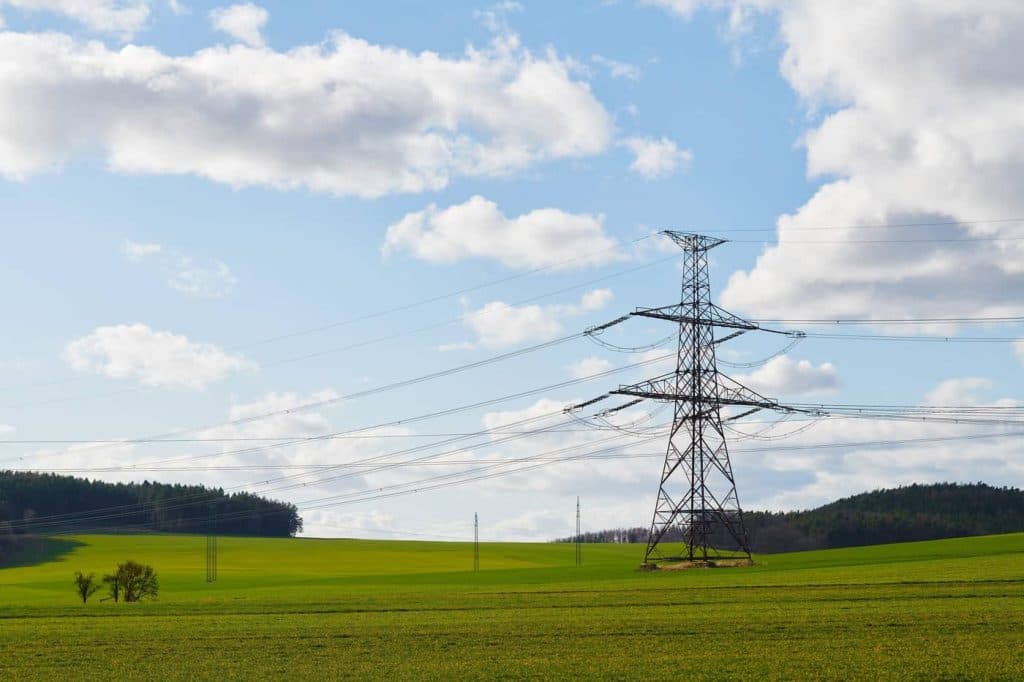
A hydropower plant in the mountain town of Mühlbach generates electricity for local households and farms. Solar power is developing in a similar way. The Austrian government supports community projects through lower charges, accessible advice and subsidies.
In Czechia, community energy could take off as early as next year. An amendment to the law that could enable electricity sharing between neighbours or between a municipality and small businesses is now before the Chamber of Deputies. Czechs can draw inspiration from neighbouring countries, where joint generation is already operating.
The Modern Energy Association recently described the situation in neighbouring countries. In an overview entitled Outlook of community energy in Europe, the authors compare different approaches in Austria, Germany, Poland, Slovakia and Belgium.
Austria is the furthest ahead among Czechia's neighbours when it comes to sharing. Its more than 1,000 operating communities include a community near Salzburg built around the local Roser printing company. It is even the first community initiated by private individuals.
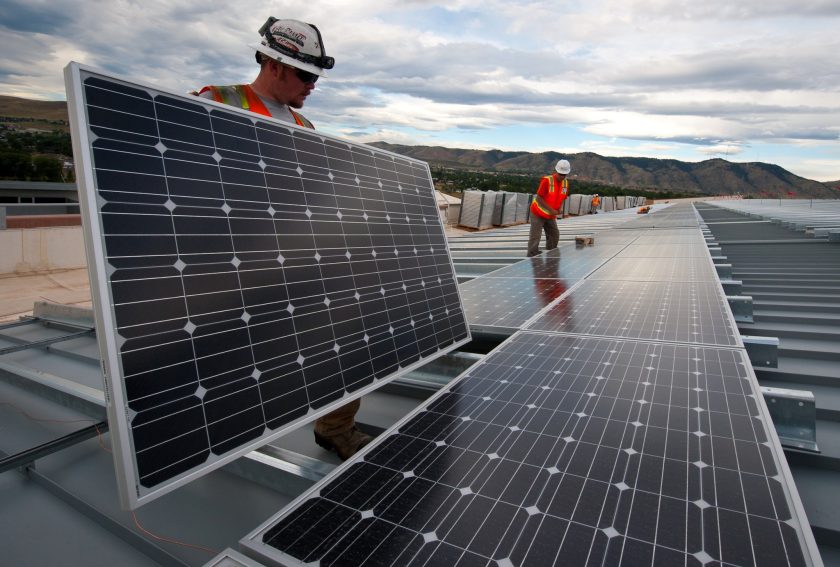
The printing company in the town of Hallwang in north-western Austria covers around 40 percent of its own consumption with 145 kWp of solar installations built on one of its production halls. At weekends and on other days off, when the Roeser company is not printing books or promotional materials, the solar panels supply electricity to four nearby households. More members could join soon.
According to CEO Peter Buchegger, the printing company's vision is to be an "energy self-sufficient and climate-neutral company", as he told the Austrian Coordination Office for Energy Communities (Österreichische Koordinierungsstelle für Energiegemeinschaften). Thanks to companies in the surrounding area, the business could soon obtain all the electricity it needs from its own sources.
Not just solar, but water too
Another community was established in alpine Mühlbach. However, instead of solar panels, the local community is based on electricity generation from a small hydropower plant. This is nothing unusual: in Austria, as much as 73 percent of "green" electricity comes from water. By contrast, solar power plants currently account for only a five-percent share.
The electricity generated in the mountain town in the Salzburg region partly covers the consumption of sixteen local households and farms. The community does not intend to stop at one power plant and is currently building solar installations on three family houses and two farm buildings.
Overall, more than 1,400 similar communities operate in Austria. One thousand of these are apartment buildings, where residents have shared electricity among themselves since 2017. The remainder consists of communities of varying sizes, divided according to how far the electricity travels.
"Local renewable energy communities" use only low voltage, while "regional renewable energy communities" also operate at high voltage. In addition to small sources such as solar panels, their members can install wind or hydropower plants.
The largest type of Austrian community is the "citizen energy community", in which members can join across the grid. According to the authors of the Modern Energy Association study, there are currently only a handful of these.
No tax and lower electricity distribution charges
The necessary legislation only came into force in January last year. The Austrian government considers the local nature of generated electricity particularly important, with electricity intended to travel the shortest possible distance when shared.
The state supports local communities by reducing the distribution charge, which in Austria does not include a charge for circuit breakers, as it does in Czechia – citizens pay only for the electricity's "journey". "Community" kilowatts are also exempt from electricity tax and the renewable energy support charge.
"The legislative amendment adopted in this way also included an agreement that the impacts of the measures would be regularly assessed from the perspective of their impact on security of supply," the study's authors point out. The government can therefore adjust the conditions if necessary.
Communities can also use a so-called dynamic allocation key. In practice, this means that each member is not assigned a fixed share of the electricity generated; instead, it is used by whoever needs it at a given moment. Under the current wording of the amendment and the rules of the Energy Regulatory Office, in Czechia everyone would receive only a predetermined share of the electricity generated.
The creation of new communities is also supported by a sophisticated advisory system. This is mainly managed by the Austrian Coordination Office for Energy Communities, which cooperates with individual regional organisations. In addition to municipalities, it provides advice to households, for example.
Czechia can learn lessons
Austria rolled out community energy gradually. Initially, each member could be connected to only one source. This restriction remained in force until last autumn. This autumn, Austrians will be able to operate communities across the distribution grid.
Next year, those interested could become members of several communities at once. This will allow Austrians to draw electricity from solar panels on a neighbouring house while also using power from a wind turbine several dozen kilometres away.
The Modern Energy Association believes Czechia could take a similar approach in this respect. "A sensible solution is to build community energy in Czechia gradually, evolutionarily, so that the system undergoes a stress test and we can then benefit from the first experience when building a more robust system," says Martin Sedlák, the association's programme director.
As with its rollout, Austria is also proceeding step by step with financial support. "In the first phase, a smaller number of 'pioneering' projects were supported for implementation; subsequently, a larger number of 'exploratory' projects will be supported; and in the third phase, projects for monitoring and evaluating the operation of new energy communities," the authors of the Outlook of community energy in Europe describe.
Republished from EkoNews.cz, a website covering business and sustainability.
Translation disclaimer
This article is a machine translation of the Czech original and has not yet been fully reviewed. In case of any doubt, please refer to the Czech version.
Sdílejte článek prostřednictvím:
You might also like
8 October 2026, 10:05