Berlin hit by the biggest postwar blackout. Power supplies now almost fully restored

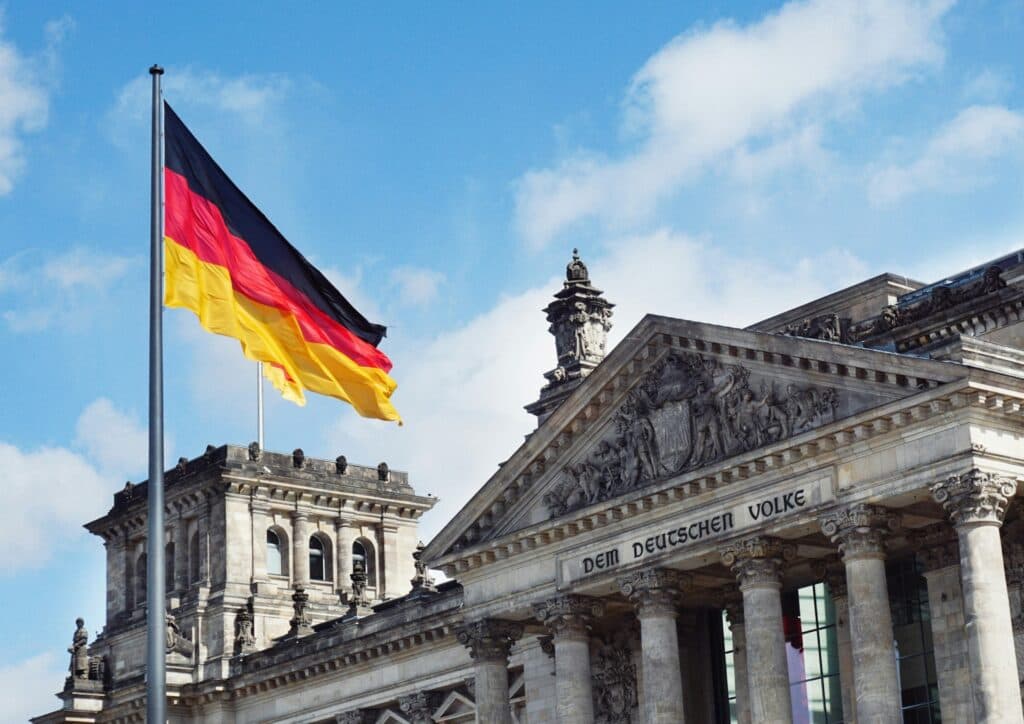
After a large-scale arson attack on high-voltage cables in southeastern Berlin caused the biggest power outage since the Second World War, intensive efforts are under way to restore supplies and investigate the incident. Tens of thousands of households and businesses were without electricity for several days. The Federal Prosecutor General’s Office has taken over the case as a suspected act of terrorist sabotage. The incident has reignited debate about the security of Germany’s critical infrastructure.
Following the arson attack on a cable bridge over the Teltow Canal around 45 000 households and 2 200 businesses were left without electricity, with around 100 000 Berlin residents affected in total. The mobile network failed, public transport services were disrupted, and schools and healthcare facilities had to switch to backup power. The impact was particularly severe during the freezing winter weather.
On Tuesday, the fourth day of the power outage, around 25 000 households and 1200 shops and businesses were still without electricity. According to the latest information, supplies were expected to be partially restored yesterday, while work to fully restore them is still under way.
The far-left activist group Vulkangruppe claimed responsibility for the attack in a publicly available letter. It described the attack as a strike against a fossil-fuel-based energy system. German authorities consider the letter authentic and are examining it as part of the investigation. In a second version of its public statement, the group rejected speculation about the involvement of foreign actors and framed the act in the context of domestic social conflicts.
The case has been taken over by the Federal Prosecutor General’s Office in Karlsruhe, which handles the most serious criminal cases. The incident is being investigated as suspected sabotage, terrorism and arson. Investigators said that evidence is being gathered and witnesses questioned. Berlin’s mayor called the attack an act of terrorism that put residents’ lives at risk and called for the perpetrators to be prosecuted vigorously.
Economic losses linked to the prolonged power outage could run into millions of euros, according to estimates by business associations in Berlin . The outages affected, among other sectors, services, small businesses and industry.
Incident sparks debate about critical infrastructure security
The incident has further fuelled debate about how well Germany’s critical infrastructure is actually protected against targeted attacks, and prompted calls from the public and politicians to improve safeguards.
Helena Melnikovová, chief executive of the Association of German Chambers of Industry and Commerce (DIHK), has called for weaknesses relating to security, in her view, to be addressed as part of the legislative process.
“An important lesson from the recent attacks is the need to limit the obligation to disclose sensitive information,” Melnikovová said. Detailed maps of the electricity grid are currently publicly accessible.
Germany has already strengthened its critical infrastructure protection framework following a series of incidents, including in the energy sector. Rules that came into force in 2025 require operators to identify vulnerabilities, draw up resilience plans and report major incidents, with penalties for non-compliance.
Some politicians and security experts are now calling for even stricter measures, including closer coordination between security agencies and energy operators and stronger physical protection for key facilities.
Translation disclaimer
This article is a machine translation of the Czech original and has not yet been fully reviewed. In case of any doubt, please refer to the Czech version.