Do subsidies make heat pumps more expensive? New study offers detailed analysis of the situation in Germany

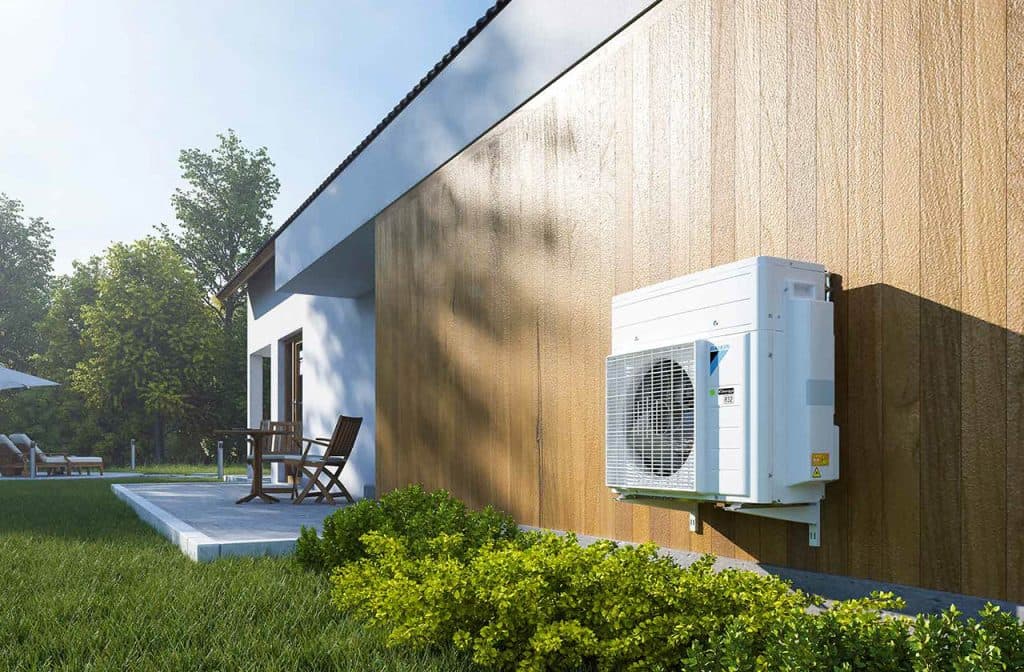
Heat pump installations in Germany are among the most expensive in Europe, yet households there can access support covering a significant share of their costs. A new study warns that subsidies covering a percentage of costs may, alongside technical and tax factors, themselves weaken pressure on the final price, indirectly transferring part of the public support into higher supplier quotes.
The gross cost of installing an air-to-water heat pump in an existing detached house in Germany ranges from around €23,000 to €40,000, while it is substantially lower in other Western European countries. In a modelled comparable case, the installation price in Germany was €35,366 including VAT, compared with just over €12,000 in the United Kingdom.
Such a striking cost difference cannot be explained solely by more expensive equipment. The study's authors estimate that, even after accounting for different specifications, German prices are roughly 15 to 35% higher than for comparable products in neighbouring markets. The German market is also dominated mainly by established European manufacturers, whereas Asian brands with lower equipment prices have a stronger position in the United Kingdom, France and the Netherlands.[6]
Standards, grid connections and taxes raise costs in Germany
Technical installation requirements represent a significant cost item. German standards commonly require a solid concrete foundation for the outdoor unit, which the study puts at €976 to €2,700, while cheaper wall mounting or a simpler foundation structure is used in many other European countries.
Another layer of costs comes from connection to the electrical system. Since 2024, German systems above 4.2 kW have had to meet requirements for smart metering and a communications interface for load management, which may entail modifying the distribution board, a three-phase connection or installing additional circuit protection. According to the study's authors, these works cost between €1,800 and €4,000.
Higher labour costs also have an impact, adding an average of just under €1,800 to the cost of purchasing a heat pump in Germany compared with the United Kingdom, according to the study.
VAT also creates a substantial difference. Germany applies a 19% rate to installations, while the United Kingdom has applied a zero rate since 2022 to energy-saving systems, including heat pumps. In the case compared, the tax alone added €5,647 to the cost of the system in Germany, accounting for roughly a quarter of the total price difference compared with the UK example.
Generous support may weaken competitive pressure on prices
Even after accounting for the factors above, however, the difference in heat pump purchase costs in Germany remains high. The study's authors put this residual factor at almost €4,000.
The study identifies the design of Germany's BEG subsidy programme as potentially the most significant factor. Households there can receive support of 30 to 70% of eligible expenditure, capped at expenditure of €30,000. A higher quoted price therefore not only increases the supplier's revenue but also the nominal subsidy, meaning that the household does not bear the full impact of any price increase.
According to the study, this mechanism reduces competitive pressure on suppliers more than a fixed-amount subsidy system, in which the customer bears the full marginal cost of a price increase.
However, the authors say the link has not been definitively proven, as it is based on observed data, market comparisons and the timing of changes in support schemes. Nevertheless, it is notable that, according to the study, heat pump purchase costs in Germany rose sharply after the switch from the previous support system to a percentage-based system in 2020.
What is the situation on the Czech market?
For the Czech Republic, the main question is not whether German price levels can be directly applied to the domestic market. What matters is that the level of support alone may not be a sufficient measure of the success of subsidy policy. For subsidy schemes covering heat pumps, rooftop photovoltaics, insulation or energy storage, it is important to monitor whether a subsidy reduces households' net costs or merely creates more room for supplier prices to rise.
The German experience also highlights the importance of technical standardisation, simpler administration and transparent comparison of quotes. If public support is tied to a fixed amount, a standardised scope of measures or clear cost limits, customers remain more sensitive to the price of the supply. This may be particularly important during a period when the market for building decarbonisation technologies is stabilising and the initial shortage of installation capacity is gradually easing.
Translation disclaimer
This article is a machine translation of the Czech original and has not yet been fully reviewed. In case of any doubt, please refer to the Czech version.