Eagle S crew planned to damage more cables, Finnish authorities say

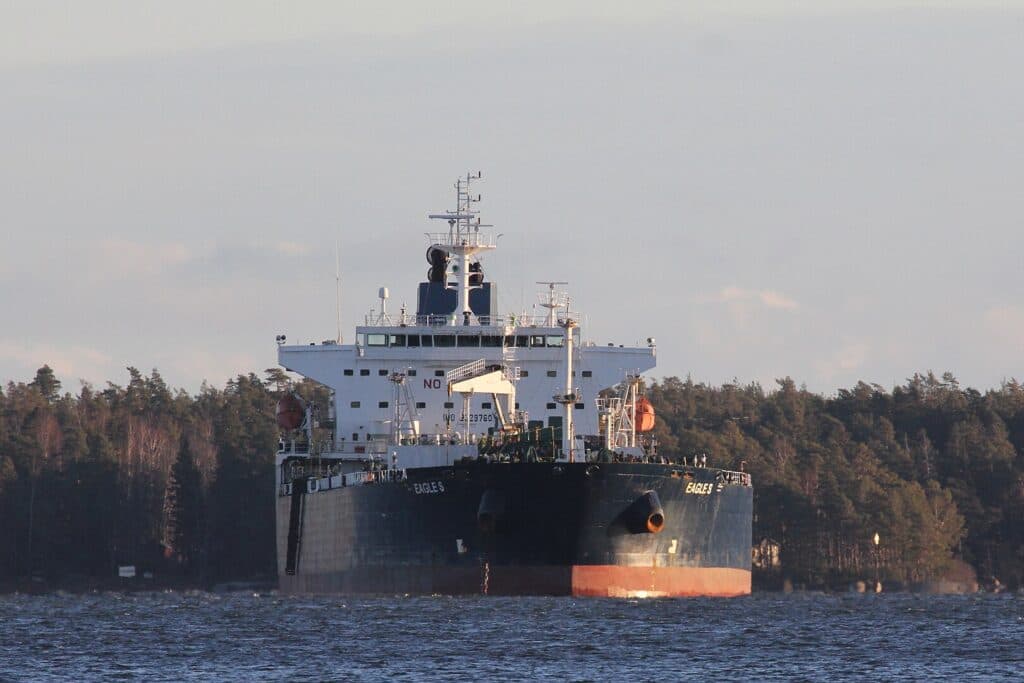
The crew of oil tanker Eagle S, accused of sabotage and damaging subsea cables in the Baltic Sea, was prepared to sever more cables and pipelines, Finnish investigators said today. Reuters reports.
When the Finnish Border Guard boarded Eagle S, after four telecommunications cables and one power cable were damaged in the Baltic Sea on 25 December, investigators said there was “an imminent danger that further cables or pipelines connected to our critical subsea infrastructure could be damaged,” lead investigator Risto Lohi of the National Bureau of Investigation told Reuters. He said the vessel threatened to sever the second power cable, Estlink1, and the BalticConnector gas pipeline between Finland and Estonia when it was detained.
Lohi also said a ninth crew member had been added to the list of suspects. Finland announced earlier this month that eight of the 24 crew members had been banned from leaving the country.
Finnish police detained the tanker Eagle S, which was carrying Russian oil, on 26 December and said they suspected the vessel had damaged the Estlink 2 power link between Finland and Estonia and four telecommunications cables by dragging its anchor along the seabed. The Swedish navy later retrieved the anchor from the Baltic Sea and handed it over to Finnish authorities for investigation.
Countries around the Baltic Sea have been on alert following a series of disruptions to power cables, telecommunications links and gas pipelines since 2022, when Russia invaded Ukraine. Leaders of NATO member states around the Baltic Sea are due to meet in Helsinki on Tuesday to discuss the defence alliance’s response to the threat.
German Chancellor Olaf Scholz will also travel to Helsinki for the Baltic states summit, the DPA news agency reported today. Scholz will be joined by the heads of state and government of other NATO countries in the Baltic Sea region, including Denmark, Lithuania, Latvia, Poland and Sweden. NATO Secretary General Mark Rutte will come from Brussels, and the European Commission will be represented by Vice-President Henna Virkkunen. Russia, the only Baltic Sea country outside NATO, will not attend the meeting. Finnish President Alexander Stubb and Estonian Prime Minister Kristen Michal will host the security summit.
Translation disclaimer
This article is a machine translation of the Czech original and has not yet been fully reviewed. In case of any doubt, please refer to the Czech version.




