4 October 2026, 21:07
Loading...
First ships pass through Strait of Hormuz, but full reopening is still far off, Hapag says

oEnergetice.cz, ČTK
8 April 2026, 16:49
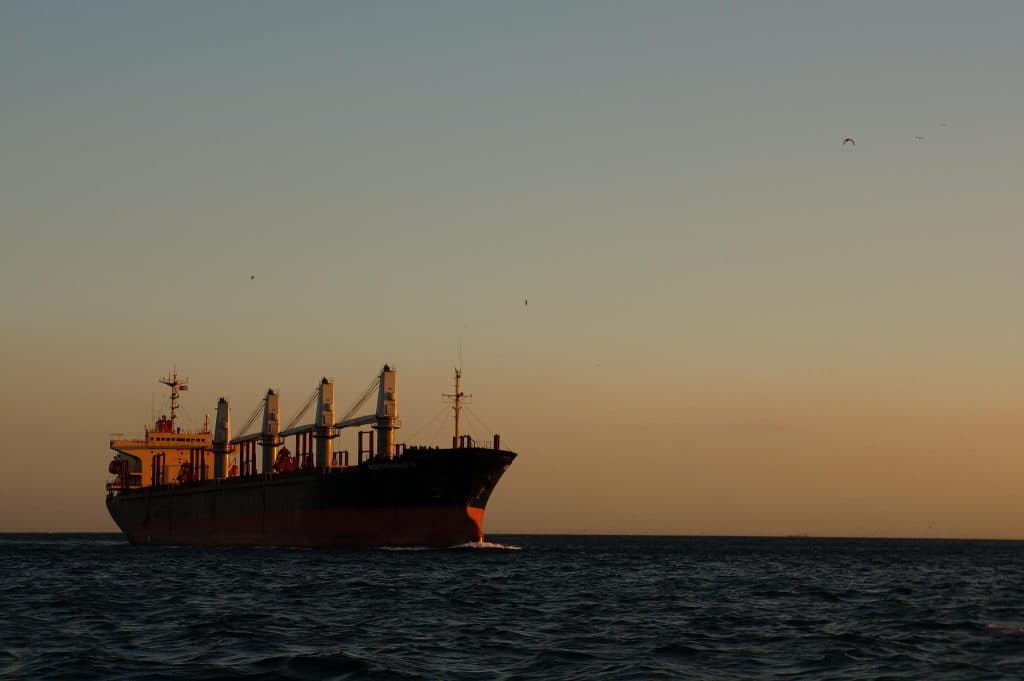
The first ships have sailed through the strategically important Strait of Hormuz since Iran and the United States agreed to a two-week ceasefire. At 10:44 CEST, the Greek cargo tanker NJ Earth passed through the strait, while the Liberia-flagged Daytona Beach had crossed at 8:59 CEST, the MarineTraffic service said on its X account. German shipping company Hapag-Lloyd warned, however, that a full reopening of the strait could take six to eight weeks.
According to Bloomberg data, only seven vessels have passed through the strait since the ceasefire was announced. Before the war began, around 135 ships passed through the area each day. The Strait of Hormuz therefore remains largely blocked, the agency reported.
"Time will tell whether this is a temporary easing of the situation or a lasting peace, but in the meantime it is very unlikely that shipping in the Persian Gulf will simply resume," said Neil Roberts of the marine and aviation department at Lloyd’s Market Association. "Risks in the region remain elevated, as none of the underlying causes of tension have been resolved," he added.
"The passage of NJ Earth may be the first sign of a recovery, but it is still too early to say whether this marks a broader reopening linked to the ceasefire or whether permission had already been granted earlier," Ana Subasic, an analyst at Kpler, which owns the MarineTraffic online platform, told AFP.
The ship had its transponder switched on and sailed along a route near Larak Island.
Hapag-Lloyd chief executive Rolf Habben Jansen stressed the need for further security guarantees during a conference call with clients, according to Reuters. "Even though a ceasefire was agreed overnight, in my view it is fair to say that the conflict in the Middle East is still seriously disrupting shipping, as well as supply chains," he said, adding that the situation was unstable. The Norwegian Shipowners’ Association (NSA) said Norwegian merchant ships would not pass through the strait for now.
Hapag-Lloyd estimates the additional costs caused by the war in the Middle East at 50 to 60 million dollars (up to CZK 1.25 billion). That is up from the previously reported 40 to 50 million dollars. According to data from the Association of German Shipowners (VDR), more than 2,000 merchant ships carrying around 20,000 seafarers have been stranded in the Persian Gulf since the war began on February 28. The situation for seafarers in the area remains tense, the association said.
The United States and Israel attacked Iran on February 28. One reason they gave was concern that Iran could acquire a nuclear weapon. In retaliation, Tehran and its allies began attacking Israel and Arab states in the region that host US military facilities with drones, ballistic missiles and rockets. Iranian attacks also targeted civilian sites, including oil infrastructure and merchant ships in the Strait of Hormuz.
Overnight, the United States and Iran agreed to a two-week ceasefire intended to allow talks on ending the conflict. US President Donald Trump said the United States had agreed to suspend strikes on Iran for two weeks, provided Iran immediately opened the Strait of Hormuz. Iranian Foreign Minister Abbas Araghchi said, according to AFP, that Iran’s leadership would allow ships to pass through the Strait of Hormuz for two weeks under the supervision of the Iranian military. It remains unclear what arrangements will govern traffic through the strait.
Iran had earlier announced that parliament was preparing a bill that would allow Tehran to officially charge ships for passage through the Strait of Hormuz. Tehran is already demanding fees from some ships without any legal basis, the AP reported. It has gradually exempted some countries from the traffic restrictions, including Iraq.
Under normal circumstances, around one-fifth of global oil and liquefied natural gas (LNG) supplies pass through the Strait of Hormuz, along with a significant share of fertilizer supplies and large volumes of other goods.
Translation disclaimer
This article is a machine translation of the Czech original and has not yet been fully reviewed. In case of any doubt, please refer to the Czech version.
Sdílejte článek prostřednictvím:
You might also like


3 October 2026, 13:01
3 October 2026, 07:43
2 October 2026, 21:55