
17 October 2026, 13:09
Loading...
Germany risks its standard of living by reaching climate targets early, says Amprion CEO

David Vobořil
19 May 2025, 15:06
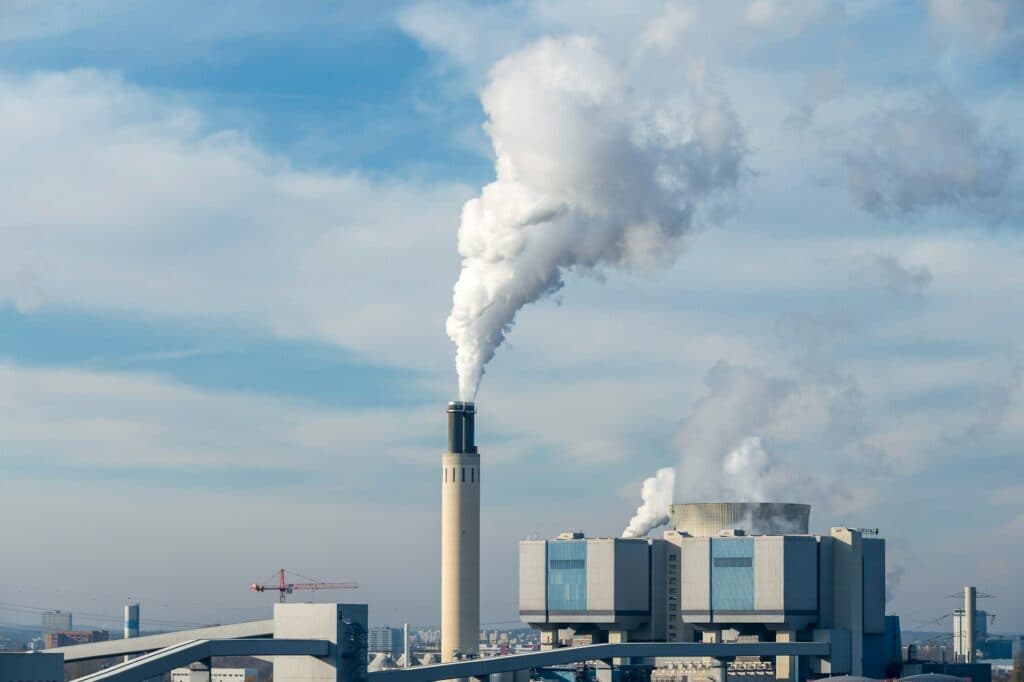
Germany's target of achieving climate neutrality by 2045 is set to cost the country 300 billion euros. According to the CEO of transmission system operator Amprion, the target should be reconsidered.
Germany's dual goal of achieving climate neutrality five years earlier than the EU target and becoming energy independent would increase investment costs without clear benefits, Christoph Müller, CEO of transmission system operator Amprion, said at the Future Energy Forum panel on Wednesday.
"The real question for Germany and Europe is whether we are willing to risk our standard of living so that we can finish five years earlier," he said, noting that the EU requires member states to achieve climate neutrality by 2050.
Müller added that Germany's dual ambition had significantly increased the cost of the country's green transition, which is currently estimated at 300 billion euros. More realistic ambitions could reduce the cost by 100 billion euros, Müller said.
He added, however, that most projects planned through 2030 had already been contracted and could not be changed. Cuts could be made after the turn of the decade, as current plans to build hydrogen power plants are too extensive, Müller said.
However, a key goal of the new German government, led by the Christian Democrats and Social Democrats, will be to ensure a degree of continuity so that the plans are not completely rewritten, he added.
The new government has pledged to build 20 GW of gas-fired power plants by 2030 and, among other things, to reduce energy costs.
Rising network charges
Germany's main problem is the rising cost of developing and operating transmission and distribution grids.
Klaus Müller, head of Germany's network regulator, said a key issue was that many households and businesses had installed their own energy sources, driving up costs and charges. More broadly, Germany's rapid expansion of renewable energy is behind the significant increase in network costs.
"Our overall system costs are really exploding, making the question of the pace of development critical," said Gerald Linke, president of the German Technical and Scientific Association for Gas and Water (DVGW).
Translation disclaimer
This article is a machine translation of the Czech original and has not yet been fully reviewed. In case of any doubt, please refer to the Czech version.
Sdílejte článek prostřednictvím:
You might also like




16 October 2026, 10:16