IEA: Energy investment to rise to record $3.3 trillion this year

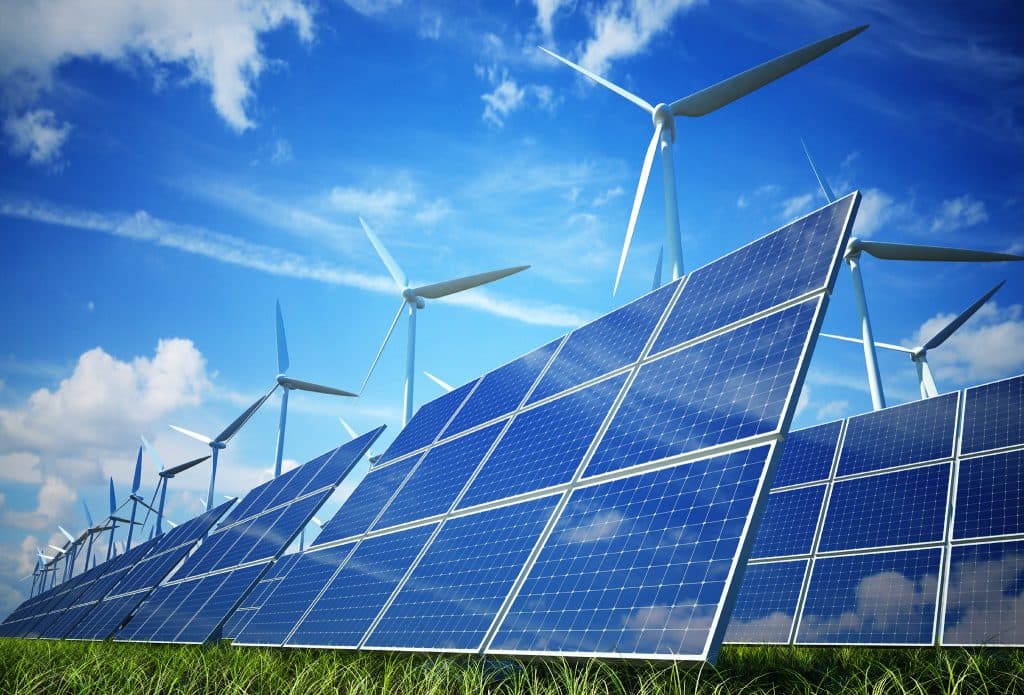
Global investment in energy will rise to a record $3.3 trillion (nearly CZK 72 trillion) this year, despite the adverse effects of heightened geopolitical tensions and economic uncertainty. The International Energy Agency (IEA) said this today in its annual report on the subject. China is the biggest investor in energy, and investment in low-emissions sources is rising significantly.
Clean energy technologies now attract twice as much capital as fossil fuels. Investment in clean technologies—renewables, nuclear energy, grids, storage, low-emissions fuels, efficiency improvements and electrification—is expected to rise to a record $2.2 trillion this year. This reflects not only efforts to reduce emissions, but also the growing influence of industrial policy, concerns about energy security and the cost competitiveness of electricity-based solutions. Investment in oil, natural gas and coal will reach $1.1 billion.
“Amid geopolitical and economic uncertainties clouding the outlook for the energy world, we see energy security as a key driver of growth in global investment,” said IEA Executive Director Fatih Birol.
“Rapid changes in the economy and trade mean that some investors are taking a wait-and-see approach to approving new energy projects, but in most areas we have not yet seen significant effects on existing projects,” he added.
When the IEA published the first edition of its report on global energy investment nearly ten years ago, investment in China’s energy sector in 2015 was shown to have only just exceeded investment in the United States, Birol noted. “Today, China is by far the world’s largest energy investor, spending twice as much on energy as the European Union—and almost as much as the EU and the United States combined,” he said.
Over the past decade, China’s share of global clean energy spending has risen from a quarter to almost a third, driven by strategic investment across a wide range of technologies, including solar, wind, hydropower and nuclear energy, batteries and electric vehicles. At the same time, global spending on oil and gas extraction is shifting towards the Middle East.
Today’s investment trends clearly show, according to the report, that a new era of electricity is approaching. Ten years ago, investment in fossil fuels was 30 percent higher than investment in power generation, grids and storage. This year, investment in electricity is expected to be around 50 percent higher than the total amount spent on bringing oil, natural gas and coal to market.
Globally, spending on low-emissions power generation has nearly doubled over the past five years, led by solar photovoltaics. Investment in solar energy is expected to reach $450 billion this year, making it the largest item in the global energy investment tally. Investment in battery energy storage is also growing rapidly and is expected to exceed $65 billion this year, according to the IEA.
Capital flows into nuclear energy have increased by 50 percent over the past five years, and investment is expected to reach around $75 billion this year. Rapid growth in electricity demand is also sustaining investment in coal extraction, particularly in China and India. Last year, China began construction of coal-fired power plants with a capacity of almost 100 gigawatts, bringing the global number of approved coal-fired plants to its highest level since 2015.
A worrying signal for electricity supply security is that investment in grids, now at $400 billion a year, is not keeping pace with spending on generation and electrification. To maintain secure electricity supplies, grid investment would need to match spending on generation by the beginning of the next decade. Lengthy permitting procedures are the main obstacle.
Lower oil prices and weaker demand for it are expected to lead to the first year-on-year decline in oil production investment since the drop caused by the COVID-19 pandemic in 2020, the report says. The expected six-percent decline will be driven mainly by a fall in spending on US tight oil production. By contrast, investment in new liquefied natural gas (LNG) facilities is rising sharply, with new projects due to come online in the United States, Qatar, Canada and elsewhere.
Translation disclaimer
This article is a machine translation of the Czech original and has not yet been fully reviewed. In case of any doubt, please refer to the Czech version.




